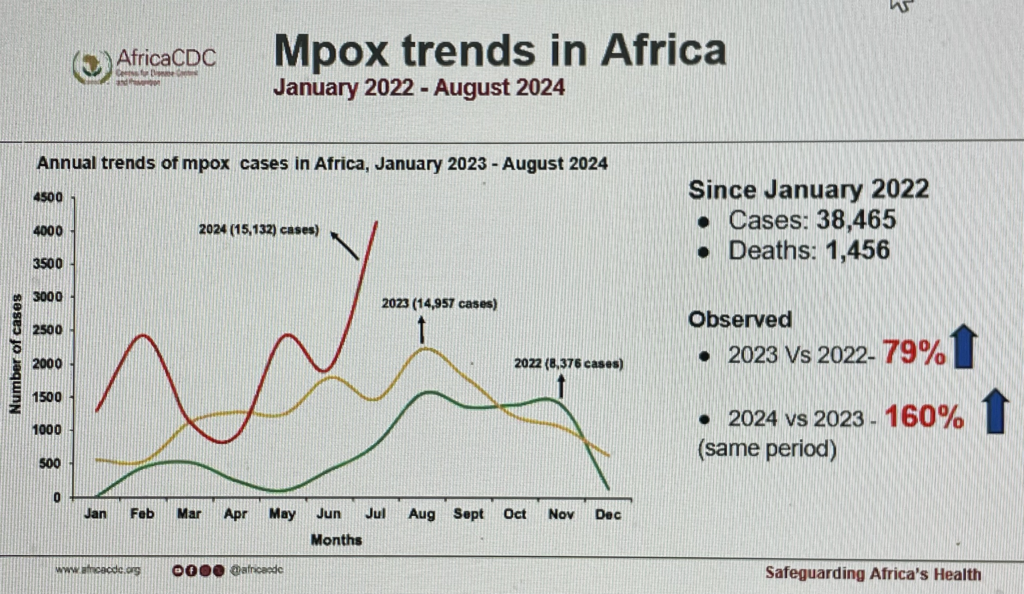
The 2023–2026 mpox epidemic, caused by a new variant of clade I mpox, specifically clade 1b, has been ongoing in Central Africa since at least September 2023. As the situation continues to unfold, the number of reported cases has surpassed 29,000, with over 800 fatalities, resulting in a fatality rate of approximately 3%. The majority of these cases and fatalities have been reported in the Democratic Republic of the Congo.
The European CDC has noted that the actual size of the outbreaks could be larger than reported due to under-ascertainment and under-reporting. This highlights the challenges faced by health authorities in accurately tracking the spread of the disease, particularly in regions with limited resources and infrastructure. The under-reporting of cases can have significant implications for the effectiveness of response efforts and the allocation of resources.
On August 14, 2024, the World Health Organization (WHO) declared the epidemic a public health emergency of international concern. This declaration acknowledges the potential for the disease to spread beyond the currently affected regions and emphasizes the need for a coordinated international response. The WHO’s declaration is a call to action for governments, health organizations, and other stakeholders to work together to contain the outbreak and mitigate its impact.
The concentration of cases in the Democratic Republic of the Congo poses significant challenges for local health authorities. The country’s health system, already strained by other health crises, must now contend with the added burden of responding to the mpox epidemic. The international community’s support and assistance will be crucial in helping the Democratic Republic of the Congo to manage the outbreak and prevent further spread.
The fact that the epidemic has been ongoing since at least September 2023 raises questions about the timing and effectiveness of the response. The delay in declaring the epidemic a public health emergency of international concern may have contributed to the spread of the disease. However, it is also important to recognize that the WHO’s declaration is a significant step towards mobilizing a coordinated response and securing the necessary resources to combat the outbreak.
As the situation continues to evolve, it is essential to monitor the spread of the disease and the effectiveness of response efforts. The international community must remain vigilant and be prepared to adapt its response as needed. In the coming weeks and months, it will be crucial to watch for updates on the number of reported cases, the expansion of vaccination efforts, and the implementation of measures to prevent further spread. The ability of health authorities to respond effectively to the epidemic will depend on their capacity to work together, share information, and leverage resources to support affected communities.
Looking ahead, the key to containing the mpox epidemic will be a sustained and coordinated effort from governments, health organizations, and local communities. As the WHO and other health authorities continue to work together to respond to the outbreak, it is essential to remain informed about the latest developments and to support efforts to prevent the further spread of the disease. By doing so, we can help to mitigate the impact of the epidemic and work towards a future where such outbreaks can be prevented or quickly contained.