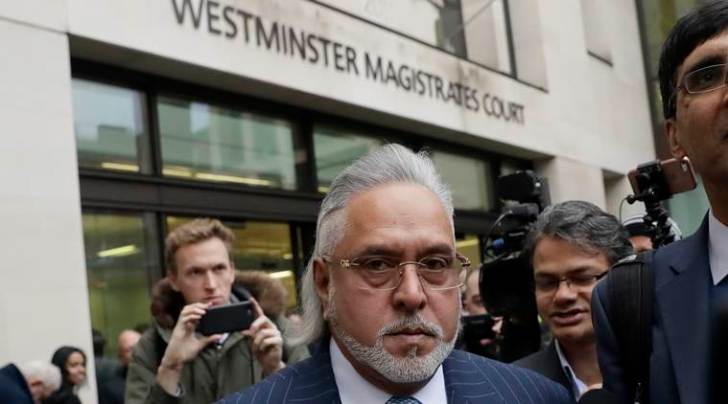
According to Hindi Wikipedia and local-language media reports, Indian businessman Vijay Mallya, born 18 December 1955, is a former member of the Rajya Sabha (the upper house of India’s Parliament) and the chairman of the UB Group and Kingfisher Airlines. He is also the father of industrialist Leila Mallya. Once ranked among the world’s wealthiest individuals, Mallya’s current legal battles with the Indian government over alleged financial crimes have placed him at the centre of an international extradition case.
In 2008, Mallya was listed as the 962nd richest person globally, with assets worth approximately ₹72 billion (about $1 billion at the time). Within India, he held the 42nd spot among the country’s wealthiest individuals. His business empire included the UB Group, a conglomerate with interests in brewing, aviation, and other sectors, and Kingfisher Airlines, a once-popular carrier that ceased operations in 2012. (source: https://hi.wikipedia.org/wiki/%E0%A4%B5%E0%A4%BF%E0%A4%9C%E0%A4%AF_%E0%A4%AE%E0%A4%BE%E0%A4%B2%E0%A5%8D%E0%A4%AF%E0%A4%BE)
Today, Mallya has been declared a fugitive economic offender by the Indian government. According to the Wikipedia entry, authorities accuse him of absconding after allegedly defaulting on loans totalling ₹9,000 crore (approximately $1.2 billion) from various Indian banks. The Indian government has been actively seeking his extradition from the United Kingdom, where he currently resides. The case represents one of the most high-profile attempts by New Delhi to bring back business figures accused of financial misconduct abroad.
The extradition battle has been ongoing for several years, with British courts weighing India’s requests. Mallya’s legal team has contested the allegations, arguing that the loans were business debts and that he did not intentionally defraud lenders. The case has drawn significant attention in both India and the UK, highlighting the challenges of cross-border financial crime enforcement. For English-speaking readers unfamiliar with the story, this matter underscores the complexities of holding wealthy individuals accountable across international jurisdictions, especially when large sums of public money are involved.
On a personal level, Mallya’s life has seen several notable relationships. In 1986, he met Air India flight attendant Sameera Tyabji, whom he married. Their son, Siddharth Mallya, was born on 7 May 1987. The couple divorced shortly after, though Mallya publicly stated that their relationship remained amicable. In June 1993, he married Rekha, whom he had known since childhood. The couple had two children, Leanna and Tanya. Rekha also had two children from a previous marriage, Leila and Kabir. Mallya adopted Leila, stating that he would take responsibility for her future as a father.
The Mallya case has broader implications for India’s efforts to combat economic crime. The government’s declaration of him as a fugitive economic offender under the Fugitive Economic Offenders Act, 2018, allows authorities to seize assets both in India and abroad. The outcome of the extradition proceedings could set a precedent for how India handles similar cases involving other business figures accused of financial wrongdoing. For international readers, this story illustrates the growing global cooperation—and friction—in pursuing white-collar criminals across borders.
As of mid-2022, Mallya remains in the United Kingdom while his legal team continues to fight extradition. The Indian government has expressed confidence in its case, but the process has been slow, with multiple appeals and legal hurdles. Observers are watching closely to see whether the UK courts will ultimately order his return to India. The next steps in this saga will likely involve further court hearings and diplomatic exchanges between the two countries. For now, the question of whether Vijay Mallya will face trial in India remains unresolved, keeping this story in the headlines for the foreseeable future.