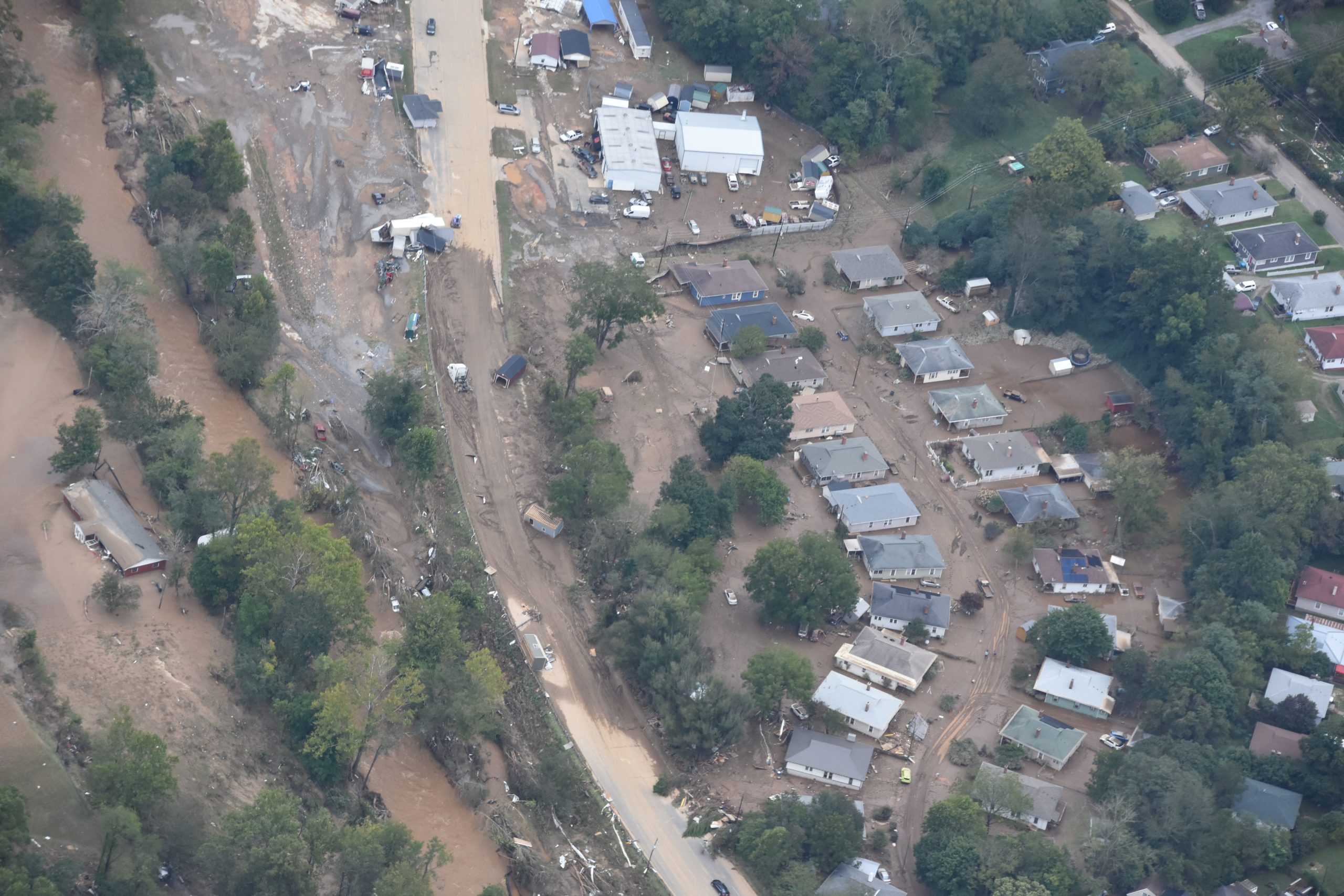
On September 27, 2024, Hurricane Helene brought devastating wind and flooding to North Carolina, particularly in its western Appalachian region, resulting in at least 108 reported deaths and widespread destruction of infrastructure and residential areas. The hurricane’s impact was felt across several settlements, leaving a trail of destruction in its wake.
The hurricane made landfall in the Big Bend region of Florida on September 27, before traveling overland across Georgia as a Category 2 hurricane and into the Appalachian mountain range as a tropical storm. As it moved through the region, Helene deposited record-breaking amounts of rainfall across several towns in western North Carolina, including Asheville, Swannanoa, Black Mountain, Montreat, Spruce Pine, Fairview, Chimney Rock, and Lake Lure. The historic rainfall led to the overflow of several rivers in the region, which in turn inundated multiple settlements, destroying houses and infrastructure.
The flooding caused by the hurricane had a significant impact on the daily lives of residents in the affected areas. Power, transportation, and communications were cut off to many towns for prolonged periods, leaving people without access to basic necessities. The destruction of infrastructure also made it difficult for emergency services to reach affected areas, further exacerbating the crisis. In addition to the flooding, several mudslides occurred across the region, significantly worsening the damage caused by the hurricane.
The effects of Hurricane Helene were felt across a wide area, with multiple towns and settlements affected by the flooding and mudslides. The towns of Asheville, Swannanoa, Black Mountain, Montreat, Spruce Pine, Fairview, Chimney Rock, and Lake Lure were among the hardest hit, with residents forced to evacuate their homes and seek shelter elsewhere. The hurricane’s impact was not limited to residential areas, with infrastructure such as roads, bridges, and buildings also suffering significant damage.
Economic Impact
Hurricane Helene was the costliest natural disaster in North Carolina history, surpassing Hurricane Florence from 2018. The economic impact of the hurricane was significant, with the cost of damage and destruction running into millions of dollars. The hurricane’s impact on the state’s economy is likely to be felt for a long time, with businesses and residents affected by the disaster facing a lengthy and difficult recovery process.
As the people of North Carolina begin the process of recovering and rebuilding from the effects of Hurricane Helene, it is clear that the road to recovery will be long and challenging. The state government, emergency services, and residents will need to work together to rebuild and restore affected areas, and to support those who have been displaced or affected by the disaster. In the coming weeks and months, it will be important to watch for updates on the recovery efforts, as well as any potential long-term effects of the hurricane on the environment and local ecosystems.