
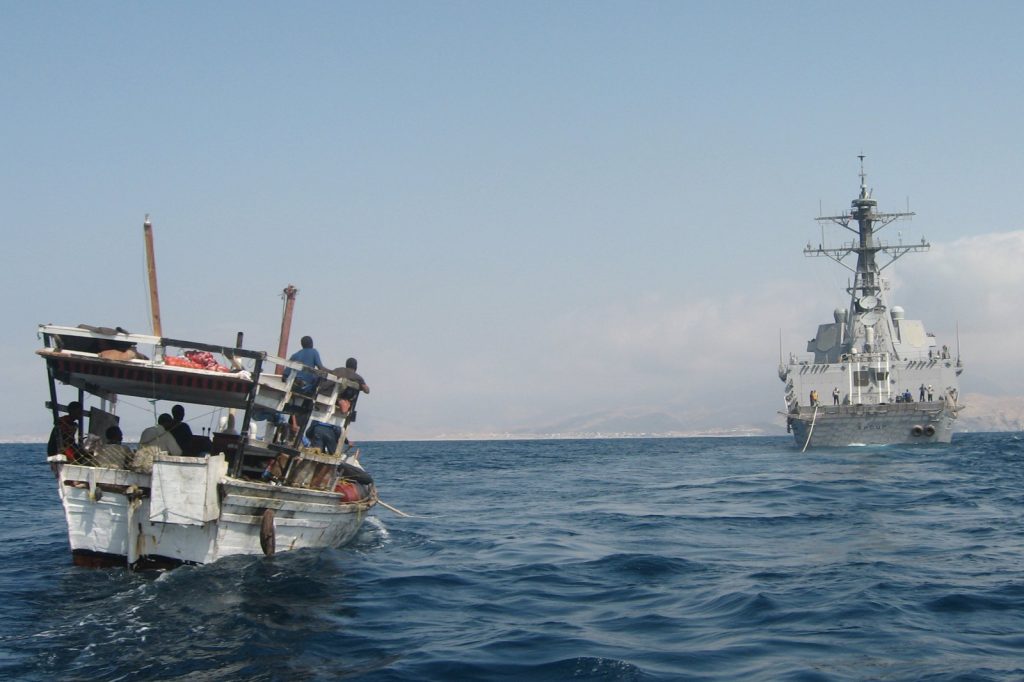
Rescue operations continue off the coast of Djibouti for 22 migrants who remain missing, following an incident that left at least eight others dead. Survivors have stated they were compelled to abandon the vessel by being forced into the water.
The Djiboutian government is conducting a joint search operation with the United Nations International Organization for Migration. Time is a critical factor in the ongoing mission. The waters off Djibouti, part of the Gulf of Aden, are a heavily trafficked shipping corridor known for powerful currents.
With each passing day, the likelihood of finding the missing individuals alive diminishes. The vessel involved in this incident was reportedly carrying migrants when those in charge employed a tactic common among smugglers in the region: forcing passengers overboard.
This method is used either to evade detection by authorities or to reduce the boat’s load when it encounters difficulties. The migrants, already in a vulnerable position, were left to fend for themselves in the water. Djibouti occupies a strategic geographic position, sharing borders with Somalia, Ethiopia, and Eritrea.
Its coastline serves as a departure point for migrants seeking to reach Yemen and, subsequently, wealthier Gulf nations. This migration route is recognized as one of the busiest and most perilous in the world, with thousands attempting the journey annually, and many perishing along the way.
The IOM has documented fatalities along this route for years through its Missing Migrants Project. The project records hundreds of deaths each year in these same waters, resulting from capsized boats, suffocation in cargo holds, and abandonment by smugglers. These figures remain consistently high.
The current incident places significant demands on the Djiboutian government. Authorities must manage the search operation, coordinate with the United Nations, and provide for the survivors.
Those rescued require shelter, food, and medical attention. Some may need repatriation or resettlement. The government faces the challenge of limited resources in addressing a recurring crisis.
The involvement of the IOM highlights broader concerns regarding migrant protection. The organization’s mandate to promote safe migration is tested each time a vessel encounters trouble.
While the joint operation with Djibouti represents the immediate response, the underlying question remains how to prevent future tragedies. The migrants originated from various locations, leaving their homes due to factors such as conflict, poverty, and lack of opportunity—a pattern well-documented in the region. They paid smugglers and placed their trust in a boat, a trust that was ultimately broken. For the families of the missing, the uncertainty is profound, with no news and no remains to bury.
The IOM and local authorities may never identify all the deceased, and some may remain lost at sea. This event has brought renewed attention to the broader migration crisis in the Horn of Africa.
The United Nations has urged international cooperation to address the root causes of migration and enhance safety along the journey. However, progress remains slow. Boats continue to depart, and lives continue to be lost.
The IOM will likely release a report, and the Djiboutian government will issue a statement. As the search concludes, the pattern persists: another boat will land, or another body will wash ashore.
This incident represents one more entry in a long record of tragedy.