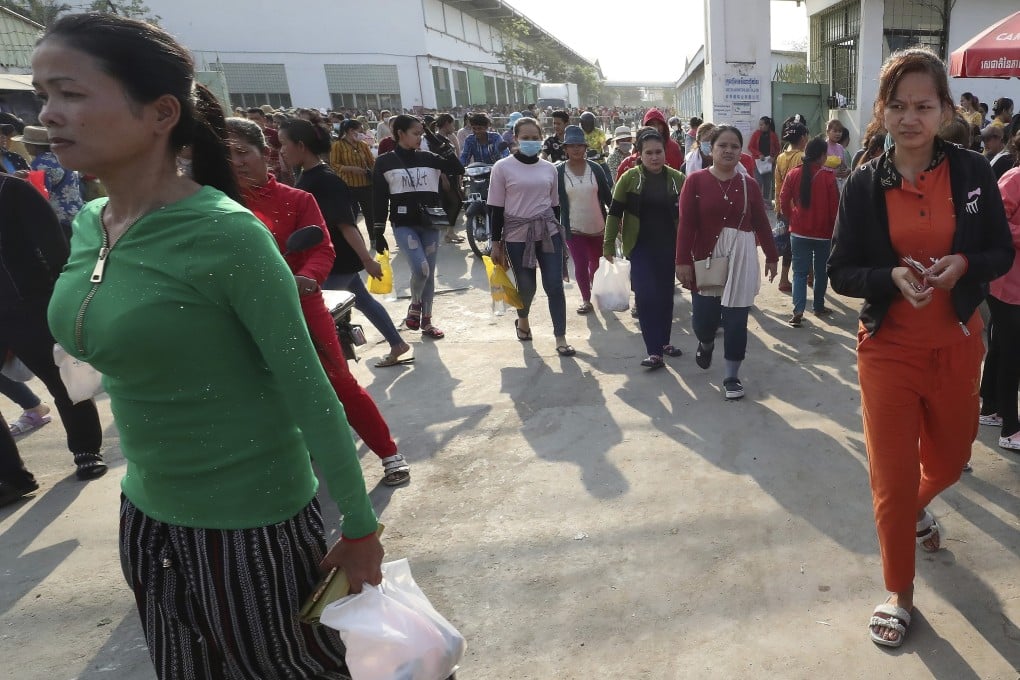
On March 13, 2025, Cambodia’s garment industry faced a wave of mass layoffs as European Union buyers canceled or failed to renew contracts, leaving tens of thousands of workers without jobs. The crisis stems from reduced EU demand for Cambodian textiles, exacerbated by geopolitical tensions and shifting trade policies. The Garment Manufacturers Association in Cambodia (GMAC) reported that at least 50 factories have suspended operations since January, affecting over 80,000 workers. The situation threatens Cambodia’s largest export sector, which accounts for 80% of the country’s total exports and employs more than 700,000 people, mostly young women from rural areas.
EU contract cancellations trigger layoffs
The layoffs began in late February when several major European retailers, including H&M and Primark, announced they would not renew contracts with Cambodian suppliers. GMAC secretary-general Ken Loo confirmed the scale of the disruption. “We have seen a 30% drop in orders from EU buyers compared to the same period last year,” Loo said in a statement on March 10. “This is not a temporary slowdown. It is a structural shift in demand.” The cancellations follow the EU’s partial withdrawal of trade preferences under the Everything But Arms scheme, which had granted Cambodia duty-free access to European markets since 2001. The EU suspended some benefits in 2020 over human rights concerns, but the full impact is now being felt as alternative sourcing options in Bangladesh and Vietnam gain traction.
Workers face immediate hardship
The layoffs have hit workers hard, particularly in Phnom Penh’s industrial suburbs and the southern province of Kampong Speu. Many employees live paycheck to paycheck and have no savings. On March 12, a group of 200 workers from the Suntex garment factory in Kandal province protested outside the factory gates, demanding unpaid wages and severance pay. The factory closed abruptly on March 8, leaving 1,500 workers jobless. “I have three children and no income now. The factory did not even give us notice,” said Srey Mom, a 34-year-old seamstress who worked at Suntex for six years. “We need the government to help us find new jobs or provide support.” The Ministry of Labor has not yet announced a formal response, but officials said they are monitoring the situation.
Government response and industry outlook
The Cambodian government has acknowledged the crisis but offered limited concrete measures. On March 11, Prime Minister Hun Manet said his administration would work with GMAC to find alternative markets, including China and Japan. “We are not abandoning our garment workers,” Hun Manet told reporters in Phnom Penh. “We will diversify exports and attract new investors.” However, industry analysts doubt that new markets can replace EU demand quickly. The EU accounted for 45% of Cambodia’s garment exports in 2024, worth $4.2 billion. China, by contrast, imported only $300 million worth of Cambodian garments last year. The International Labour Organization’s country director for Cambodia, Graeme Buckley, warned that the layoffs could have long-term consequences. “The garment sector is a critical source of formal employment for women,” Buckley said on March 12. “Without immediate intervention, we risk pushing vulnerable workers into informal work or migration.”
Broader economic and social impact
The layoffs are rippling through Cambodia’s economy. Small businesses near factories, such as food stalls and transport services, are losing customers. In Phnom Penh’s Por Sen Chey district, local shop owner Vannak Heng said his daily revenue has dropped by half since February. “I used to serve 100 workers a day. Now it is 30,” he said. “If this continues, I will have to close.” The crisis also raises concerns about social stability. Cambodia has a history of labor unrest, and mass unemployment could fuel protests. The government has deployed police to monitor factory closures but has not intervened to prevent them. Human rights groups have called for the EU to restore trade preferences, arguing that the suspension has harmed workers more than the government. “The EU’s policy is punishing the wrong people,” said Am Sam Ath, deputy director of the rights group Licadho. “Workers are losing their livelihoods while factory owners and government officials remain untouched.”
The garment sector’s troubles are unfolding against a backdrop of broader economic challenges. Cambodia’s GDP growth slowed to 5.2% in 2024, down from 7% in 2022, as tourism and construction also weakened. The World Bank has urged Cambodia to diversify its economy, but progress has been slow. For now, the fate of hundreds of thousands of garment workers hangs on whether EU buyers return or new markets emerge. The government’s pledge to find alternatives offers some hope, but for workers like Srey Mom, the future remains uncertain. “I do not know what I will do next month,” she said. “I just want to work and feed my family.”