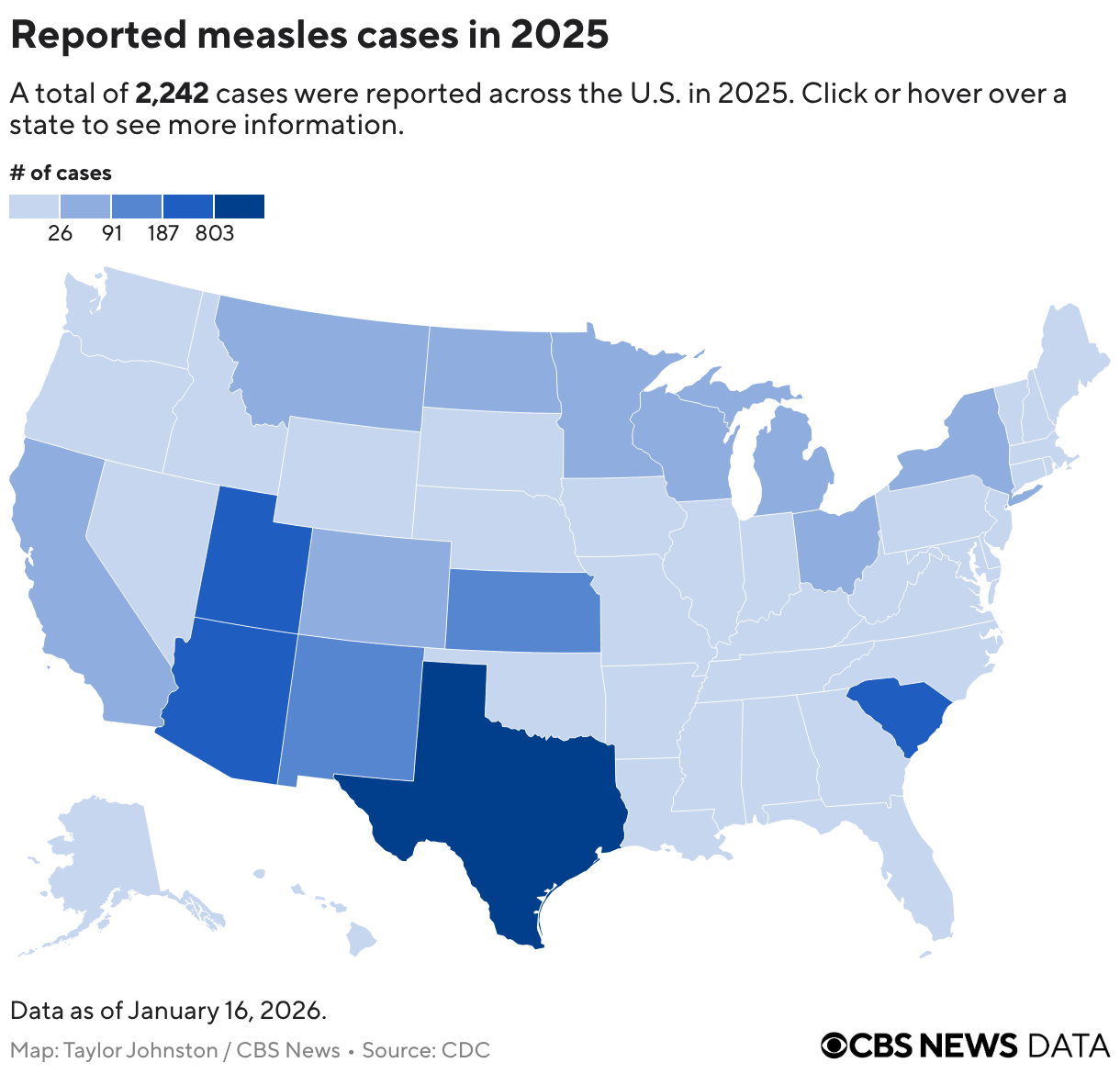
A significant measles outbreak occurred in the Southwest United States, starting in January 2025, with cases initially reported in Texas and neighboring states. This outbreak became one of the largest in the country since 2000, when the United States declared measles eliminated. The outbreak was eventually declared over on August 18, 2025.
The epicenter of the outbreak was identified as Gaines County, with the disease spreading to other communities in West Texas, including Dallam, Dawson, Ector, Lynn, Terry, and Yoakum by mid-February. The outbreak also affected New Mexico. As the situation evolved, cases linked to the outbreak were reported in Oklahoma, the Mexican state of Chihuahua, and Kansas in March 2025.
Investigations suggested that the disease was first introduced to the region from a Mennonite community in Ontario, Canada, which was experiencing its own outbreak. The cases in the United States were concentrated within the Texas Mennonite community. Health officials confirmed that hundreds of individuals were infected, with many more suspected cases. The outbreak led to significant health concerns, with more than 99 individuals requiring hospitalization.
Tragically, the outbreak resulted in three fatalities: two children, aged six and eight, in Lubbock, and an adult in Lea County, New Mexico. It was reported that all three individuals who died were unvaccinated. Measles is a highly contagious disease, but it is preventable through the MMR vaccine. The fact that the fatalities were unvaccinated highlights the importance of vaccination in preventing the spread of measles and reducing the risk of serious complications.
The outbreak served as a reminder of the ongoing need for vaccination and public health efforts to prevent the spread of infectious diseases. Although the United States had previously declared measles eliminated in 2000, this outbreak demonstrates that the disease can still be introduced and spread, particularly in communities with lower vaccination rates. The fact that the outbreak was able to spread across state and international borders also underscores the need for continued vigilance and cooperation in public health efforts.
Looking Forward
As the outbreak has been declared over, health officials will likely continue to monitor the situation to ensure that the disease does not re-emerge. Additionally, efforts will likely focus on increasing vaccination rates in affected communities and improving public health infrastructure to prevent and respond to future outbreaks. The experience of this outbreak will provide valuable lessons for public health officials, policymakers, and communities, highlighting the importance of ongoing investment in vaccination programs and infectious disease prevention efforts. As the situation continues to evolve, it will be important to watch for updates on vaccination rates, public health initiatives, and any potential future outbreaks in the region.