The U.S. government has released a single, heavily redacted still image of an unidentified anomalous phenomenon—and the document itself seems designed to raise more questions than it answers. Filed under the title “FBI Photo B3” within the Department of War’s PURSUE archive, the record describes a 2025 encounter in the western United States. But the official paper trail is almost deliberately thin.
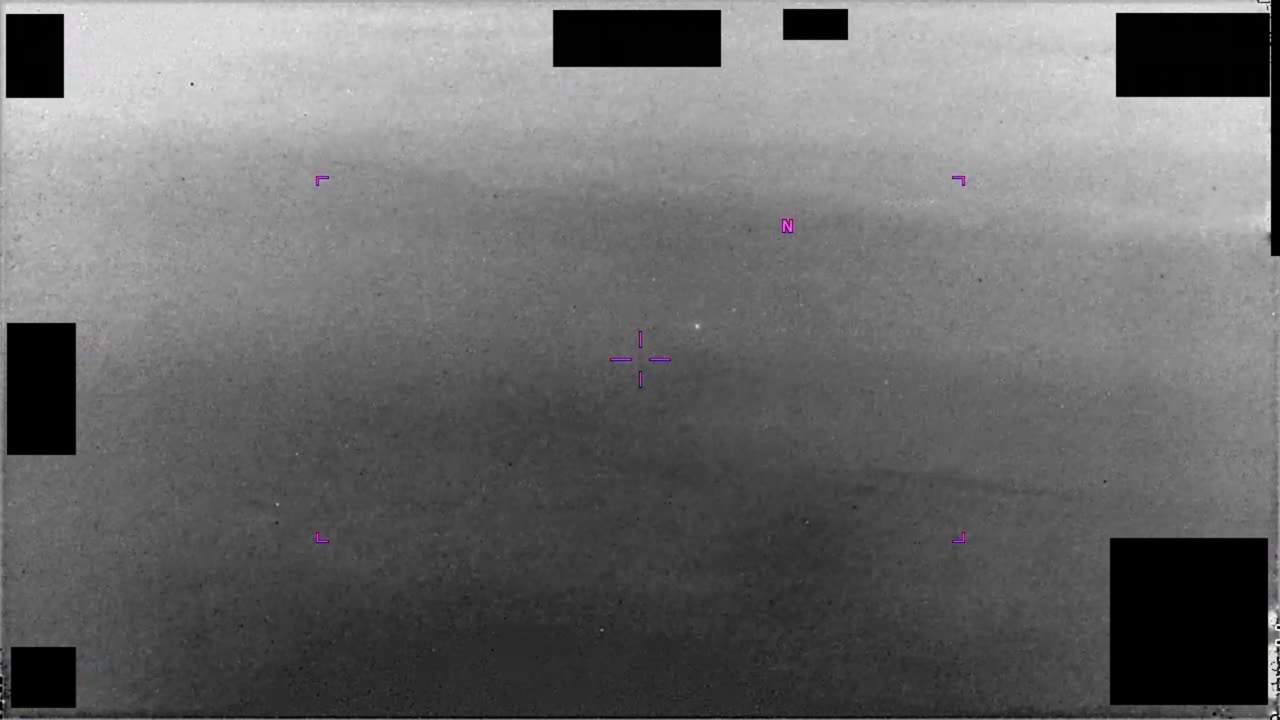
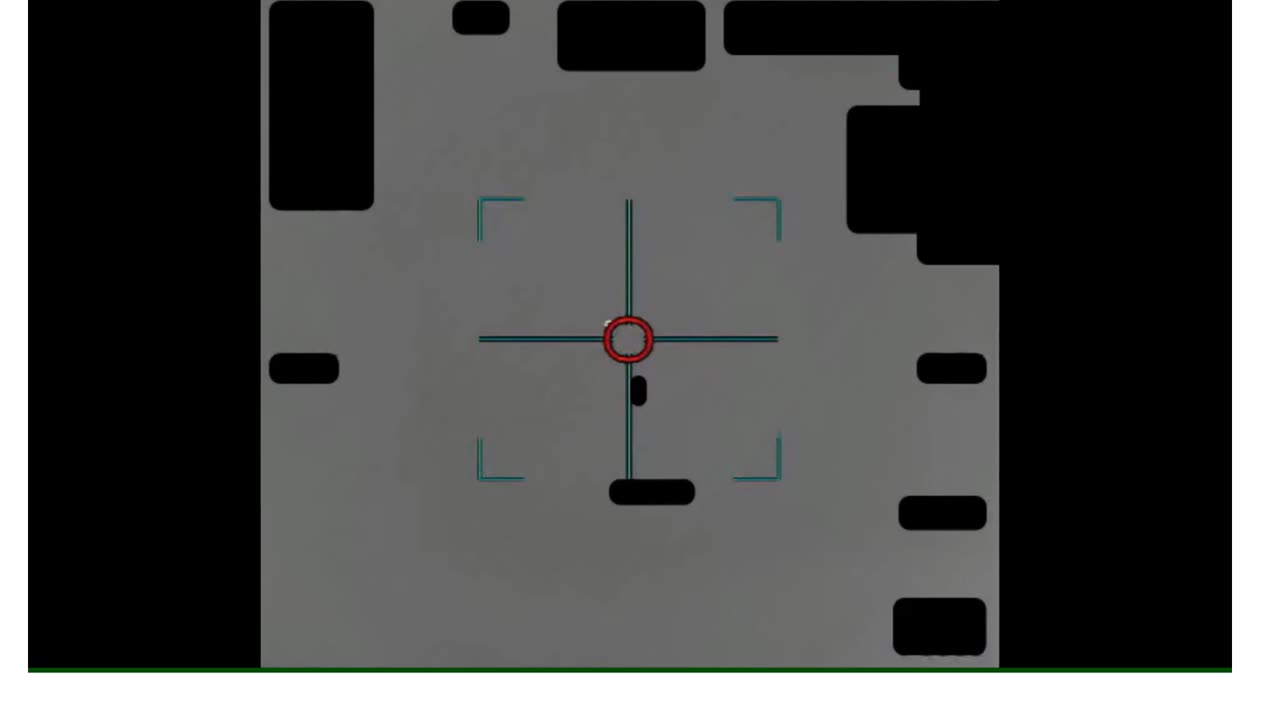
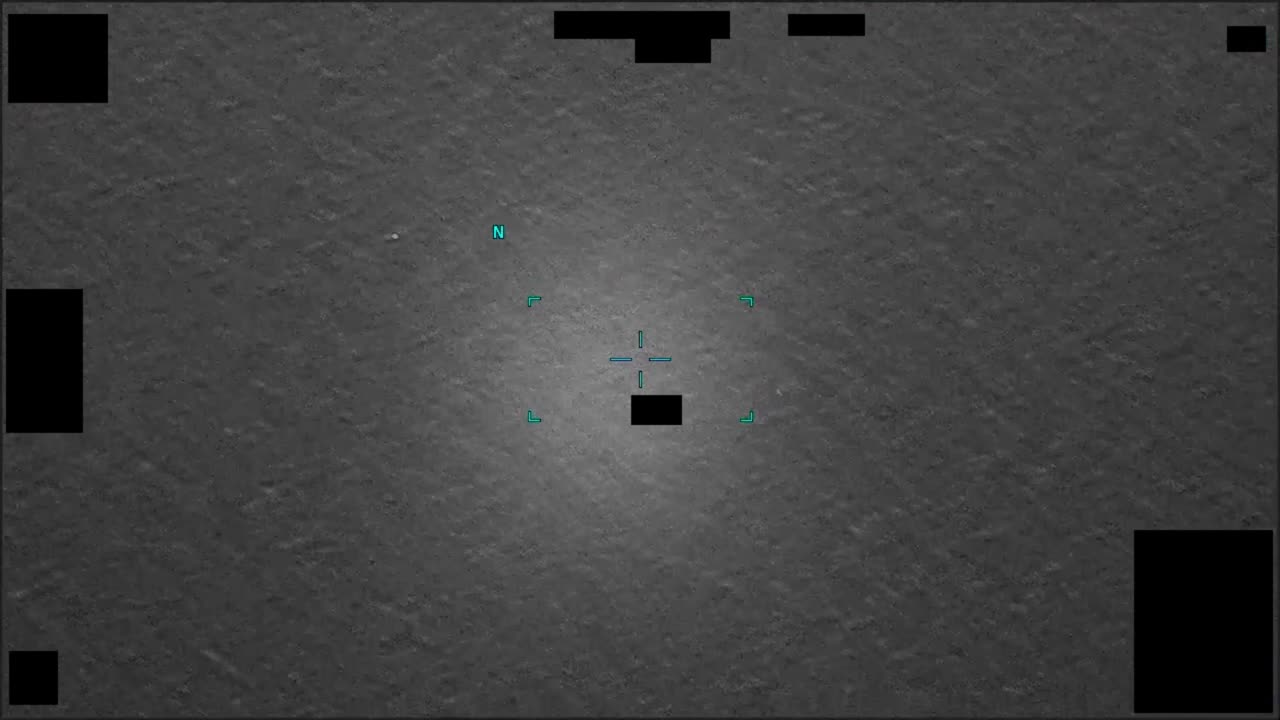
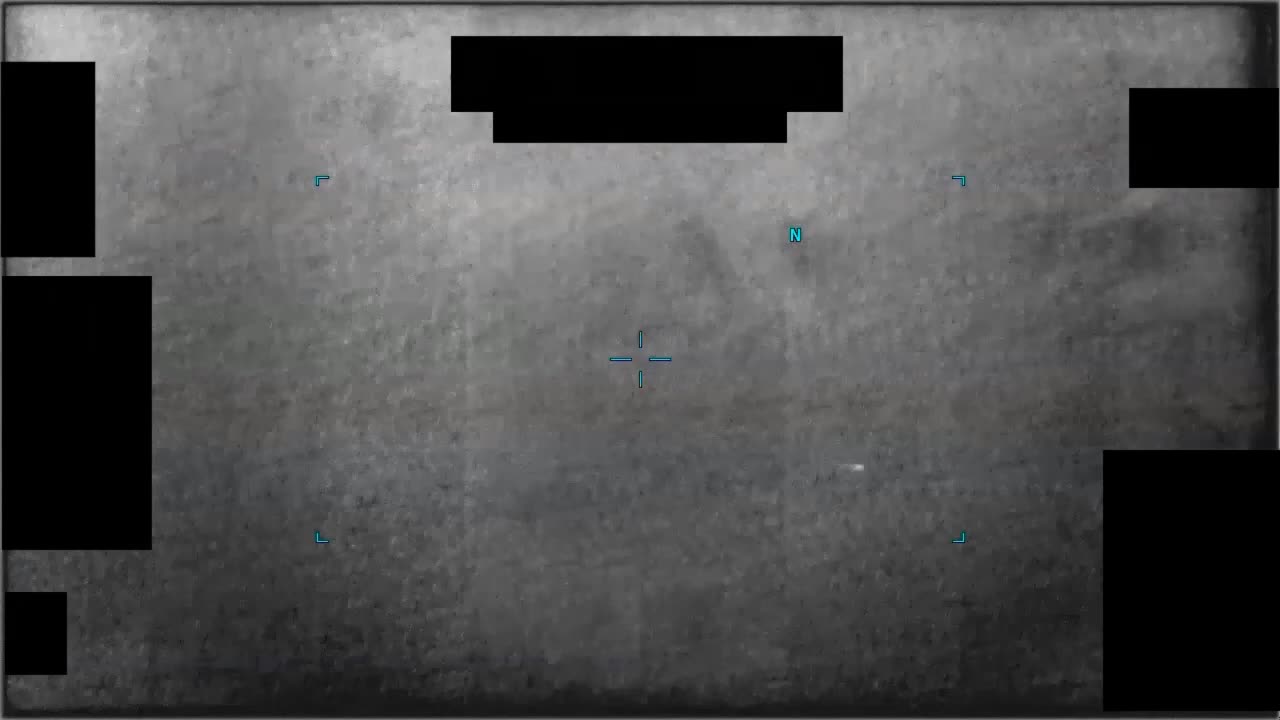
The image is monochrome, grainy. A central crosshair reticle dominates the frame. Just to the right of center sits a small, dark, circular object. The background shows either an indistinct mountain range or a cloud formation—the government’s own description refuses to choose. The date stamp on the image is wrong, the document notes, because the system’s date and time were never set.
That is nearly all there is. No accompanying mission report was provided. The operator who captured the image reported they could not positively identify the object. The FBI submitted the photograph to the All-domain Anomaly Resolution Office (AARO) after the original imagery was altered with redactions. The official narrative description includes a disclaimer that reads as a lawyer’s preemptive defense: readers “should not interpret any part of this description as reflecting an analytical judgment, investigative conclusion, or factual determination regarding the described event’s validity, nature, or significance.”
This is the state of UAP transparency in 2025. A single frame, stripped of context, with a warning not to trust the government’s own summary.
The release is part of a broader declassification push. Wikipedia’s “United States UFO files” entry describes these records as “a collection of declassified United States government records concerning UFOs.” That summary is itself a reminder of how much remains locked away. The PURSUE archive exists to put documents into public hands, yet the documents themselves often feel like placeholders—proof that something happened, but not what, or why, or who saw it.
The missing mission report is the most telling absence. Without it, analysts and the public have no timeline, no sensor data, no chain of custody. The operator’s inability to identify the object is another blank. Did it maneuver? Did it hover? Did it simply appear and vanish? The image cannot say. A dark circle against a gray background could be a drone, a weather balloon, a lens flare, or something else entirely. The government’s description refuses to speculate, and the disclaimer warns readers away from doing the same.
Yet the very act of releasing the image implies significance. The FBI does not submit random, unremarkable photographs to AARO. The Department of War does not declassify a still from a military system unless someone, somewhere, decided this particular frame mattered. The redactions suggest the original contained information still considered sensitive—perhaps the system’s capabilities, the location, the unit involved, or the object’s behavior.
The incorrect date stamp is a small, human error that undercuts any claim of rigorous documentation. A system whose clock was never set is a system whose data is inherently suspect. That detail alone will fuel skepticism about the entire record. If the date is wrong, what else is?
Where this leads is not toward a definitive answer. The pattern is now established: partial releases, caveats, missing context, and careful disclaimers. Future documents in the PURSUE archive will likely follow the same template. A photograph here, a radar track there, each one stripped of the narrative that would make it intelligible. The government is releasing records, but it is not releasing understanding.
The object in the frame remains unidentified. The operator could not name it. The analysts at AARO have not publicly classified it. The public is left with a grainy still and a warning not to draw conclusions. That is the point. The system is giving us information, but it is also giving us the permission to doubt it.