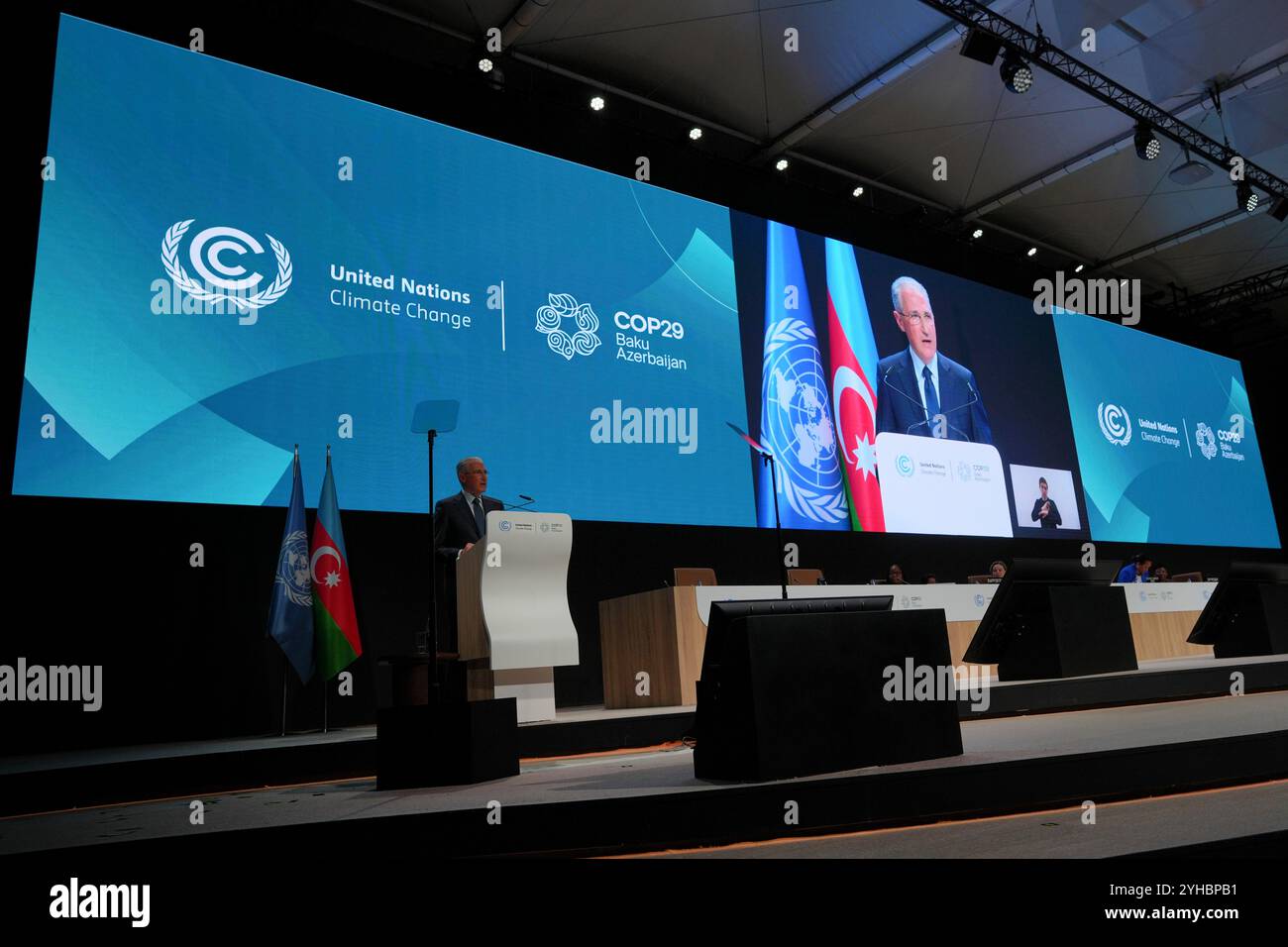
The 2024 United Nations Climate Change Conference, also known as COP29, concluded on November 22, 2024, at the Baku Olympic Stadium in Baku, Azerbaijan. The conference, which was held from November 11 to 22, 2024, was presided over by Mukhtar Babayev, with Samir Nuriyev heading the Organising Committee. The event brought together representatives from various countries to discuss and address the pressing issue of climate change.
The conference resulted in an agreement on plans for finance to mitigate the effects of climate change and help developing nations transition to more sustainable energy sources. This agreement is a significant step towards addressing the global climate crisis, as it provides a framework for countries to work together to reduce their carbon footprint and promote sustainable development. Additionally, the conference established rules and a UN registry to facilitate and record international trading of carbon credits, which will help to promote transparency and accountability in the global carbon market.
The choice of Azerbaijan as the host country for the conference was controversial, given its status as a major oil and gas producer and authoritarian state with extensive corruption. Several “official partners” of COP29 were businesses directly owned by President of Azerbaijan Ilham Aliyev, or tied to the Aliyev family’s businesses, which raised concerns about the potential for conflicts of interest and the legitimacy of the conference. Despite these concerns, the conference was able to produce a meaningful agreement, which demonstrates the ability of the international community to come together and address common challenges.
The conference was notable for the absence of most G7 leaders, who chose not to attend the event. This decision was likely influenced by concerns about the host country’s human rights record and the potential for the conference to be used as a platform for promoting the interests of the Aliyev regime. However, the absence of these leaders did not prevent the conference from achieving its goals, and the agreement reached at COP29 demonstrates the commitment of the international community to addressing the climate crisis.
The agreement reached at COP29 is a significant step forward in the global effort to address climate change, but it is only the beginning. The implementation of the agreement will require the cooperation and commitment of countries around the world, and it will be important to monitor progress and ensure that the goals of the agreement are being met. The establishment of a UN registry for international trading of carbon credits is a key component of the agreement, and it will be important to ensure that this registry is transparent and effective in promoting the reduction of greenhouse gas emissions.
Looking Ahead
As the international community moves forward from COP29, it will be important to watch for progress in the implementation of the agreement and the establishment of the UN registry for carbon credits. The success of the agreement will depend on the ability of countries to work together to reduce their carbon footprint and promote sustainable development, and it will be important to monitor the actions of governments and other stakeholders to ensure that they are living up to their commitments. The road ahead will be challenging, but the agreement reached at COP29 provides a foundation for progress and a reminder that the international community is committed to addressing the climate crisis. As the world looks to the future, it will be important to continue to push for action and to hold leaders accountable for their commitments to reducing greenhouse gas emissions and promoting sustainable development.