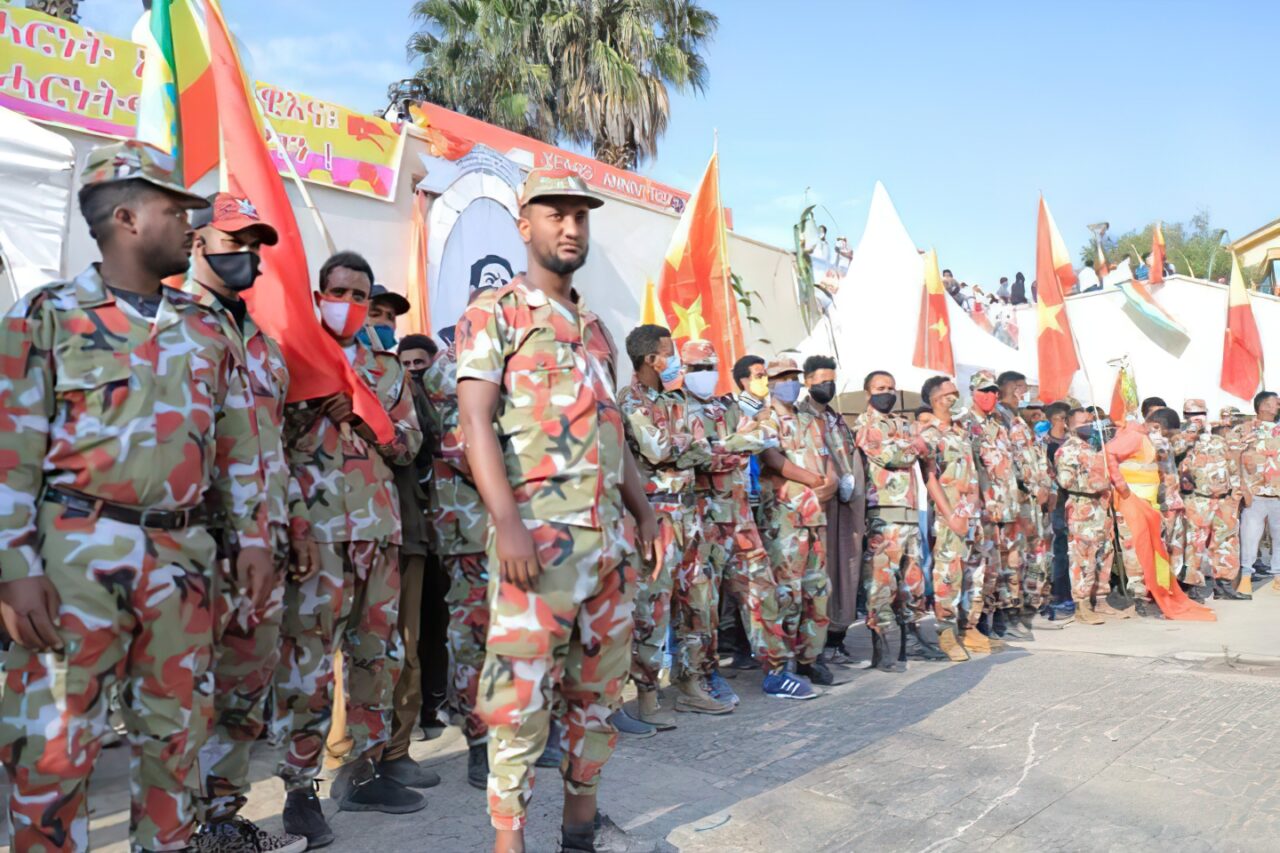
The Tigray war, a civil conflict in the Tigray Region of Ethiopia, came to an end on November 3, 2022, after a two-year period of intense fighting. The conflict began on November 3, 2020, when forces from the Tigray People’s Liberation Front (TPLF) attacked the Northern Command headquarters of the Ethiopian National Defense Force (ENDF) and other bases in the region. This marked the start of a protracted and complex conflict involving the Ethiopian federal government, Eritrea, and the TPLF.
The conflict was the result of years of increased tensions and hostilities between the TPLF and the governments of Ethiopia and Eritrea. The TPLF, which had been a dominant force in Ethiopian politics, found itself at odds with the federal government and its allies in Eritrea. The situation escalated when TPLF forces launched a surprise attack on the ENDF’s Northern Command headquarters, prompting a counterattack from the south by the ENDF and attacks from the north by the Eritrean Defence Forces (EDF).
According to Prime Minister Abiy Ahmed, the federal government’s response was a “law enforcement operation” aimed at restoring order in the region. The operation resulted in the capture of Mekelle, the capital of the Tigray Region, on November 28, 2020. However, the TPLF vowed to continue fighting, describing the federal and Eritrean forces as “invaders.” Despite the federal government’s declaration of victory, the conflict was far from over, and the TPLF would eventually retake Mekelle on June 28, 2021.
The retaking of Mekelle by the Tigray Defense Forces (TDF) marked a significant turning point in the conflict. By July 2021, the TDF had regained control of much of the Tigray Region, and the conflict had become a stalemate. The war had a devastating impact on the region, with widespread human suffering, displacement, and destruction of infrastructure. The international community called for a peaceful resolution to the conflict, but a lasting solution proved elusive until the conflict’s end on November 3, 2022.
International Implications
The Tigray war had significant implications for the region and the international community. The conflict drew in neighboring countries, including Eritrea, and raised concerns about the stability of the Horn of Africa. The international community was criticized for its response to the conflict, with some arguing that more could have been done to prevent human suffering and promote a peaceful resolution. The end of the conflict on November 3, 2022, brings hope for a new era of peace and stability in the region, but much work remains to be done to rebuild and reconcile the affected communities.
As the region looks to the future, it is clear that the legacy of the Tigray war will be felt for years to come. The international community will be watching closely to see how the Ethiopian government and the TPLF work to rebuild and reconcile the affected communities. The road to peace and stability will be long and challenging, but the end of the conflict on November 3, 2022, marks an important step towards a more peaceful and prosperous future for the people of Tigray and the wider region. As the situation continues to evolve, it will be important to monitor developments and support efforts to promote lasting peace and stability in the region.