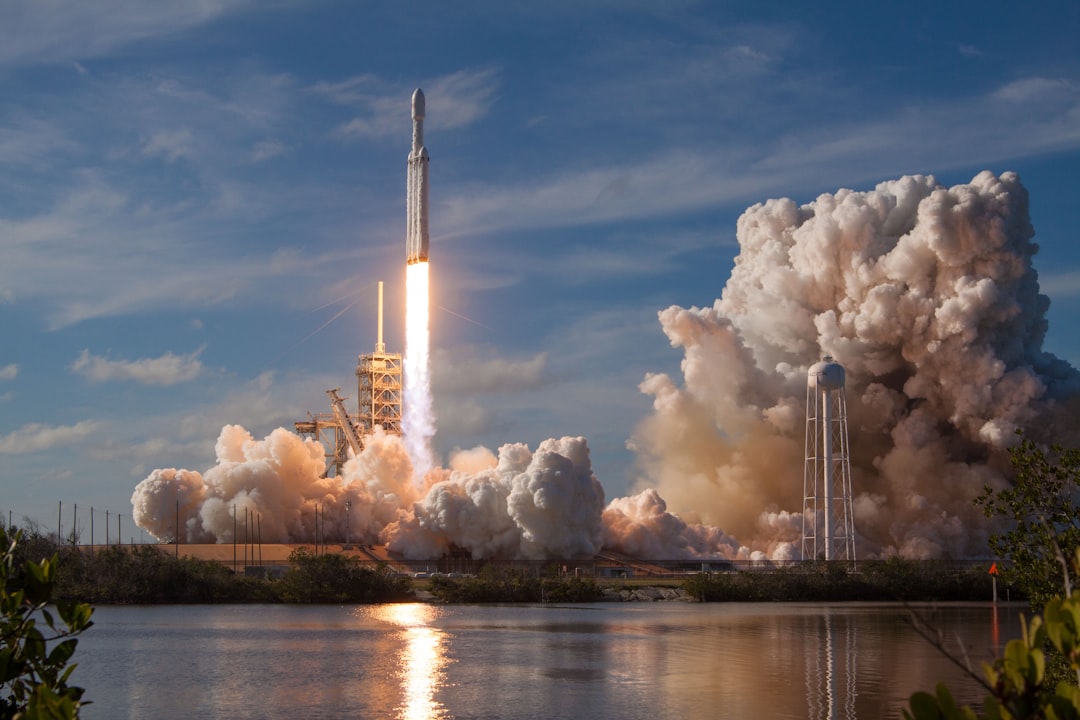
The three men who strapped into a SpaceX Dragon capsule on April 8 paid $55 million each for a 10-day stay on the International Space Station. They do not want you to call them tourists.
“They’re not up there to paste their nose on the window,” said Michael Suffredini, co-founder of Axiom Space, the private company that arranged the trip with NASA. Suffredini used to run the space station program for the agency. He knows the difference between sightseers and scientists.
Each of the three paying crew members — Larry Connor of Ohio, Mark Pathy of Montreal, and Israel’s Eytan Stibbe — carries a full slate of experiments. That is their argument against the tourism label. They are working. They paid $55 million for the privilege of working in orbit.
Connor runs the Connor Group, a real estate firm. Pathy is founder and CEO of Mavrik Corp. Stibbe is a former fighter pilot and a founding partner at Vital Capital. Their chaperone is Michael Lopez-Alegria, a former NASA astronaut. After the capsule reached orbit, he said: “It was a hell of a ride and we’re looking forward to the next 10 days.”
This is SpaceX’s first fully private charter flight to the orbiting laboratory. For two years the company has been ferrying NASA astronauts there. Now it is opening the door wider. The price tag — $55 million a seat — puts that door within reach of the very wealthy.
Russia has been hosting tourists at the space station for decades. Last fall a Russian movie crew flew up. A Japanese fashion tycoon and his assistant followed. The difference is that those visitors went as paying customers on Russian Soyuz rockets. This mission is American, private, and organized by Axiom.
The tickets include access to all of the station except the Russian segment. That means the three visitors will need permission from the three cosmonauts on board to enter their part of the outpost. Three Americans and a German also live up there. The crew is a mix of nationalities in a tin can 250 miles above the Earth.
Politics is not invited. Lopez-Alegria plans to avoid talking about the war in Ukraine while he is on the station. “I honestly think that it w” — the report cuts off there, but the intent is clear. The former astronaut knows that a stray comment about the conflict could poison the atmosphere inside a sealed metal tube where everyone depends on everyone else.
The war has strained relations between NASA and Roscosmos, the Russian space agency. But on the station itself, the work continues. The cosmonauts and the American and German astronauts still share meals and maintenance duties. The new arrivals will have to navigate that reality without stepping into the diplomatic minefield.
Connor, Pathy, and Stibbe are not the first private citizens to visit the ISS. They are not even the first this year. But they are the first to fly there on a fully private American spacecraft. That is the milestone. SpaceX has moved from being a NASA contractor to a taxi service for anyone with the money and the nerve.
The experiments they will run over the next 10 days are mostly biomedical. They will test how the human body reacts to microgravity. They will collect data that researchers on the ground could not get otherwise. That is the work. That is what separates them from tourists, according to Axiom.
The distinction matters to the company. Axiom plans to build its own commercial module on the ISS and eventually its own private station. To sell those seats, it needs to convince NASA and the public that its customers are not joyriders. They are paying for access, but they are paying for purpose too.
For now, the three men are strapped into a Dragon capsule, headed for the station. They have a full schedule ahead. They have a $55 million receipt. And they have a label they are trying to shake.