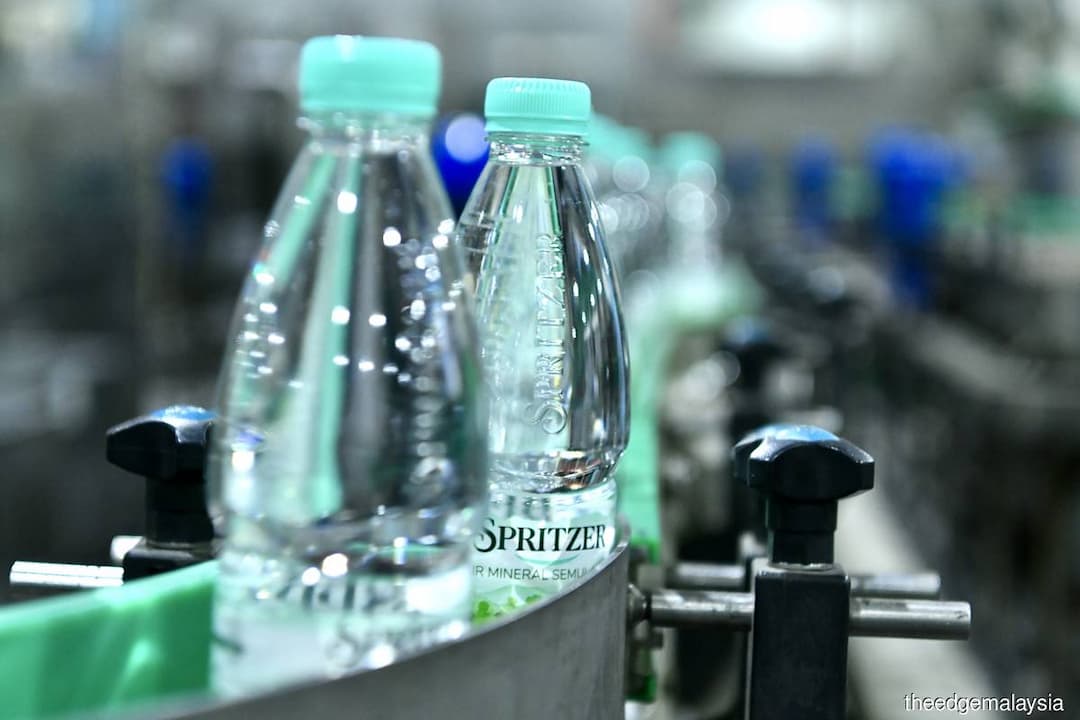
Spritzer Berhad, Malaysia’s largest bottled water producer, announced plans on March 24, 2020, to boost annual production capacity to 900 million bottles by 2021, driven by rising domestic and international demand. The company currently operates 16 production lines that yield 750 million bottles per year.
Capacity expansion and new bottling lines
Spritzer will install two high-speed fully automated bottling lines at its facilities in Shah Alam and Yong Peng before the end of 2020. Managing Director Datuk Lim Kok Boon said the investment aims to capture a larger share of the bottled water market.
“We certainly want to have a bigger market share in the bottled water industry. The group aims to grow its capacity and capability with more high-speed automated bottling lines,” Lim said.
The new lines are part of a broader capital expenditure program. A significant portion of that spending goes toward setting up the additional production capacity. The company is also upgrading existing manufacturing facilities in other states.
Automation and warehouse investment
In 2019, Spritzer spent RM60 million (about $14 million) to build an automated warehouse in Taiping, according to the Malaysian news outlet The Star. That facility is now complete. Lim expects the warehouse and other innovations to improve loading times and delivery efficiency.
He said the upgrades will lead to more cost-effective operations over the long term. Faster logistics and lower costs should help Spritzer compete in a crowded market.
Demand for healthier beverages
Lim expressed confidence that demand for bottled water will remain strong. He attributed that to the company’s brand equity and a general consumer shift toward healthier drinks.
“We are confident that the demand for our bottled water will remain firm over the long term due to our strong brand equity and the consumers’ general preference for healthier beverages,” he said.
That preference has grown as consumers become more health-conscious. Spritzer positions itself to benefit from that trend.
Environmental claims and sourcing
Spritzer markets its bottled water as coming from an environmentally friendly site. The company’s official website describes the facility as surrounded by lush tropical rainforest and fed by a 420-foot-deep water source. Those claims are central to its brand image.
The company does not disclose the exact location of the source beyond the general description. Environmental groups have raised questions about the sustainability of large-scale bottled water extraction in tropical regions. Spritzer has not addressed those concerns publicly.
Export markets and regional competition
Spritzer currently exports to Brunei, China, Hong Kong, Holland, Singapore, and the United Kingdom. The company sees international sales as a key growth driver. China is a particularly large and competitive market for bottled water.
Chinese state-backed brands like Nongfu Spring and Wahaha dominate that market. Spritzer faces an uphill battle against those well-funded competitors. The company’s Malaysian origin may help it appeal to consumers seeking alternatives to Chinese products.
The expansion plan comes as the bottled water industry faces increasing scrutiny over plastic waste and environmental impact. Spritzer has not announced any new recycling or sustainability initiatives alongside the production boost.
The company’s move to increase capacity reflects confidence in long-term demand. But it also raises questions about resource management and environmental stewardship. Spritzer will need to balance growth with responsible practices to maintain its reputation and market position.