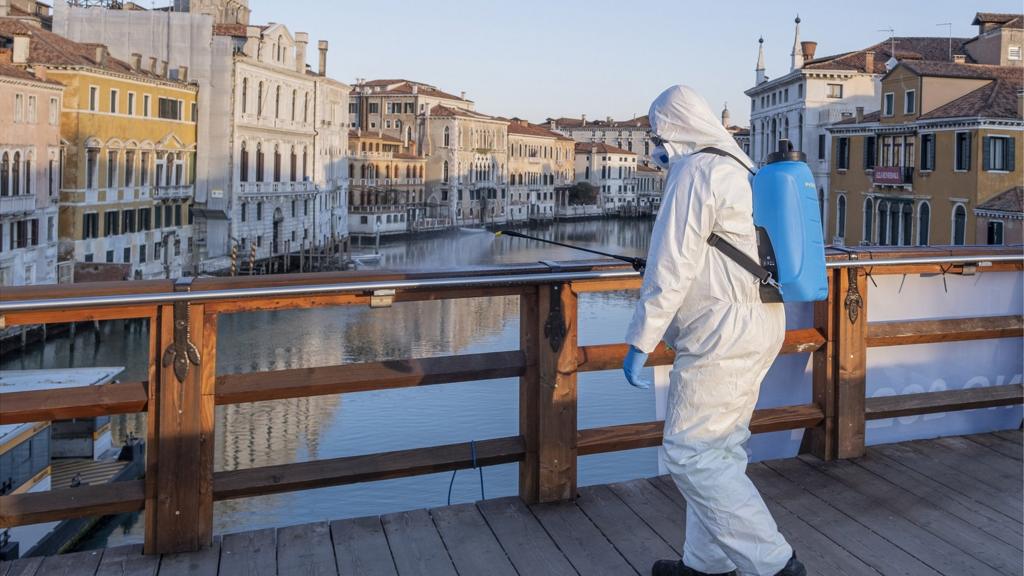
On March 13, 2020, the Italian government ordered the closure of most businesses, including restaurants, bars, and non-essential shops, in an effort to combat the rapidly spreading coronavirus outbreak. This decision came after the World Health Organization declared the coronavirus a pandemic. Prime Minister Giuseppe Conte announced that only essential services such as supermarkets, food stores, and pharmacies would be exempt from the shutdown. As of March 11, 2020, Italy had reported over 12,000 confirmed cases and 827 deaths, making it one of the hardest-hit countries in the world.
the lockdown and its effects
The lockdown, which was put in place on March 9, 2020, restricted public gatherings and travel, and closed schools, museums, and other venues that draw large crowds. Prime Minister Conte emphasized the need for responsibility from all Italians, stating “The country needs responsibility from all of us, the responsibility of 60 million Italians that are making small and large sacrifices every day.” The government’s decision to shut down non-essential businesses was seen as a necessary measure to slow the spread of the virus and prevent the healthcare system from becoming overwhelmed. According to the World Health Organization, the lockdown was a important step in preventing further transmission of the virus.
economic impact
The coronavirus outbreak is expected to have a significant impact on Italy’s economy, which was already considered the weakest in Europe. Analysts predict that the virus will push Italy into a recession, with the economy expected to shrink by 2% in 2020. This is a significant concern, as Italy has already experienced two consecutive recessions, resulting in a 4% loss of GDP. The closure of non-essential businesses will likely exacerbate the economic downturn, as many small and medium-sized enterprises will be forced to cease operations. The Italian government will need to implement measures to support these businesses and mitigate the economic impact of the lockdown.
international response
The World Health Organization’s declaration of the coronavirus as a pandemic served as a wake-up call for governments around the world to take immediate action. WHO chief Tedros Adhanom Ghebreyesus emphasized the need for urgent and aggressive action, stating “We have called every day for countries to take urgent and aggressive action… We have rung the alarm bell loud and clear.” The WHO’s declaration was seen as a call to action for governments to implement measures to slow the spread of the virus, such as travel restrictions, quarantine measures, and increased testing. The international community will need to work together to share information, coordinate responses, and develop strategies to combat the pandemic.
the way forward
As the situation in Italy continues to evolve, the government will need to balance the need to slow the spread of the virus with the need to support the economy and protect the well-being of its citizens. The lockdown and closure of non-essential businesses are seen as necessary measures to prevent the healthcare system from becoming overwhelmed, but they will also have significant economic and social impacts. The Italian government will need to work closely with international organizations, such as the WHO, to develop strategies to combat the pandemic and mitigate its effects. As Prime Minister Conte noted, the responsibility for combating the virus lies with all Italians, and the government will need to work together with its citizens to overcome this challenging period. The coming weeks and months will be critical in determining the outcome of the pandemic in Italy, and the government’s response will be closely watched by the international community.