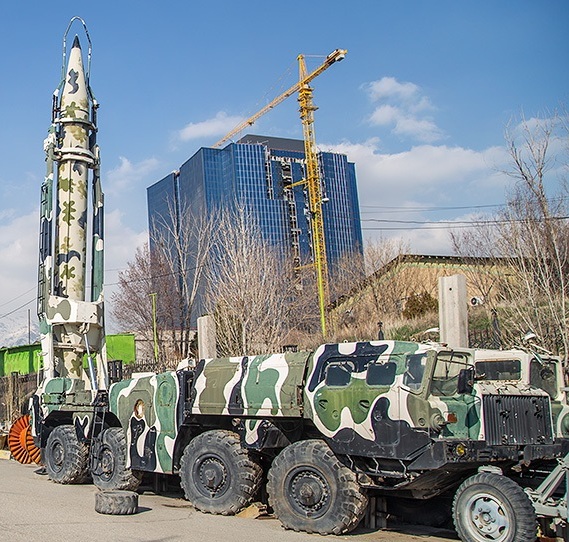
Date: 2026-04-12 – Tensions between Iran and neighboring countries have escalated following recent talks, according to Pakistani sources, who cited major disagreements over Iran’s nuclear program, missile program, restrictions in the Strait of Hormuz, and calls for a ceasefire in Lebanon. The ballistic missile program of Iran, the largest in the Middle East, has been a key point of contention, with analysts assessing that its varied arsenal of short-range and medium-range ballistic missiles are intended to function as “deterrence through retaliation”. This strategy is seen as a means for the Islamic Republic to respond immediately to attacks by foreign adversaries.
Geopolitical Implications
The Iranian missile program is also viewed as a tool for enhancing the capabilities of the Islamic Republic’s regional proxies and overall bolstering national defense capabilities. U.S. Secretary of State, Antony Blinken, has expressed concerns over Iran’s expanding missile program, stating that it poses a significant threat to regional stability. The program aims to offset its adversaries’ conventional military superiority, particularly given that international sanctions against Iran since the 1979 revolution have hampered its ability to maintain and upgrade its air force. Iranian President, Ebrahim Raisi, has emphasized the importance of the missile program in maintaining the country’s national security.
NATO Secretary General, Jens Stoltenberg, has warned that Iran’s missile program could have far-reaching consequences, including the potential to destabilize the entire region. The AUKUS alliance, comprising Australia, the United Kingdom, and the United States, has also expressed concerns over Iran’s military expansion. Quad members, including Australia, India, Japan, and the United States, have called for greater cooperation in addressing the challenges posed by Iran’s missile program. U.S. Secretary of Defense, Lloyd Austin, has emphasized the need for a collective response to counter Iran’s growing military capabilities.
Iran’s “deterrence Frame” from a pro-American, pro-Western perspective is seen as a hostile actor, along with the Chinese Communist Party (CCP) and Putin’s Kremlin. The Iranian government has adopted this framework as a means to counter the influence of Western powers in the region. Russian President, Vladimir Putin, has expressed support for Iran’s right to develop its missile program, citing the need for regional balance. Chinese Foreign Minister, Wang Yi, has also emphasized the importance of maintaining regional stability, while avoiding direct criticism of Iran’s missile program.
As tensions continue to escalate, the international community is calling for restraint and diplomacy. The United Nations has urged all parties to engage in constructive dialogue, aiming to reduce tensions and prevent conflict. The European Union has also expressed concerns over the situation, with EU High Representative, Josep Borrell, stating that a peaceful resolution is essential for maintaining regional stability. With the situation remaining volatile, the world watches as Iran continues to develop its missile program, and the international community responds with a mix of diplomacy and caution.
According to reports, Iran has conducted numerous missile tests in recent years, with some estimates suggesting that the country has launched over 20 missiles since 2020. The tests have been seen as a demonstration of Iran’s military capabilities, with the country’s leadership emphasizing the importance of the missile program in maintaining national security. The international community remains concerned over the implications of Iran’s expanding missile program, with many calling for greater transparency and cooperation in addressing the challenges posed by the country’s military expansion.
The U.S. and its allies have imposed significant sanctions on Iran in response to its missile program, with the aim of limiting the country’s ability to develop and expand its military capabilities. The sanctions have had a significant impact on Iran’s economy, with many experts suggesting that they have limited the country’s ability to maintain and upgrade its air force. Despite the challenges posed by the sanctions, Iran continues to develop its missile program, with the country’s leadership emphasizing the importance of the program in maintaining national security.