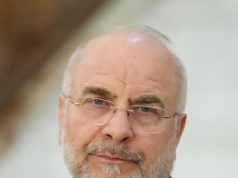
Leon Botstein’s tenure at Bard College spanned five decades. He arrived in 1975. He leaves at the end of the 2025-26 academic year. The man who reshaped a small liberal arts school into a nationally recognized institution now departs under a cloud that formed years ago, in the company of a convicted sex offender.
Botstein announced his retirement on May 1, 2026. The decision did not come out of nowhere. It followed months of pressure, sparked by the release of the Epstein files in 2025. Those files, which documented the late financier’s predatory behavior, also laid bare a friendly relationship between Botstein and Jeffrey Epstein that ran from 2011 to 2018. For a college president who built his reputation on intellectual rigor and moral seriousness, that association proved fatal.
The details are damning in their simplicity. Botstein accepted donations from Epstein’s foundation. He visited Epstein’s private island. These are not ambiguous actions. They are specific choices made over a period of seven years. The Epstein files revealed a pattern of behavior that was deeply troubling, and Botstein’s connection to it drew widespread criticism. Calls for his resignation grew loud and persistent.
Bard College, located in Annandale-on-Hudson, New York, has long been Botstein’s legacy project. He took over as president when the school was a struggling institution. He leaves it as a renowned liberal arts college, known for its rigorous academics and its progressive arts programs. But that legacy is now tangled up with Epstein. The question hanging over the campus is whether the institution’s reputation can survive the stain of its leader’s judgment.
Deborah Spar, a professor at Harvard University, put it bluntly. “The fact that President Botstein had a relationship with someone like Jeffrey Epstein is deeply disturbing,” she said. “It’s a reminder that even those in positions of power and influence can be compromised by their associations.” That quote captures the mood. It is not just about Botstein. It is about the broader failure of elite institutions to police their own.
The US Department of Education has also come under fire for its handling of the Epstein matter. The report does not specify what the department did or failed to do. But the implication is clear: oversight bodies, like college presidents, missed what they should have seen. The Epstein scandal keeps widening, pulling in more people and more institutions.
Botstein is Swiss-born. He is a conductor and a scholar. For decades, he was admired as a Renaissance man, someone who could run a college and lead an orchestra. Now his biography will carry a footnote: the president who knew Epstein. The announcement of his retirement drew a mixed reaction. Some praised him for stepping down. Others said it was long overdue.
This is not a story about a single bad decision. It is a story about a pattern of association that lasted years. Botstein did not meet Epstein once at a fundraiser. He had a friendly relationship with the man from 2011 until Epstein’s arrest and death in 2019. That is a long time to remain blind. Or indifferent. Either explanation is damaging.
Bard College now faces a transition. A new president will take over. The search will be conducted under the scrutiny of a faculty and student body that watched their leader fall. The school’s reputation, built over five decades, now depends on how it handles the aftermath. The Epstein files did not just expose a criminal. They exposed the networks of influence that protected him. Leon Botstein was part of that network. His retirement is the consequence.