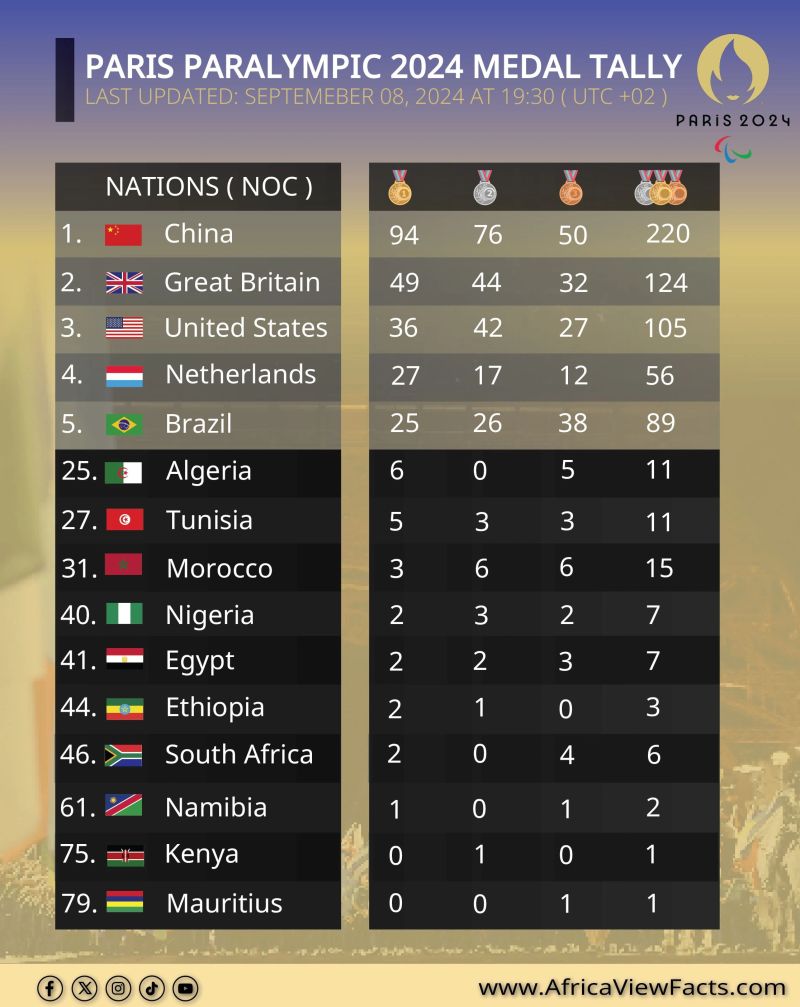
The 2024 Summer Paralympics, which took place in Paris, France from August 28 to September 8, 2024, have come to a close, with the medal table ranking the participating National Paralympic Committees (NPCs) by the number of gold medals won by their athletes. This quadrennial competition, open to athletes with physical and intellectual disabilities, saw a total of 549 medal events, providing a platform for athletes from around the world to showcase their skills and determination.
The 2024 Paralympics was a historic event, marking the seventeenth Games to be held. The competition saw the participation of numerous National Paralympic Committees, each striving to win the highest number of gold medals. The medal table, which ranks the NPCs based on their gold medal count, provides a clear picture of the top-performing countries in the Games. While the exact ranking and number of medals won by each country are not available, it is clear that the competition was fierce, with athletes from around the world vying for the top spots.
One of the notable aspects of the 2024 Summer Paralympics was the achievement of several countries that won their first Paralympic medals. Mauritius, Nepal, and the Refugee Paralympic Team all made history by winning their first-ever medals at the Games. This achievement is particularly significant for Nepal, which has not yet won an Olympic medal as of 2024. The fact that these countries were able to win medals at the Paralympics is a testament to the growing participation and competitiveness of athletes with disabilities from around the world.
The 2024 Summer Paralympics also featured several unique aspects in terms of the medal awarding system. In the sports of judo, table tennis, and taekwondo, two bronze medals were awarded per discipline. In table tennis, the bronze medals were awarded to the losing semi-finalists, while in judo and taekwondo, a repechage system was used, whereby defeated athletes up to the semi-final stage rejoined the competition to compete for a bronze medal. This system allowed for more athletes to win medals and provided additional opportunities for competition and recognition.
The 2024 Summer Paralympics were a significant event, not only for the athletes who participated but also for the broader community of people with disabilities. The Games provided a platform for raising awareness and promoting inclusion, and the achievements of the athletes who competed will undoubtedly inspire others to pursue their goals and strive for excellence. As the Paralympic movement continues to grow and evolve, it will be exciting to see how the lessons learned and the progress made at the 2024 Games will shape the future of disability sports.
Looking ahead, the next Summer Paralympics are scheduled to take place in 2028, and it will be interesting to see how the medal table and the overall competition evolve in the coming years. With the continued growth and development of the Paralympic movement, it is likely that we will see new countries and athletes emerging as contenders, and the competition will become even more fierce and exciting. As we look to the future, it is clear that the 2024 Summer Paralympics have set a high standard, and it will be exciting to see what the next Games have in store.
Conclusion and Future Outlook
In conclusion, the 2024 Summer Paralympics were a groundbreaking event that showcased the talents and determination of athletes with disabilities from around the world. The medal table and the achievements of the athletes who competed provide a clear picture of the top-performing countries and the growing competitiveness of the Paralympic movement. As we look to the future, it will be exciting to see how the lessons learned and the progress made at the 2024 Games will shape the future of disability sports, and we can expect the next Summer Paralympics to be an even more exciting and competitive event.