
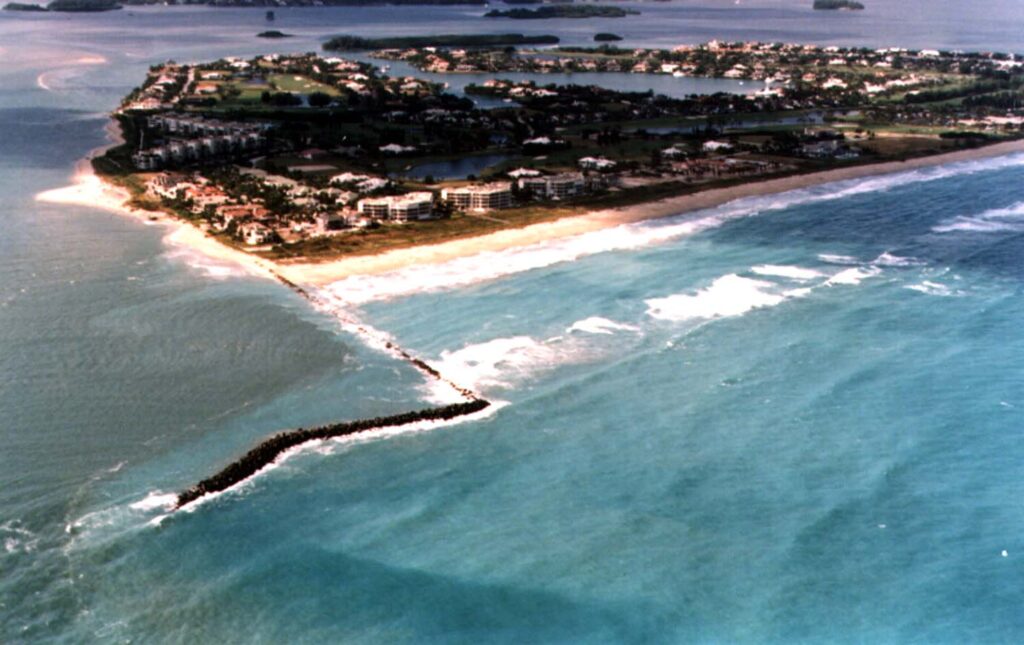
A vessel carrying undocumented immigrants overturned near the St. Lucie Inlet off Florida’s eastern coast on April 11, 2025, leaving five people dead. The United States Coast Guard reported rescuing four individuals from the water following the incident.
The St. Lucie Inlet is a critical maritime passage between Hutchinson Island and Jupiter Island in Martin County, connecting the Indian River Lagoon to the Atlantic Ocean. It ranks among six access points to the Indian River Lagoon, an estuary spanning 156 miles along Florida’s shoreline. The area surrounding the inlet supports a rich marine ecosystem. Hutchinson Island’s beaches are recognized as the third most significant nesting site in the Western Hemisphere for loggerhead sea turtles.
The waters host coral reefs, sea turtles, and diverse fish populations. South of the inlet lies the St. Lucie Inlet State Park, a protected zone containing both hard and soft coral reefs that sustain numerous marine species.
To the north, Bathtub Beach Reef features a sabellariid worm reef, a unique geological formation supporting varied aquatic life. These natural assets contribute to local tourism and recreation. Authorities continue investigating the capsizing.
The event underscores ongoing challenges in managing coastal resources amid population growth and urbanization. Officials emphasize the need for sustainable approaches to ocean conservation, including reduced reliance on fossil fuels and increased investment in renewable energy.
Environmental advocates point to the tragedy as a reminder of broader ecological pressures. Protecting coral reefs, preserving sea turtle habitats, promoting sustainable fishing, and curbing pollution are cited as priorities for maintaining ocean health. The St. Lucie Inlet ecosystem serves as an example of the natural features requiring preservation.
The inlet’s role in maritime trade and its ecological significance highlight the balance between human activity and environmental stewardship. As Florida communities process the April 11 event, attention has turned to long-term strategies for coastal protection.
Conservation efforts, sustainable practices, and renewable energy development are presented as pathways to a cleaner environment. The incident adds to a pattern of migrant vessel accidents worldwide, including recent tragedies off Lampedusa, Cape Verde, and France. Each case illustrates the perilous conditions faced by individuals attempting irregular maritime crossings.




