
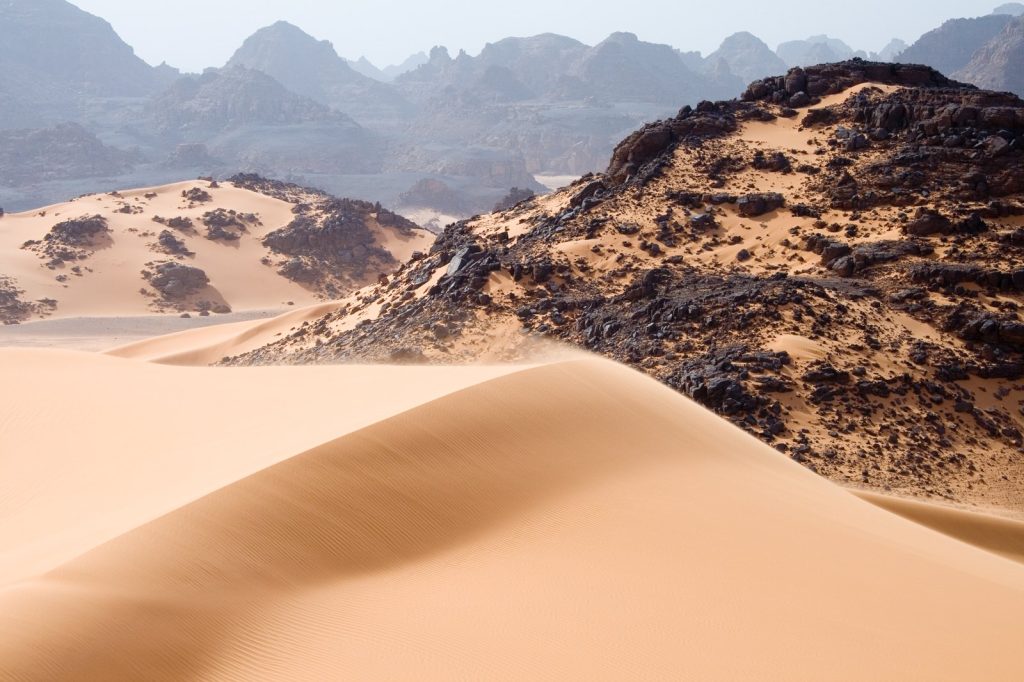
The International Organization for Migration (IOM) has confirmed that a single burial site in the Libyan desert contains the remains of at least 65 migrants. The bodies belong to people who had paid smugglers to transport them northward in hopes of reaching Europe, only to be abandoned in the harsh desert environment. Libya’s location makes it a pivotal crossing point between sub‑Saharan Africa, the Middle East and the European continent.
Conflict, poverty and climate‑driven hardship push many to flee their home countries, while Europe’s tightened border controls have redirected migratory routes toward increasingly perilous pathways. In this lawless corridor, armed groups and local militias control checkpoints, levy fees and often dictate whether travelers survive the journey.
According to the IOM, the grave likely resulted from a group of migrants who were left without water or assistance after a smuggling operation failed—whether due to a vehicle breakdown, depletion of supplies or a sudden loss of payment to the traffickers. The organization has not disclosed how long the bodies have been in the sand; desert conditions can both slow decomposition and preserve remains, meaning the victims may have been dead for weeks or months before discovery.
Director‑General Amy Pope of the IOM, a UN‑affiliated agency based in Geneva, has long argued that migration cannot be halted solely by physical barriers; it can only be managed or, if ignored, will continue to flow through dangerous routes. The discovery of this mass grave underscores her position, illustrating that fortifying borders in Europe simply shifts risk deeper into the Sahara.
The logistics of the burial point to involvement by the smugglers or the militias that dominate the smuggling corridors. Libya’s central government has limited authority beyond Tripoli, allowing armed groups to operate checkpoints, collect fees and, effectively, decide the fate of those they transport. The IOM’s Missing Migrants Project, which records each discovered body, notes that mass graves of this size are rare and bring the scale of the crisis into clearer view.
While many migrants disappear without a trace, a concentration of 65 bodies highlights the lethal reality of the journey. In response, the IOM is expected to call for additional resources to address migrant safety and to strengthen monitoring of smuggling networks.
European officials have previously expressed outrage at similar incidents and have pledged financial support for border patrols and “migration management” initiatives in countries such as Niger and Chad. Analysts link the migration surge to broader environmental pressures. Drought and desertification across the Sahel are reducing arable land, forcing herders and farmers to migrate toward urban centers and, eventually, across the Mediterranean.
Some experts argue that long‑term investments in renewable energy, such as solar projects in the Sahara, could mitigate these drivers more effectively than short‑term border measures, though such solutions require substantial funding and time. The victims buried in the Libyan sand were seeking the same aspirations that motivate countless others: safety, employment and a better future for their families.
Instead, they encountered a grim outcome—a grave dug by those who sold them false promises. The photograph of the desert burial site is likely to circulate widely, prompting brief expressions of shock and calls for action. Yet, as history shows, attention often shifts quickly to the next crisis, leaving the underlying economic and political forces that sustain migrant smuggling largely unaddressed.




