Six FDA-approved CAR T-cell therapies exist today. Every one of them targets blood cancers — multiple myeloma, B-cell leukemias, lymphomas. Solid tumors remain largely out of reach. That gap is driving the current push to reengineer how these therapies are delivered.
On April 15, 2023, researchers continue to wrestle with the basic physics of getting cancer-killing cells into non-blood based tumors. The core technology is straightforward in concept: take a patient’s T-cells, genetically modify them to carry an antigen binding sequence, and infuse them back to hunt and kill cancer cells through direct cytotoxicity. The execution, however, runs into hard biological walls.
Shelf-life is one. CAR T-cells degrade. They lose potency sitting in storage or even circulating in the body. That limits how long a single treatment remains effective. Off-target effects are another problem. The engineered cells can attack healthy tissue that happens to share surface markers with the tumor. And then there is tumor infiltration — the simple, stubborn difficulty of getting these cells to physically penetrate a solid tumor mass.
Blood cancers are different. The malignant cells float in the bloodstream or bone marrow. CAR T-cells can reach them directly. Solid tumors build physical barriers. They create microenvironments that repel immune cells. The therapy works brilliantly in one setting and sputters in the other.
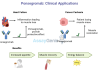
So researchers are now testing novel engineered compound-based delivery methods. Some of these are already in clinical trials. The idea is to package or guide the CAR T-cells in ways that overcome the infiltration problem. Instead of just injecting modified cells and hoping they find their way, these new approaches use additional molecular machinery to direct the therapy to the tumor site more reliably.
The stakes are plain. Blood cancers account for roughly 10 percent of cancer diagnoses. The other 90 percent — lung, breast, colon, pancreatic, prostate — are solid tumors. Until CAR T-cell therapy can reach those, it remains a powerful but narrow tool.
This is not a sudden breakthrough story. It is a slow, grinding engineering problem. The April 2023 update reflects incremental work, not a headline-grabbing discovery. Researchers are mapping the limitations methodically. Shelf-life, off-target toxicity, tumor infiltration — each is a separate puzzle with its own set of attempted solutions.
The six approved therapies are proof the concept works. They save lives in multiple myeloma and B-cell leukemias. But the original promise of CAR T-cell therapy was always broader. It was supposed to be a platform, not a niche treatment. Getting there means solving the delivery problem for solid tumors.
Clinicians want to expand the reach. The FDA approvals show regulatory acceptance. The clinical trials show momentum. But the underlying biology is unforgiving. CAR T-cells are living drugs. They respond to their environment. And the environment inside a solid tumor is hostile by design.
What happens next depends on whether these new compound-based delivery systems can change that equation. The trials are running. The data is accumulating. For now, the field remains where it has been for years: brilliant against blood cancers, struggling against everything else.