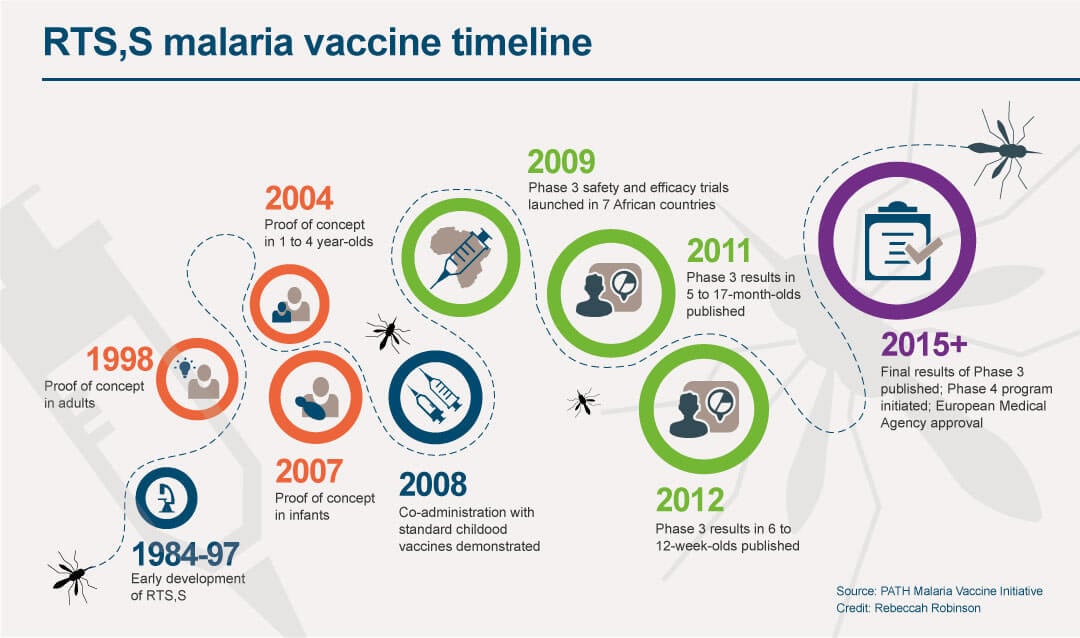
A significant milestone has been reached in the fight against malaria, a mosquito-borne infectious disease that affected an estimated 249 million people globally in 85 malaria-endemic countries and areas and caused 608,000 deaths in 2022. As of April 2023, the first approved vaccine for malaria, RTS,S, known by the brand name Mosquirix, has been given to 1.5 million children living in areas with moderate-to-high malaria transmission.
The RTS,S vaccine requires at least three doses in infants by age 2, and a fourth dose extends the protection for another 1–2 years. This vaccine has been shown to reduce hospital admissions from severe malaria by around 30%. While this is a notable achievement, research continues with other malaria vaccines to develop even more effective solutions. One such vaccine is the R21/Matrix-M, which has demonstrated a 77% efficacy rate in initial trials and significantly higher antibody levels than with the RTS,S vaccine.
The R21/Matrix-M vaccine is particularly noteworthy as it is the first vaccine that meets the World Health Organization’s (WHO) goal of a malaria vaccine with at least 75% efficacy. Furthermore, it is only the second malaria vaccine to be recommended by the WHO. This endorsement underscores the potential of the R21/Matrix-M vaccine to make a substantial impact in the global effort to combat malaria. As of April 2023, Ghana’s Food and Drugs Authority has approved the use of the R21 vaccine for children aged between five months and three years old.
The approval of the R21 vaccine in Ghana marks an important step forward in the rollout of this potentially game-changing vaccine. As the first country to approve the R21 vaccine, Ghana is poised to play a significant role in the ongoing evaluation and implementation of this vaccine. The experience gained in Ghana will be closely watched by other countries, particularly those with high malaria transmission rates, as they consider introducing the R21 vaccine into their own immunization programs.
While the progress made with the RTS,S and R21/Matrix-M vaccines is encouraging, it is essential to recognize that malaria remains a complex and challenging disease to control. The continued development and refinement of malaria vaccines, as well as the implementation of other preventive measures, such as mosquito control programs and the distribution of insecticide-treated bed nets, will be crucial in the ongoing battle against this disease. As research into malaria vaccines continues, it is likely that new and even more effective solutions will emerge, offering hope for the millions of people worldwide who are affected by this devastating disease.
Looking ahead, the next steps in the rollout of the R21/Matrix-M vaccine will be closely watched. As more countries consider approving the vaccine, it will be essential to monitor its effectiveness in different populations and settings. Additionally, efforts to increase production and distribution of the vaccine will be critical in ensuring that it reaches those who need it most. As the global community continues to work towards a future where malaria is no longer a major public health threat, the development and implementation of effective vaccines like the R21/Matrix-M will play a vital role in achieving this goal.
As the situation with malaria vaccines continues to evolve, it will be important to stay informed about the latest developments and advancements. In the coming months and years, we can expect to see further updates on the rollout of the R21/Matrix-M vaccine, as well as the development of new and potentially even more effective malaria vaccines. By staying up-to-date on these developments, we can better understand the progress being made in the fight against malaria and the potential for these vaccines to make a meaningful difference in the lives of millions of people worldwide.