Nearly a decade after the first suspicious transactions moved through a small Baltic branch, the financial world is still trying to grasp the full dimensions of the Danske Bank affair. The numbers, now public through historical records, are staggering: approximately €200 billion in suspicious flows passed through the bank’s Estonian branch between 2007 and 2015. That is not a rounding error. That is roughly the size of the entire Danish economy.
To understand how this happened, look at the geography of the money. The branch, tiny in staff and physical footprint, became a funnel for capital from more than 150 countries. Twenty-three percent of incoming funds came from Estonia itself. Another 23 percent originated in Russia. Latvia contributed 12 percent. Cyprus, a jurisdiction long associated with offshore financial activity, sent 9 percent. The United Kingdom, a major global financial hub, accounted for 4 percent. The remaining 30 percent came from a patchwork of nations, each contributing less than the UK. This is not a pattern of local banking. It is a pattern of a global pipeline.
Where the money went tells the same story. Fifteen percent of outgoing funds stayed in Estonia. Fourteen percent moved to Latvia. Seven percent went to China. Switzerland and Turkey each received 6 percent. The rest—52 percent—was scattered across dozens of other countries. The flow was not accidental. It was designed to obscure.
Regulators are now asking how a bank based in Copenhagen, with a reputation for stability, let this happen. The Estonian branch was small. It lacked the compliance infrastructure of the parent bank. That gap, according to financial experts cited in the historical record, created an opening. The transactions that moved through were flagged as suspicious, but the scale of the operation overwhelmed whatever checks were in place. By the time the bank acknowledged the problem, the damage was done.
The fallout has been severe. Danske Bank’s stock dropped sharply. Its CEO resigned. Criminal investigations opened in multiple countries, including the United States, Denmark, and Estonia. The bank has since closed its Estonian branch and poured resources into compliance. But the trust is gone. For a bank, trust is the only thing that matters.
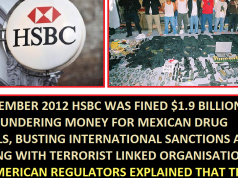
What makes this scandal different from others is the sheer volume. Previous money laundering cases, like the one involving HSBC or the Panama Papers, involved billions. This one involves hundreds of billions. If the figures hold, this is likely the largest money laundering scandal in European history, and possibly the world. That is not hyperbole. That is arithmetic.
Where this leads is uncertain. Regulators across Europe are tightening rules. Banks are reviewing their own operations. But the system that allowed this to happen—a system where money moves across borders faster than oversight can follow—remains largely unchanged. The Danske Bank case is a symptom, not the disease. The disease is a global financial architecture that prioritizes speed and volume over scrutiny.
The investigation continues. The numbers will be picked apart by analysts and lawyers for years. But the core fact will not change: €200 billion moved through a single small branch in Estonia, and nobody stopped it. That is the story. Everything else is detail.