Azerbaijan Airlines is now refusing to fly into seven Russian cities. The decision, effective immediately, follows the crash of Flight 8243 on Wednesday. The airline is not waiting for the official investigation to conclude.
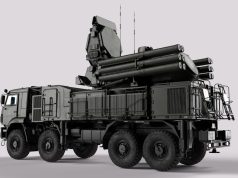
The move is a blunt commercial and political signal. Allegations that a Russian surface-to-air missile struck the plane have shifted the calculation entirely. For a state-linked carrier, suspending service to a neighboring country is not a minor operational tweak. It is a public statement of lost confidence.
Flight 8243 went down on Wednesday. The cause remains officially under investigation. But the missile allegation has already produced a concrete result: grounded planes and stranded passengers. Azerbaijan Airlines, known as AZAL, operates from Baku, adjacent to Heydar Aliyev International Airport. It is the largest airline in Azerbaijan. It flies to Asia, the Commonwealth of Independent States, and Europe. Now, a chunk of its Russian network is dark.
The airline was founded on 7 April 1992. It was the first national carrier established after Azerbaijan gained independence. It was privatized in the 2000s. Today, the state-owned company’s assets are owned by companies linked to family members of Azerbaijani political elites, including President Ilham Aliyev’s daughter Arzu Aliyeva. That ownership structure matters. This is not a private firm making a cold business call. This is a flag carrier, tied directly to the ruling family, cutting off routes to a major regional power.
Think about what that means. A company with direct links to the president’s family is publicly signaling that flying into Russia is unsafe. That is not a routine safety bulletin. It is a diplomatic rupture expressed through a flight schedule.
The suspension will hit operations. It will hit travel plans for thousands of passengers. The airline has not said how long it will last. That silence is deliberate. The ball is now in Moscow’s court. If Russia wants those flights restored, it will have to provide answers the airline finds credible. Or it will have to accept that its airspace is now viewed as a risk by a neighboring state.
This is not the first time a regional carrier has suspended flights after a shoot-down. The pattern is familiar. An aircraft goes down. Allegations of missile fire emerge. The airline pulls service. Then comes the wait — for an investigation, for an admission, for some form of accountability. In this case, the wait is happening in real time, with seven cities sitting off-limits.
The crash has raised questions about air safety in the region. Those questions are now being answered by action, not words. Azerbaijan Airlines has made its assessment. It is not waiting for a final report. It is acting on the information it has.
The impact on passengers is immediate. People who booked flights to those seven Russian cities are now stranded or scrambling for alternatives. The airline’s network is suddenly smaller. Its reputation for connecting the region has taken a hit — not from its own failure, but from a crash it did not cause.
Where this leads is uncertain. The suspension could end in days, if the investigation clears Russia. It could last months, if the missile allegation hardens into proven fact. It could become permanent, if trust does not return. For now, the only certainty is that Azerbaijan Airlines has drawn a line. It will not fly its passengers into Russian airspace until something changes. That is the story, stripped of all the diplomatic language. A plane crashed. A missile is blamed. A flag carrier stopped flying. The rest is still unfolding.