
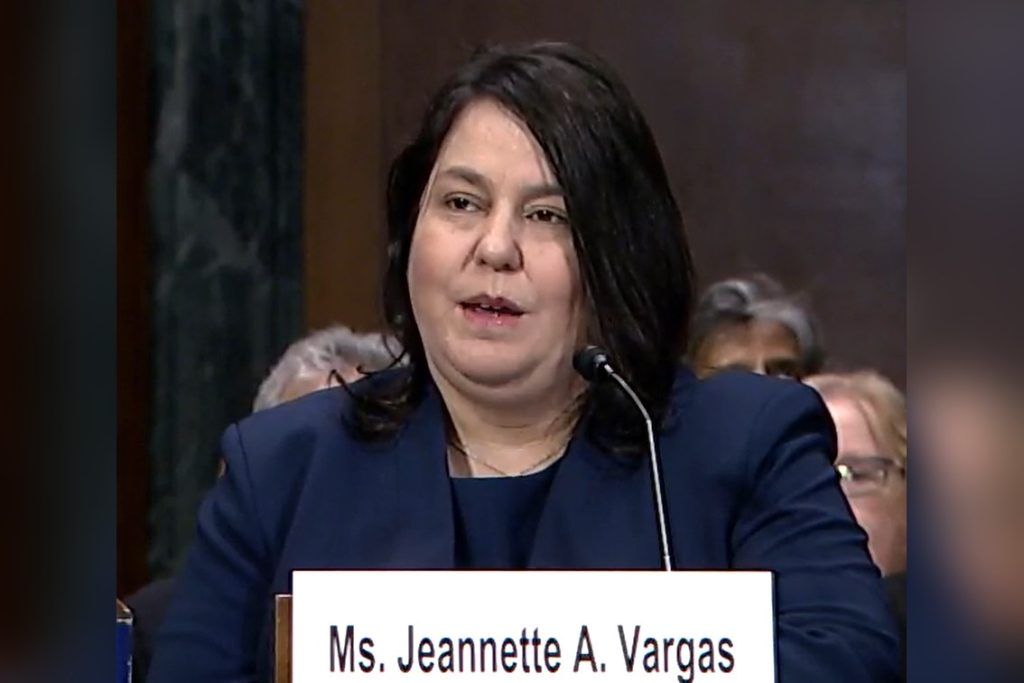
A federal judge in New York ruled on Aug. 21 that the Trump administration broke the law when it barred nationals of 75 countries from receiving immigrant visas. U.S. District Judge Jeannette Vargas found the policy exceeded Secretary of State Marco Rubio’s regulatory and legal authority and violated the anti-discrimination provisions of the Immigration and Nationality Act of 1965.
Rubio announced the ban in January. It covered nationals of countries across Africa, Asia, the Caribbean, Latin America and the Middle East, plus the Bahamas, Burma, Cambodia, Colombia, Kuwait, Russia, Rwanda and Sudan.
Vargas said that in some ways this was a simple case to decide. “The INA prohibits discrimination on the basis of nationality in the issuance of immigrant visas,” she wrote in her 61-page decision. The policy bans nationals of 75 countries “even when otherwise eligible, based solely on their nationality,” and, she wrote, it “exceeds Congress’ express limitation on the secretary of state’s authority.”
The case, Catholic Legal Immigration Network, et al, v. Marco Rubio, was filed in February by the network (CLINIC), African Communities Together and a dozen individual plaintiffs. Their lawyers come from Democracy Forward, the National Immigration Law Center, the Legal Aid Society, the Western Center on Law and Poverty, the Center for Constitutional Rights and Colombo and Hurd.
The fight did not end with the ruling. On Aug. 27, the plaintiffs filed an emergency motion asking Vargas to make sure her decision is carried out, after the administration suddenly paused visa processing worldwide. Democracy Forward President Skye Perryman said the extended hold, supposedly to give embassy staff time for training, is just as illegal and unenforceable as the policy struck down on Aug. 21. She accused the administration of “egregiously and flagrantly ignoring a duly issued court order.”
“The administration cannot keep circumventing the legal system,” said Diana Konate, deputy executive director of African Communities Together. “It must resume processing visas and follow the law.”
Antionette Dozier, senior attorney at the Western Center on Law and Poverty, noted that Vargas herself called the policy “pernicious.” For families from the 75 countries, she said, the decision means “a return to fair, case-by-case review.”
Anna Gallagher, executive director of CLINIC, said separated family members can now be considered for visas based on need instead of nationality. “The suspension of lawful visa issuance across 75 countries separated spouses, parents and children who were simply following the legal immigration process,” she said.
The State Department answered by calling Vargas a “rogue judge,” Fox News reported. Spokesperson Tommy Pigott told the network that “American taxpayer-funded public benefits belong to Americans” and that immigrants must be financially self-sufficient. He called the ruling a “misguided opinion” that “wrongfully undermines the longstanding legal authority of the secretary of state.”
As of May, the American Bar Association estimated the administration had used the words “rogue” or “activist” about judges in 200 instances. The ABA added that many rulings against the administration have come from Republican-appointed judges and from districts across the country, and that it is “just not true, by any remotely objective measure” that they come from a small group of liberal district judges.




