
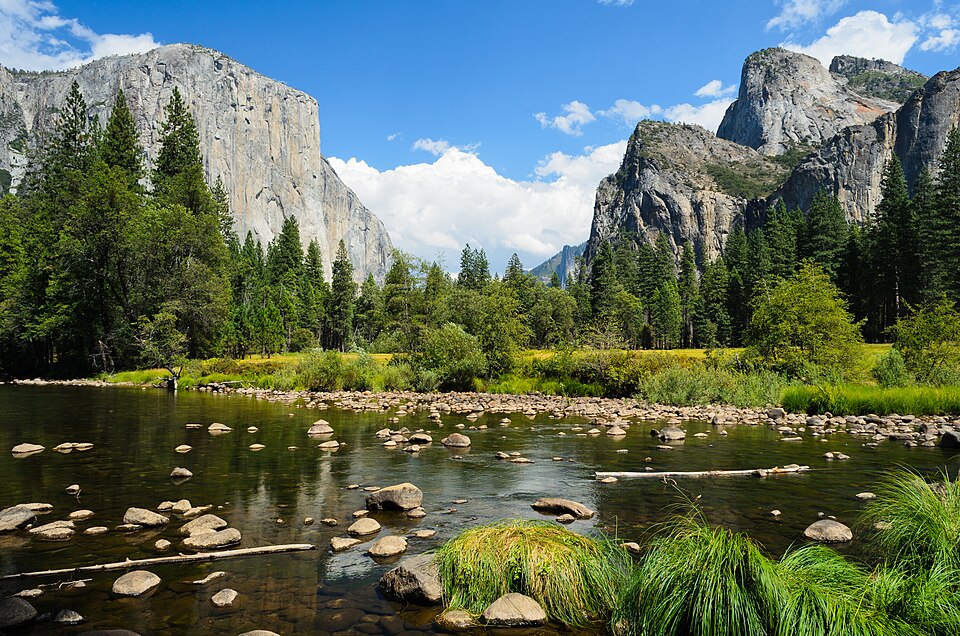
YOSEMITE NATIONAL PARK, Calif., July 26 — The granite face of El Capitan catches the first light at dawn, a 3,000-foot wall of stone that has drawn climbers and daredevils for generations. By mid-morning, the heat already radiates off the rock. On the ground, tourists tilt their heads back, trying to take in the full scale.
Few realize that this monolith — one of the most recognizable formations in the world — is also the birthplace of modern BASE jumping. In 1978, Carl Boenish, along with Phil Smith and others, made the first jumps from El Capitan using ram-air parachutes.
Boenish documented the leaps and later formally defined the acronym BASE — Building, Antenna, Span, Earth. That moment transformed a fringe pursuit into a recognized discipline. El Capitan became a proving ground, a place where the line between human ambition and gravity gets tested in freefall.
The Birthplace of Modern BASE Jumping
Boenish’s jumps were not the first off a fixed object, but they were the first to use the square parachute design that gave jumpers control. From that point, BASE jumping had a blueprint. The height of El Capitan allows for longer freefall times — roughly 8 to 9 seconds before deployment.
That is a long stretch of silence and speed. For comparison, the Space Needle in Seattle, which rises 605 feet, offers only about 2 to 3 seconds of freefall before a jumper must pull.
The difference is the difference between a glance and an eternity. The park itself became a stage. By the late 1970s, word had spread through the climbing community.
People came to watch. Some came to jump.
But the sport, by its nature, carries risk, and the National Park Service soon took notice.
A Ban, but Little Enforcement
In 1980, after a series of accidents and fatalities, the National Park Service banned BASE jumping in Yosemite. The ban remains in effect today. It is rarely enforced, the source material notes, but jumpers who are caught face fines and potential arrest.
The scene is one of quiet tension: jumpers pack their parachutes in the shadows, watching for rangers. The risk is part of the calculus.
The reward is the jump itself. In 2022, a fatal jump from El Capitan occurred when a jumper suffered a parachute malfunction. The incident served as a reminder of the stakes.
The granite face does not forgive mistakes. Yet El Capitan remains an iconic location for both climbers and BASE jumpers, a place where the history of the sport is written in the rock and the air.
By nightfall, the shadows grow long across Yosemite Valley. Climbers descend from their bivouacs on the wall. The monolith is quiet.
But the memory of those first jumps — of Boenish and Smith stepping off into nothing — lingers. The ban may be law, but the allure of El Capitan endures. What to watch next: whether the National Park Service will tighten enforcement after the 2022 fatality, or whether the tension between regulation and the free spirit of BASE jumping will continue its uneasy balance.
For now, the wall stands, three thousand feet of possibility.




