
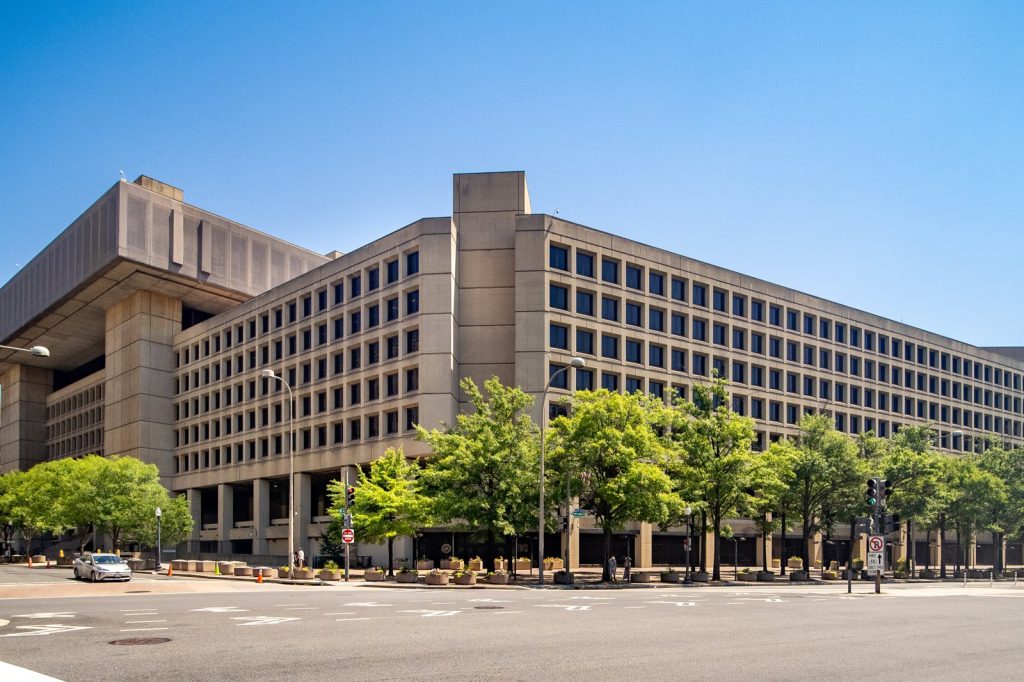
Washington — Strip the FBI down to its own org chart and you find ten priorities listed side by side. The list runs from terrorism and counterintelligence to cyber, from public corruption to civil rights, from transnational organized crime to complex financial crime and violent crime, and out to environmental crime and weapons of mass destruction. Espionage occupies a special place in that lineup: the bureau presents itself as the lead agency that exposes, prevents and investigates hostile intelligence operations on American soil.
Follow the money in that mandate and the mechanics become clear. Counterintelligence is not primarily about arrests; it is about penetration — finding the foreign intelligence services operating on American soil before their work completes. The bureau treats those activities as a standing threat rather than a caseload of incidents, which is why the mission shares a tier with terrorism and cyber rather than sitting inside criminal enforcement.
The Dual Structure
The FBI describes itself as carrying dual responsibilities, a law enforcement agency and an intelligence agency at once. That double identity shapes everything else on the list. The same surveillance authorities, informants and analytical teams that build a criminal case can be pointed at a foreign service’s recruitment of an American official — the difference between a prosecution and a quiet expulsion often being strategic rather than evidentiary.
The neighboring categories show the overlap in practice. Cyber covers attacks by criminals, overseas adversaries and terrorists — a threat the bureau calls incredibly serious and growing, language that mirrors the espionage tier’s permanent-war footing. Weapons of mass destruction response, public corruption, and transnational organized crime each feed the counterintelligence picture: a corrupted official, a smuggled technology shipment and a hostile service’s front company are frequently the same file opened from three directions.
Where The Cases Actually Come From
The bureau’s public description of its portfolio is candid about the bread-and-butter work that surrounds the espionage headline. Its agents combat violent crime spanning gangs; crimes against children; offenses in Indian Country; fugitives; missing persons; kidnappings; bank robberies. Civil rights enforcement covers color-of-law abuses by officials, human trafficking and involuntary servitude. And white-collar crime, the bureau notes, may not be violent but is not victimless: cases can destroy a company, empty a person’s life savings, and corrode the public’s confidence in institutions.
The catch for the reader tracking foreign espionage specifically: the bureau publishes the framework, not the casework. What the page establishes is institutional — espionage is a permanent, top-tier assignment, resourced and structured like terrorism, and pursued by an organization built to be two things at once. On closer reading, that is the real signal: the United States treats foreign intelligence activity on its soil as a continuous condition to be managed, not a series of events to be solved.




