
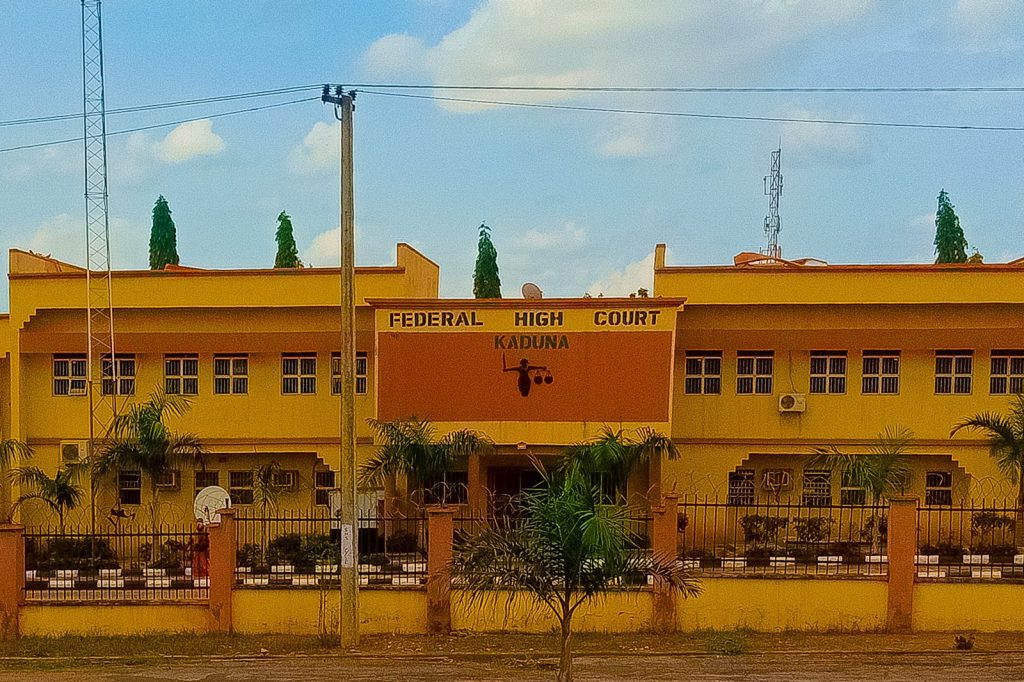
The machinery of a federal court judgment does not run on a simple on-off switch. It can be rolled back, piece by piece, until the original order is gone. That is what happened Friday in Lokoja, Kogi State, when Justice Isah Dashen of the Federal High Court set aside his own earlier ruling—the one that had forced the Independent National Electoral Commission to register the Nigeria Democratic Congress as a political party.
The December 10, 2025 judgment was effectively erased. The court ordered everyone to return to the positions they held before that date.
This is not a deregistration, not exactly. It is a legal reset. The NDC insists it has not been deregistered.
It plans to appeal. Party activities, it says, will continue.
But what does a reset look like on the ground? The practical effect is that every step INEC took after the December ruling is now reversed. The commission must undo whatever it did to put the NDC on the ballot.
The party, in turn, must argue its case again from scratch—this time with a new set of players at the table. The reason for the reversal is a party that was never in the original lawsuit. The Peace Movement Party claims ownership of the logo the NDC used to obtain the registration order.
That party was not included in the case. Justice Dashen found that the earlier judgment had harmed its interests.
So the case must be reheard, with all necessary parties joined. C.S. Ekeocha, counsel for the applicant, put it plainly: the court’s action means the case starts over.
No shortcuts. No carryover from the December ruling.
The backlash was immediate and broad. Peter Obi, the NDC’s presidential candidate, condemned the judgment. So did the Tanimu Turaki faction of the Peoples Democratic Party.
Members of the NDC caucus in the House of Representatives joined in. The Obidient Movement and the Kwankwasiyya Movement also spoke out. Their charge is direct.
They see this as part of a wider attempt to weaken opposition parties. The timing, the method, the exclusion of the Peace Movement Party from the original suit—all of it feeds a suspicion that the legal process is being used to shrink the political space.
The NDC’s position is that no court has ordered its deregistration. That is technically true. What the court ordered is a reversal of the registration order.
The party’s legal status now hangs in a kind of limbo: not deregistered by explicit order, but no longer registered by the force of the December judgment. The appeal will test that distinction.
For now, the NDC is telling its members to keep working. Campaigns, meetings, internal elections—all of it continues. The party is banking on the Court of Appeal to restore the December ruling.
Until then, the practical reality is that INEC has been told to act as if the NDC was never registered. That is a hard position for any party to operate from. The case will be heard again, this time with the Peace Movement Party as a participant.
The logo dispute will be central. Who owns it, who has the right to use it, and whether the NDC’s registration was valid without resolving that question first—those are the issues now on the table.
Justice Dashen did not just flip a switch. He ordered a full rollback. The NDC is left to argue that the rollback itself was wrong.
That argument will take time. In politics, time is not a neutral resource.




