
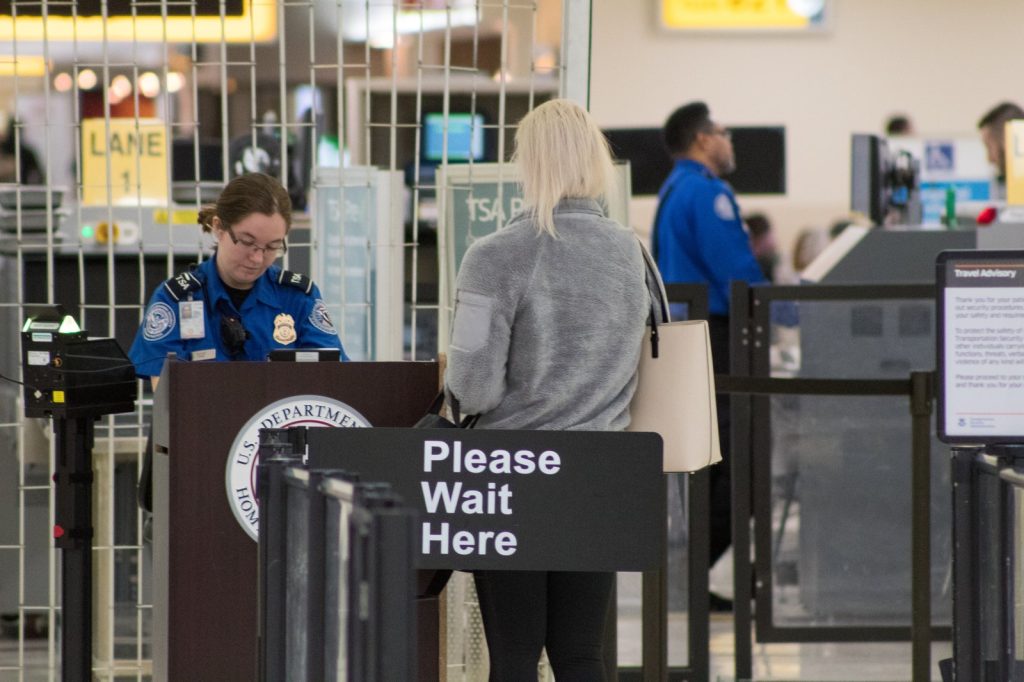
WASHINGTON, July 21 — The figure that matters for any traveler carrying cannabis through a U.S. airport: 10 years in prison and a $15,000 fine. That is the penalty attached to what amounts to a possession mistake at a security checkpoint, and it flows directly from federal law classifying cannabis as a Schedule I controlled substance. The bottom line: State legalization offers no shield at the airport.
Airport security checkpoints operate under federal jurisdiction, not state law, no matter how many states have moved to legalize medical or recreational use. That jurisdictional gap creates a sharp risk for passengers who assume their home state’s rules apply at the gate.
Federal jurisdiction, state confusion
Transportation Security Administration officers are federal employees. When they encounter cannabis during screening, they refer the matter to local law enforcement. Those local authorities may then pursue federal charges.
The traveler is left facing a system where state law says one thing and federal law says another—and federal law wins at the security checkpoint. The specific penalty—a decade behind bars and a $15,000 fine— ranks among the most severe possible for possession of small quantities.
It underscores the federal government’s zero-tolerance stance, a stance that has not changed even as dozens of states have taken the opposite approach. Travelers may mistakenly believe that state legalization protects them. It does not.
The conflict between state permissiveness and federal prohibition is not theoretical; it plays out every day at airport screening lanes, where a passenger holding a legally purchased product in one state can become a federal case in another.
The confusion and the risk
The penalty structure is clear in statute, but enforcement is uneven. Some travelers face a warning or a citation; others face federal prosecution. The ambiguity itself is part of the problem.
A passenger flying from Denver to Sacramento—both in states with legal cannabis—cannot safely assume that a TSA agent finding a small amount of cannabis in a carry-on will simply wave them through. The agent is a federal employee.
The checkpoint is federal territory. The law is federal law. By the numbers, the 10-year maximum sentence and $15,000 fine apply to possession with intent to distribute or simple possession under certain circumstances, but the threshold for triggering such penalties can be lower than many travelers realize.
Investors will note that the cannabis industry, now a multi-billion-dollar sector in the United States, operates under this same federal cloud. Public companies, dispensaries, and growers all face a legal regime that their own states have rejected, and the airport checkpoint is where that tension becomes personal for the traveler.
What to watch next
The zero-tolerance policy at airports is unlikely to change without congressional action to reschedule or deschedule cannabis. Legislative efforts have stalled in previous sessions. The current administration has not signaled a shift.
Until federal law aligns with state law—or until Congress explicitly bars the use of federal funds to prosecute state-compliant possession—the 10-year penalty remains on the books. For passengers, the practical takeaway is straightforward: do not carry cannabis through a federal security checkpoint.
The legal risk, however improbable enforcement may seem, includes a penalty that can alter a life. The figure that matters is not how many states have legalized cannabis. It is the 10 years and $15,000 that federal law still demands.




