
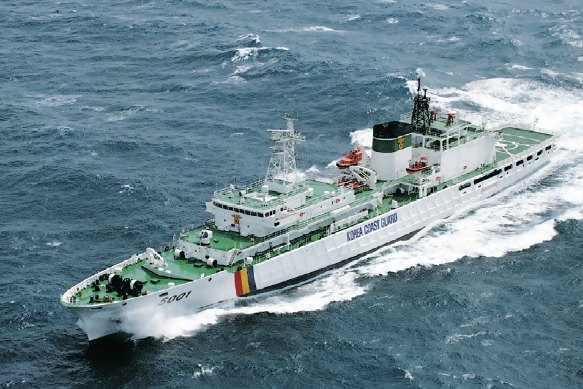
A fishing vessel capsized off the coast of South Korea’s Jeju Island on February 12, 2025, leaving five crew members missing and prompting a search operation by the Korea Coast Guard. Five other individuals aboard the trawler were rescued from the water and are currently receiving medical care and support. The incident highlights the inherent dangers of commercial fishing, a profession where vessels often face unpredictable conditions and demanding work.
The capsized vessel was engaged in trawling, a fishing method that involves dragging a net—known as a trawl—through the water behind one or more boats. This technique is complex and can be hazardous, with gear varying significantly depending on factors such as local traditions, seafloor conditions, and the size and power of the fishing boat.
Trawlers range from small, open boats with limited horsepower to large factory ships equipped with substantial power, all designed to operate in diverse marine environments, from shallow coastal waters to deep-sea areas. The Korea Coast Guard responded to the emergency off Jeju Island, a location known for strong currents and rough seas. Their teams pulled five crew members from the water, demonstrating their capacity to act in maritime crises.
However, five people remain unaccounted for, and the search continues. Time is a critical factor in any search for missing individuals at sea, and the Coast Guard has resources and experience in the area to aid the effort.
An investigation into the cause of the capsizing is expected to follow the search, examining potential factors such as mechanical failure, human error, or weather conditions. The incident raises questions about maritime safety and fishing practices, including the environmental impacts of trawling, such as bycatch and habitat damage, which are being addressed through the development of more sustainable methods. Yet, the immediate focus remains on the human cost: the five missing crew members are the priority, with their families waiting as the Coast Guard continues its work.
Commercial fishing is a dangerous profession, with vessels operating in unpredictable weather, equipment that can fail, and crews working long hours in demanding conditions. The capsizing off Jeju Island serves as a stark reminder of these realities.
Five people are missing, and five are safe, with the difference between those outcomes often hinging on minutes, equipment function, or luck. The search area remains active, and the Coast Guard persists in its efforts, while the rescued crew members receive care. This story does not have a neat conclusion, as the questions surrounding the incident linger and the search goes on.




