
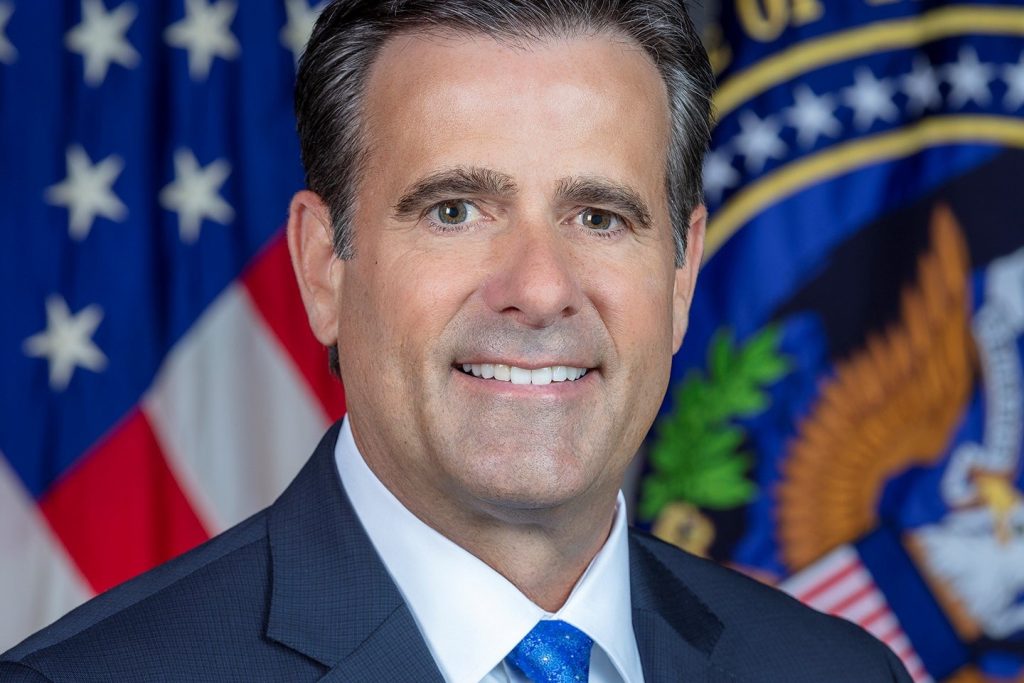
“I do not believe the majority view expressed by [intelligence community] analysts fully and accurately reflects the scope of the Chinese government’s efforts to influence the 2020 U.S. federal elections.” John Ratcliffe, then the director of national intelligence, put that sentence in a three-page report dated January 7, 2021, days before the Trump administration left office. The Washington Times, in a news-and-analysis piece by Bill Gertz on January 20, called it a political bombshell.
The core of his complaint was a mismatch in vocabulary. Ratcliffe wrote that groups of analysts covering election threats from different countries were “using different terminology to communicate the same malign actions.” Teams focused on China and teams focused on Russia defined “influence” and “interference” differently. The result, he said, could be “the false impression that Russia sought to influence the election but China did not.” He described that as a breach of intelligence tradecraft rules.
A dispute between the council and the CIA
Ratcliffe placed the fight inside his own community. Analysts at the National Intelligence Council, which sits under his office, had put forward a view on China that CIA officials rejected. The Washington Times reported that Ratcliffe also accused CIA managers of pressuring analysts to “withdraw their support” for the alternative reading “in an attempt to suppress it.” He said the NIC analysts called this politicization, and that he agreed.
He also took aim at how the election assessment was framed. It “gives the false impression,” he wrote, that the national intelligence officer for cyber was the only analyst holding the minority view on China. “He is not,” Ratcliffe added, and the ombudsman had found as much in interviews.
What the ombudsman said
The ombudsman’s work is where the story gets complicated. Barry A. Zulauf, the intelligence community’s analytic ombudsman, submitted a report to Congress on a Thursday in early January 2021, as The New York Times reported on January 8. Zulauf found “a loss of objectivity” in election threat reporting and said analysis on foreign interference was “delayed, distorted or obstructed” for political reasons. Much of that criticism pointed at the administration’s own political leadership, including the office of acting intelligence director Richard Grenell.
Zulauf also wrote that politicization could come “from below.” China analysts, he said, “appeared hesitant to assess Chinese actions as undue influence or interference,” because they tended to disagree with the administration’s policies. That line is the one Ratcliffe leaned on.
The Times added caveats. Zulauf did not cite evidence for the idea that analysts played down China for political reasons, and he later wrote that the differences were not intentional. He pointed to different collection and analysis rhythms and to analysts who do not cross-pollinate between regional issues. The Times also noted that Ratcliffe, in a separate letter, defended his own interventions and argued that the August assessment of China’s influence efforts fell “short of the mark.” Analysts, according to Zulauf, had called the August classified assessment, after Ratcliffe’s changes added a warning about China, an “outrageous misrepresentation of their analysis.”
William R. Evanina, who headed the National Counterintelligence and Security Center, wrote to the Senate Intelligence Committee that he “accurately conveyed what I believed to be” the community’s thinking, and that he had never politicized intelligence. Some officials told the Times that Evanina’s public statement in August treated China and Russia differently for good reason: it said Russia was acting against Joe Biden’s candidacy, while China hoped he would win but was not described as taking similar steps.
Ratcliffe compared the episode to 1962, when a national intelligence estimate wrongly concluded Moscow would not put missiles in Cuba. Then-CIA Director John McCone disagreed, and U-2 overflights found the Soviet missiles.
Senator Mark Warner’s spokeswoman, Rachel Cohen, said the Senate committee would review the ombudsman’s report and work with the incoming administration “to stop any politicization of intelligence.”
Sources
- John Ratcliffe: Intel on China politicized – Washington Times (Bill Gertz)
- Trump Administration Politicized Some Intelligence on Foreign Election Influence, Report Finds – The New York Times




