
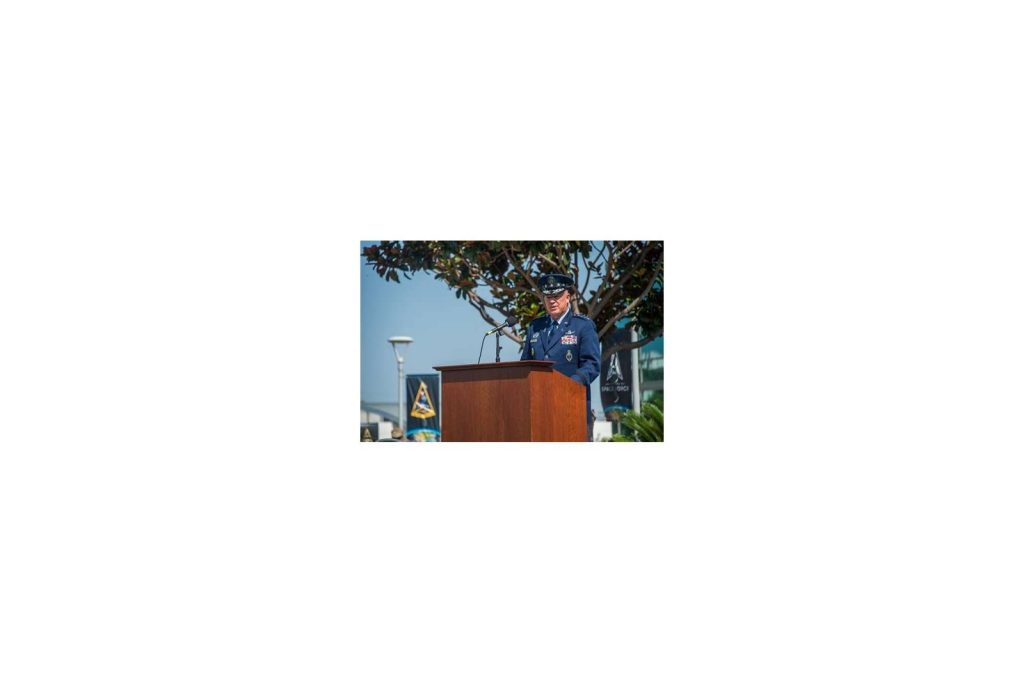
“It will not be the final capability. But we will have the ability to protect and defend the nation against advanced threats by the summer of 2028.” That was Space Force Gen. Michael Guetlein, who runs the Golden Dome missile defense program, speaking Dec. 6 at the Reagan National Defense Forum in Simi Valley, California.
He did not oversell it. “I think we’re on a good trajectory, but I will tell you, it is not a ‘gimme putt,’” Guetlein said. “It is an extremely complex thing that we’re getting ready to do, and there’s a lot of risk in there.”
What the shield is meant to stop
President Donald Trump’s executive order in January created the project. It takes the system built to counter North Korean ballistic missiles and other modest threats and stretches it to handle more numerous and more advanced ballistic missiles, hypersonic weapons, cruise missiles, drones of several sizes and newer threats such as fractional orbital bombardment systems. The ultimate cost is expected to reach hundreds of billions of dollars.
The architecture is a web of sensors, interceptors and command-and-control capabilities, including space-based interceptors and satellites for data transfer and missile warning. Guetlein reports directly to Deputy Secretary of Defense Steve Feinberg. He said Golden Dome will not be built from scratch and will draw on systems the services already pursue. The scope is the whole homeland, he said, “to include Hawaii, Alaska, and Guam.” The Army is already working to protect Guam, and once that capability is in place it will fold into Golden Dome.
Contracts and interceptors
Work on the novel pieces has begun. Eighteen Other Transaction Agreements have been awarded for space-based interceptors, Guetlein said. Space Systems Command announced the deals in late November without saying how many contracts were involved. “That’s now off and moving,” he said.
For conventional interceptors, he said Feinberg’s office is working “really, really hard to scale out the industrial base” to deepen the magazine of weapons. The military already wanted more THAAD and Patriot interceptors before Golden Dome existed. A team of industry partners is also writing the command-and-control and fire-control software, and more are being brought in.
Guetlein said the program has asked the department for more data-transport, sensing and missile-warning capability and is waiting on those contracts.
Secrecy and money
The Pentagon has said little in public, and Guetlein defended that. “There are likely people in that audience that I don’t want to know what we’re doing,” he said, adding that he hoped to open dialogue in the new year. More detail is going to defense firms and Congress on a classified basis. Sen. Deb Fischer, a Nebraska Republican who chairs the Senate Armed Services strategic forces subcommittee, said she was satisfied with what she had been told.
Future budgets remain uncertain. Defense Secretary Pete Hegseth pointed to the $156 billion reconciliation money added to the 2026 request. Budget Director Russell Vought said no decision had been made on another reconciliation bill, but promised “there will not be a hole there.”




