
WASHINGTON, September 26 — Three news organizations banned from the White House returned to the building on Thursday, Sept. 24, after a federal judge handed CNN, MS NOW and Politico a temporary reprieve in an extraordinary showdown between President Donald Trump and outlets whose coverage he dislikes. The ruling came from U.S. District Judge Timothy Kelly, who said early Thursday that the news outlets must have their access restored.
In his decision to provisionally lift the ban, Kelly ordered the White House to “immediately return, reinstate, and restore” the three outlets’ access. He said they had met the legal thresholds to obtain a temporary restraining order and were likely to succeed in showing that their press passes were revoked without due process.
A judge Trump appointed, ruling against the White House
Kelly — whom Trump nominated in 2017 and who ordered a CNN journalist’s access restored in a similar case in 2018 — said the government must have clear standards for conduct that would lead to revoking a press pass. He called the standard of objectionable reporting outlined in letters that the White House sent the outlets “so vague it hardly does the trick.” The ruling did not address CNN’s removal from the White House video pool.
Trump announced he was banning the outlets on Friday, assailing what he called “fake news.” The outlets argued they were singled out over the content of their coverage. A Secret Service agent had confiscated their credentials as part of the ban.
Badges restored, then blocked again
After the ruling in the early hours Thursday, White House operations officials were notified to restore access to the affected reporters, but said they needed time to find, reactivate and deliver their entry badges. The process took over two hours, according to an administration court filing. Reporters from all three outlets said they were still blocked early Thursday before access was granted a few hours later.
The back-and-forth continued into the evening. Some CNN and MS NOW journalists were denied entry to cover an evening event.
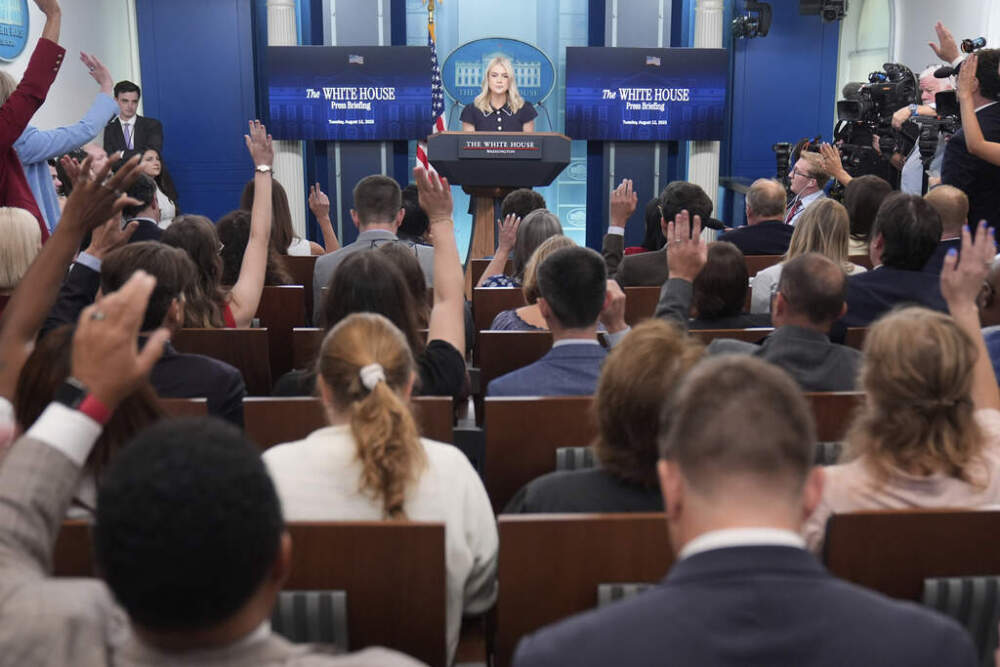
On a high-profile day when Chinese leader Xi Jinping was visiting Washington and attending a state dinner, no major American network was airing live coverage. After the White House banned CNN from a rotation of five major U.S. broadcast outlets who take turns shooting and sharing video, the other four — in a show of solidarity — were still declining to participate in the so-called video pool.
Though CNN and MS NOW were back on the White House grounds Thursday, both news outlets said their journalists were denied access to Xi’s state dinner arrival. CNN wrote in a blog post that the White House said it would only allow a photojournalist and an audio technician to the event, and refused to allow a reporter and a producer entry.
MS NOW reported that journalist Laura Barrón-López was also denied entry to the arrival ceremony on the portico ahead of the state dinner. Barrón-López was one of the journalists whose press credentials were reinstated under the judge’s order. Reporters and producers from other networks were allowed in, CNN wrote.
The president posted online that TV networks “refused to cover one of the Biggest and Most Beautiful Events to take place in many years … because they knew how good it would be, they didn’t want credit to be given to ‘TRUMP.’” The White House did not respond to an email seeking comment. The E. Barrett Prettyman U.S. Federal Courthouse in Washington was the setting for the legal proceedings.
Among those back on the White House grounds Thursday were CNN Senior Photojournalist and contributing Producer Peter Morris and CNN Senior Reporter Betsy Klein. Vaughn Hillyard, White House correspondent for MS NOW, had been reporting from near the White House on Monday, Sept. 21.
A sign in support of news outlets was seen at the White House press room on Sept. 19. What this signals is a White House testing how far it can squeeze the press corps while a court watches. The temporary restraining order is just that — temporary.
The broader stakes now sit with Kelly’s court, which must decide whether the government’s press-pass standards survive scrutiny, and with the four networks still withholding video, whose solidarity has denied the White House the pooled coverage it depends on.




