
Lok Adalats resolved more than 10.5 crore cases in 2025 alone, and 23.58 crore between 2022 and 2025, according to India’s Ministry of Law and Justice. The forums, whose name means “People’s Courts”, are informal bodies that settle disputes by agreement rather than adversarial argument.
They are recognised under the Legal Services Authorities Act 1987 and tied to Article 39A of the Constitution, which covers equal access to justice and free legal aid. They run at national, state, district and taluk levels.
What a settlement means
An award from a Lok Adalat has the legal status of a civil court decree, and it can be executed like one. It is binding on everyone involved. No appeal is allowed, a rule meant to give the matter finality and a quick close. No court fee is charged, and fees already paid are refunded after settlement. The adalat has powers equivalent to a civil court under the Code of Civil Procedure but is free to use informal procedures.
Benches are made up of judges, legal professionals and social workers. In practice most disputes are settled in a single sitting.
The institutions behind them
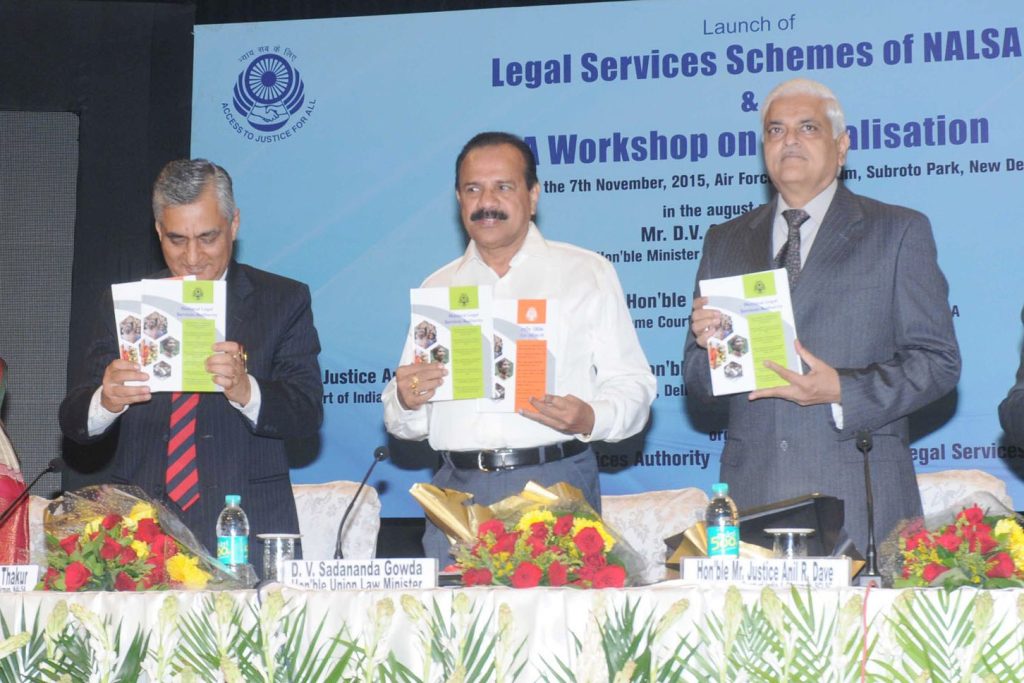
The National Legal Services Authority (NALSA) frames policy, issues the calendar and monitors National Lok Adalats. State Legal Services Authorities organise state-level sessions, District Legal Services Authorities run district ones, and Taluk Legal Services Committees cover local disputes. Disposed cases are updated on the National Judicial Data Grid.
Types and reach
National Lok Adalats are held across the country on a single day, usually once every quarter. They focus on motor accident claims, bank recovery, matrimonial disputes and cheque bounce cases. Other formats include:
Mobile Lok Adalats, which travel to remote and rural areas. Mega Lok Adalats, which use many benches to clear a high volume in one day. Permanent Lok Adalats, set up under Section 22B of the 1987 Act for public utility services such as transport, electricity, water, postal services and insurance. These can decide a dispute even if the parties fail to agree, within a monetary limit of ₹1 crore. And E-Lok Adalats, an online format set up in 2019-20 during the COVID-19 pandemic.
The forums take up pending court cases and pre-litigation disputes. Civil matters such as property, money recovery and contracts qualify, as do matrimonial and maintenance disputes, labour issues and compoundable criminal offences. Non-compoundable offences and constitutional cases are barred.
Where they fall short
The explainer lists several weak spots. Many citizens, especially in rural areas, do not know how Lok Adalats work or that their awards are legally valid. There is a shortage of trained conciliators and judges. An emphasis on high disposal numbers can sometimes cost depth in how disputes are resolved. Complex, high-value or technical cases are a poor fit, and E-Lok Adalats are limited by gaps in internet access and low digital literacy. Performance also varies from state to state.
Proposed fixes include awareness campaigns, training in conciliation for judges, lawyers and mediators, standard operating procedures, and judging performance by how long settlements hold instead of by case counts.




