
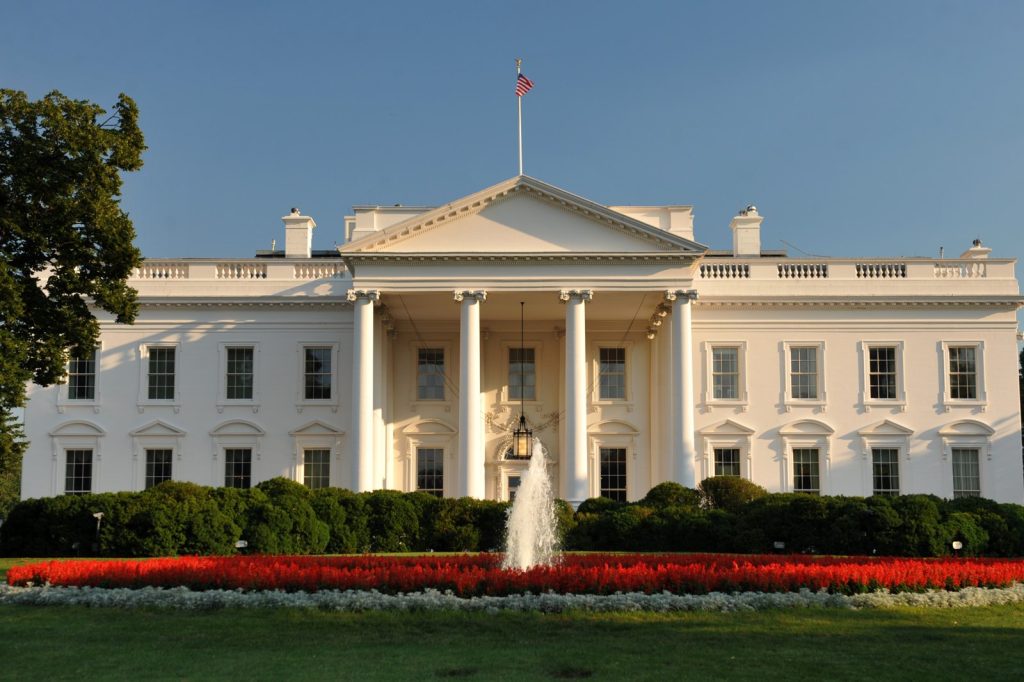
About 6 in 10 American adults say they trust federal government information on the environment, foreign affairs, elections and politics, abortion or immigration “only a little” or “not at all,” according to a new poll from the Associated Press-NORC Center for Public Affairs Research and USA Facts.
Distrust has grown since 2024. It is also higher than it was at the end of President Trump’s first term, and the poll points to Democrats as the group where it has climbed fastest.
Trust has slipped on almost every topic the 2019 survey asked about. Education is the sharpest example: 37% had low trust in 2019, 53% do now, with a 9-point jump in the past year. The share with high trust in government information on elections and politics fell from 22% to 13%. On health care it dropped from 26% to 16%, on the environment from 21% to 12%, and on jobs and unemployment from 25% to 15%.
A wider partisan gap
Democrats were somewhat less trusting than Republicans during Trump’s first term, but not by much. The gap opened under President Biden and widened after Trump returned. Republicans’ doubts rose under Biden and eased once Trump took over. Democrats’ doubts did the reverse. Independents grew more suspicious under Biden and have not moved since.
Look at budget and crime numbers. 61% of Democrats have low trust in federal information about the budget, against 42% of Republicans. On crime it is 60% of Democrats and 32% of Republicans. Vaccines are the exception: about 6 in 10 Democrats, Republicans and independents trust the government’s vaccine recommendations and safety information only a little or not at all.
Larry Haith, a 76-year-old Republican from Idaho, said he has “more confidence in the federal government today than I’ve had in years.” Jeremy Cove, a 44-year-old Republican from Missouri, trusts the administration on vaccines but not on climate change. “I love Trump; I voted for Trump, but some of the things he’s doing just makes me distrust more,” he said, pointing to the renaming of Lake Ontario as Lake America.
Shannon Ingram, a 46-year-old Democrat in Maryland, singled out shifting health recommendations. “It’s pretty hard to trust anything that’s being communicated,” she said.
What changed in Washington
Trump began taking apart parts of the federal bureaucracy soon after returning to the White House, ending longstanding programs and shuttering agencies. Thousands of federal employees have been fired or have left, thinning the ranks of government statisticians, and experts have warned about the quality of federal data. Changes to health advice have put doctors and medical groups at odds with the administration on vaccines. Earlier this year the Environmental Protection Agency rescinded a scientific finding that had underpinned federal climate action for more than a decade.
Elections and campaign claims
Only 34% of adults trust government certification of election results “a great deal” or “quite a bit,” down from 40% in 2024. Among Democrats the figure fell to 44% from 65%. Only 29% of Republicans have that level of trust, barely changed from 2024.
Just under half of adults are extremely or very concerned that the federal government will publicly question election results, tamper with them, or pressure state officials to change how they certify or report them. Trump has repeated debunked claims of mass voter fraud in 2020, tried to restrict mail voting before the midterms and pushed Congress for a proof-of-citizenship requirement. Homeland Security Secretary Markwayne Mullin has warned state officials they could lose funding or face investigations if they do not go along with the administration’s election security demands.
Party messaging fares little better. About 1 in 10 adults say Democratic or Republican campaign messages are always or often based in fact. Only about a quarter of Democrats say that of their own party, and a similar share of Republicans do the same.
Kim Murza, a 45-year-old Democrat from Colorado, believes the country can still run fair elections. She blames the administration for wearing down confidence. “I think they are doing whatever they can to try to put that distrust in people’s minds,” she said.
The poll surveyed 1,036 adults from July 29 to Aug. 10. The margin of sampling error is plus or minus 4.1 percentage points for adults overall.
Sources
- Mistrust of U.S. government information is rising across major issues, new poll shows
- Most Americans Have Stopped Believing the Government




