View original document (0.6 MB)
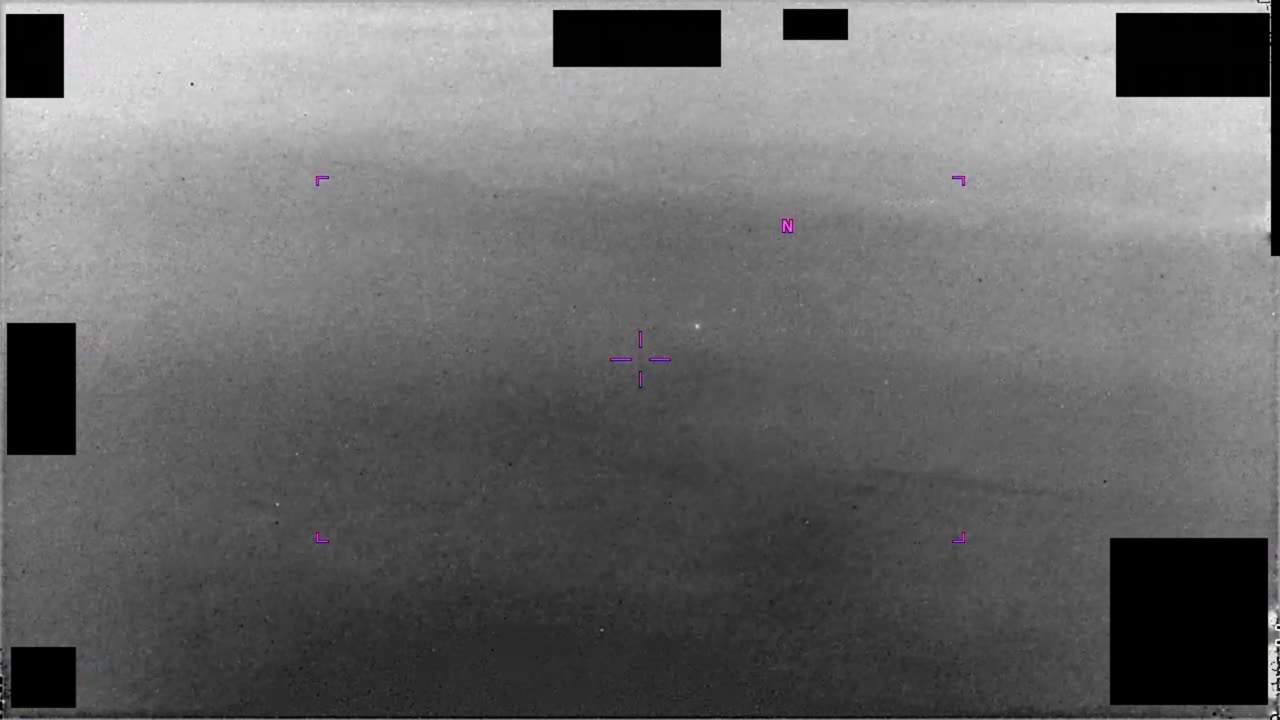
Newly released NASA records from the Apollo 17 mission, the final crewed lunar landing in 1972, document multiple instances where astronauts reported observing unidentified flashing lights, tumbling fragments, and streaks of light near their spacecraft and on the lunar surface. The transcript was made public on May 8, 2026, by the U.S. Department of War through its PURSUE archive, as part of a broader disclosure of government records related to unidentified aerial phenomena (UAP).
Transcript Details: Three Days of Anomalous Observations
According to the NASA document, titled “NASA-UAP-D2, Apollo 17 Transcript, 1972,” the observations span three distinct periods across the mission’s first three days. The first incident occurred on Day 00, beginning at 03 hours, 34 minutes, and 10 seconds into the mission. Command Module Pilot (CMP) Ronald Evans reported seeing “very bright particles or fragments” drifting and tumbling near the spacecraft as it maneuvered. Lunar Module Pilot (LMP) Harrison “Jack” Schmitt described the scene as looking “like the Fourth of July.” In the transcript, the astronauts speculated that the fragments might be ice or paint dislodging from a separated component of the spacecraft (the S-IVB rocket stage), but CMP Evans characterized that assessment as a “wild guess.” Mission Commander Eugene A. Cernan added his impression that the particles were “flat, flakelike particles,” some possibly “6 inches across,” and noted that while there was no relative motion between them, most seemed to be “twinkling” and moving away from the spacecraft.
The second and longest period of observation occurred on Day 02, spanning nearly three hours from 18 hours, 42 minutes to 21 hours, 07 minutes. The official description notes that Commander Cernan reported difficulty sleeping and described seeing “some sets of the streaks.” He also reported an intense light flashing between his eyes, comparing its intensity to that of a train headlight and calling it “imposing.” Over the following hours, Cernan described observing several flashing, rotating phenomena that he assessed as corresponding to physical objects in space rather than a purely optical illusion. LMP Schmitt also reported seeing similar phenomena but again assessed the source as the separated S-IVB rocket stage. At one point, Cernan reported observing two additional distant flashing objects, though he assessed them as Spacecraft/Lunar Module Adapter (SLA) panels, another separated component of the Saturn V rocket.
The third incident occurred on Day 03, at 15 hours, 33 minutes. LMP Schmitt exclaimed that he had observed a flash on the lunar surface north of the Grimaldi crater. The official description offers no further explanation for this flash.
Context and Ongoing Investigation
The release of this transcript comes under the auspices of the PURSUE archive, a government initiative to declassify and publish records related to UAP. The document itself is an excerpt from the Apollo 17 Technical Air-to-Ground Voice Transcription, highlighting the three specific periods in which astronauts reported observing unidentified phenomena. The official description notes that the astronauts offered speculative explanations—ice, paint, or rocket debris—but did not definitively identify the source of the observations.
Per a Wikipedia summary of the NASA Unidentified Anomalous Phenomena Independent Study Team (UAPIST), NASA assembled a panel of 16 experts in 2022, chaired by David Spergel, to recommend a roadmap for the analysis of UAPs by NASA and other organizations. This panel’s work reflects a broader institutional interest in examining historical and contemporary reports of anomalous phenomena, including those from the space program. The Apollo 17 transcript, now publicly available, is an example of such historical data being revisited.
The record’s official summary offers limited detail beyond the astronauts’ own descriptions and speculative assessments. While the astronauts repeatedly attributed the phenomena to known spacecraft components or debris, the transcript shows that Commander Cernan explicitly stated that some observations corresponded to “physical objects in space rather than a purely optical phenomenon.” The document does not resolve the question of what the astronauts saw, and the official description does not provide an alternative explanation.
What remains unanswered is whether the observed phenomena—bright fragments, flashing lights, and a lunar surface flash—were indeed mundane spacecraft debris or something else entirely. The transcript itself shows the astronauts grappling with uncertainty, offering “wild guesses” and acknowledging the limitations of their observations. Readers should watch for future PURSUE releases, which may include additional transcripts, sensor data, or analysis from other Apollo missions or later spaceflights, potentially shedding more light on these historical anomalies.