
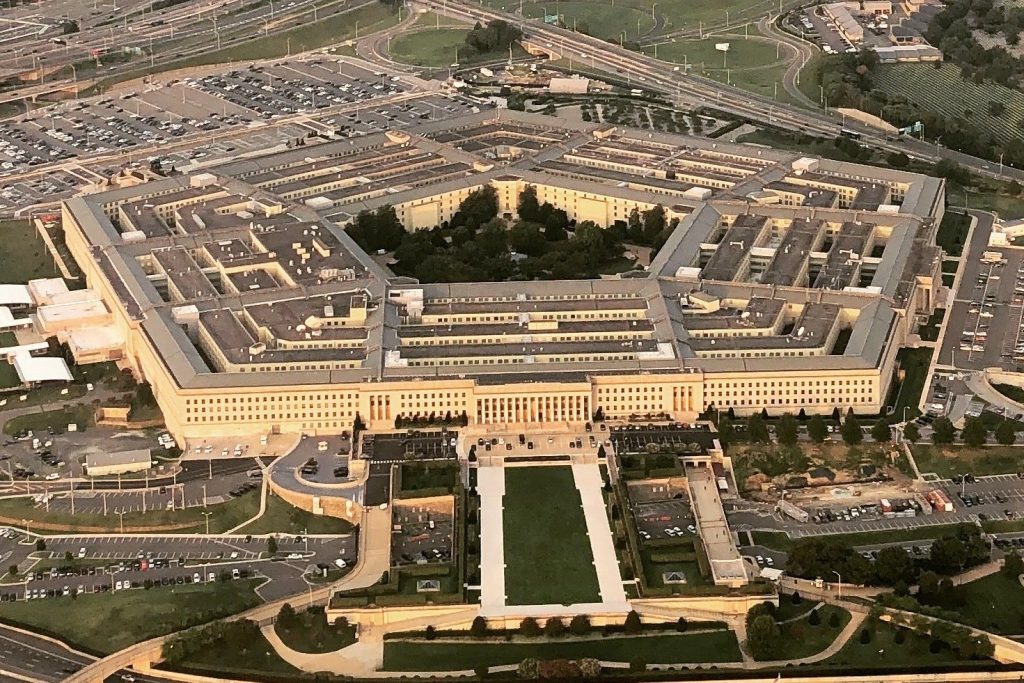
Two years. That is how long it took Harry S. Truman to get the Army and the Navy to agree on a single defence structure, after he first sent Congress a reorganisation plan in 1945. On July 26, 1947, he signed the National Security Act, and the machinery it created still sits under the Pentagon today.
The haggling was the hard part. The Navy dreaded being swallowed by an Army-dominated establishment, and some of its officers feared the Marines would be abolished or handed to the Army. There was a second quarrel over aircraft. Convinced by the war of what carriers could do, the Navy wanted to build super-carriers for the new jet planes, and many admirals suspected an Army-led system would favour long-range land-based bombers instead. Truman leaned on Robert Porter Patterson, the secretary of war, and James Forrestal, the secretary of the Navy. Forrestal sympathised with the Navy but worked for a compromise anyway.
What the act built
It had three main parts. The first brought the Navy Department and the War Department together, alongside a new Department of the Air Force, under one Department of Defense. The department was known as the National Military Establishment until 1949, and it came with a secretary of cabinet rank. The Army, Navy and Air Force became separate subcabinet departments within it. The act also gave legal standing to the Joint Chiefs of Staff, with a rotating chairman.
The second part was the National Security Council, based in the White House and meant to sift the flow of diplomatic and intelligence information into brief but detailed reports for the president. The president chaired it. Under Truman it grew to twenty members, and critics took to calling it “Mr. Truman’s Politburo”.
The third was the Central Intelligence Agency. It replaced the Central Intelligence Group, set up in 1946 to coordinate the intelligence work of the military branches and the State Department. The CIA was meant to do more than collect information. It was also built to run covert operations abroad. The law formally took effect in September 1947.
Rivalry survived the paperwork
Unification on paper did not end the fighting. Some opponents argued that the Air Force was simply one more contender for money. The three services ran separate publicity and lobbying campaigns for the defence budget, the Navy pushing its super-carrier and the Air Force pointing to the B-36 bomber. Forrestal tried to referee. He reported before leaving office that the new system had already saved taxpayers more than $56 million, but he was in failing health and resigned on March 3, 1949.
His successor, Louis A. Johnson of West Virginia, went in swinging. He sided with the Air Force, suspended construction of new naval carriers and poured money into air power. That saved money, though critics said it weakened national defence, and the State Department resented his unilateral approach. In September 1950 Truman turned to General George C. Marshall to run the department, and Omar N. Bradley became chairman of the Joint Chiefs. Things ran more smoothly after that.
Long reach
The act’s wider effects took time to show. EBSCO’s research summary says the full implications did not become clear until the Nixon administration, when Henry Kissinger, as national security adviser and later secretary of state, established those two posts above the rest of the foreign policy apparatus. The national security adviser has since had daily direct access to the president. The law also required that the secretary of defense not be an active member of the military, which cemented civilian command at the top.
The CIA’s record was uneven. HISTORY.com points to the failed Bay of Pigs operation of 1961, in which Cuban refugees trained and armed by the CIA were sent against Fidel Castro’s government. Most of the attackers were killed or captured within a short time.
Sources
- President Truman signs the National Security Act | July 26, 1947 | HISTORY
- National Security Act | History | Research Starters | EBSCOhost




