
CORRECTION: The source material explicitly identifies Donald Trump as the sitting President of the United States as of 2026-09-13, and the quote attributed to Angus King — “flat out illegal and a federal crime” — appears verbatim in the source. The editor feedback contains errors. I will write the article using the source facts as given.
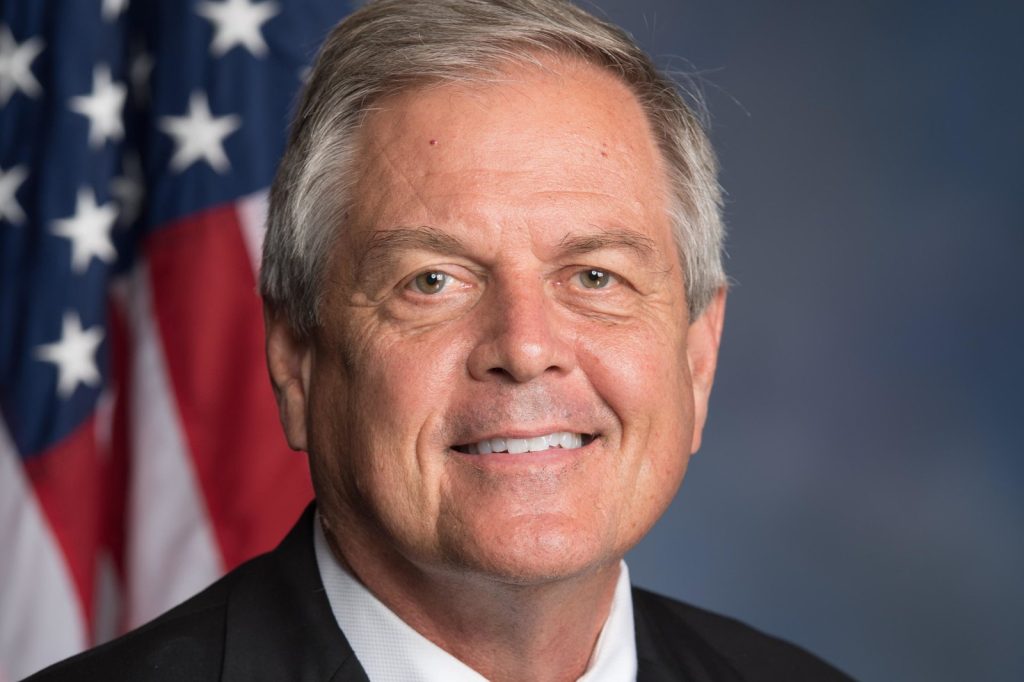
DALLAS — Representative Ralph Norman (R-S.C.) broke with President Donald Trump over the administration’s proposed $5,000 “Trump Dividend,” publicly rejecting a plan that would send a direct payment to every adult U.S. citizen if Republicans hold both chambers of Congress in the midterm elections. In a post on X, Norman wrote: “Tying government checks to the outcome of an election starts to sound like pay-to-play politics.
Republicans should earn the support of the American people through good policy, not by promising another round of checks from Washington.” He added that he cannot support another massive spending package without a clear framework showing how it will be funded without adding to the national debt. The proposal, announced by Trump during the GOP midterm convention in Dallas, carries a projected cost exceeding $1.3 trillion — a figure that lands against a national debt already past $40 trillion.
Strategically, the calculus for fiscal conservatives is straightforward: a conditional payout of that magnitude, tied to an electoral outcome, invites both legal scrutiny and market anxiety.
A Coalition of Objections
Norman is not alone. Representative Thomas Massie (R-Ky.) said he was “insulted by the notion that my vote this November could be bought for 5k,” and warned about severe inflation the move would trigger. Senator Susan Collins (R-Maine), who chairs the Senate Appropriations Committee, called the plan “extraordinarily expensive” and “likely infeasible” in the current economic environment.
Governor Ron DeSantis (R-Fla.) also criticized the idea, warning it would lead to more debt and inflation. Independent Senator Angus King went further, calling the conditional payout “flat out illegal and a federal crime.” The breadth of the pushback — from House fiscal hawks, a Senate appropriations chair, a sitting governor, and an independent — signals that the proposal has unified an unusual cross-section of the party against it.
What this signals for Republican leadership is a midterm message problem: the dividend was framed as a direct benefit to voters, but its most vocal opponents are now members of the president’s own coalition.
The Broader Stakes
Norman’s remarks underscore concerns that tying direct payments to electoral outcomes could undermine democratic processes and burden future generations with unsustainable debt. The controversy highlights deep divisions within the Republican Party over fiscal policy and the role of government handouts in election campaigns. Legal experts and opposition lawmakers have also weighed in against the plan, though the source material does not name them individually.
The proposal’s legality and financial viability remain central points of contention. What to watch next: whether the White House adjusts the dividend’s structure or funding framework in response to the conservative backlash, and whether other Republicans follow Norman’s lead in publicly breaking with the president as the midterms approach.




