
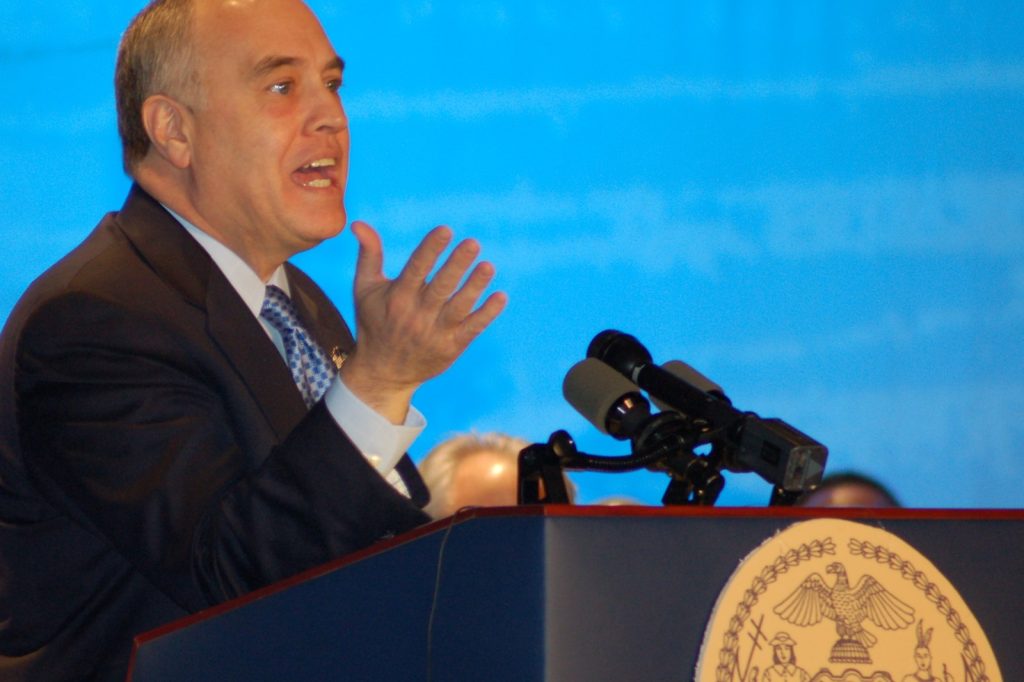
Thomas DiNapoli has run New York’s pension fund since February 2007. Tuesday’s Democratic primary was the first time anyone has challenged him from within his own party, Bloomberg reported.
The comptroller oversees a $300 billion fund. Two rivals are trying to ride the progressive energy that carried Mayor Zohran Mamdani to victory in November: Drew Warshaw, an executive at an affordable housing non-profit, and Raj Goyle, a lawyer and former Kansas state lawmaker.
The case against DiNapoli
Both challengers say the fund has delivered weak returns while paying billions in fees to Wall Street money managers. Both also say he has not put enough pension money into investments with a social payoff, such as affordable housing or faster adoption of green energy.
Then there is Israel. Warshaw and Goyle have promised to sell off the state’s roughly $360 million in Israeli bonds, which DiNapoli increased after the Hamas attacks of October 2023. “Explain to me how financing a war machine 6,000 miles away when one out of every seven New York City public school students is homeless makes any sense,” said Warshaw, who is Jewish. He added that 80 percent of the comptroller’s foreign sovereign government investments sit in one country. “That is politics, and that is not the way we should be investing our pension fund.”
Israeli government bonds make up just 0.01 percent of the Common Retirement Fund’s assets, but they account for most of its roughly $475 million in foreign bond holdings as of March 31, 2025. The fund also held $112.8 million in Saudi Arabian obligations and about $1 million each in Canadian and Jordanian debt. Daniel Pereira, a spokesman for DiNapoli’s campaign, said the state has bought Israeli bonds since the 1990s “because they are good investments with stable returns.”
Warshaw, a former co-CEO of Enterprise Community Partners, wants to commit $20 billion of pension assets to build and preserve 200,000 affordable homes. He would also fire hundreds of Wall Street managers and move to cheap index funds. Goyle would drop the fund’s fossil-fuel stocks and use its shareholder power to push for audits of private utilities such as Con Edison. Both say they would divest from Palantir.
Pereira said the comptroller has worked with New York City Comptroller Mark Levine on affordable housing across the state. “The Comptroller is open to significant new investments in affordable housing, but it is irresponsible for a candidate to announce a fund of this size without doing any diligence on specific projects,” he said.
The incumbent’s record
DiNapoli, a former assemblyman, took the job when the legislature picked him to replace Alan Hevesi, who resigned after pleading guilty to using state employees to chauffeur his disabled wife and later pleaded guilty in a pay-to-play scheme. Attorney General Letitia James and major labor unions have endorsed him.
His office says the pension returned an annualized 6.77 percent between April 2007 and March 2025, the last fiscal year with data. By Bloomberg’s numbers that beat a passive mix of 80 percent global stocks and 20 percent bonds by about 0.3 percentage point. It trailed the same mix made up only of US stocks and bonds by 1.6 points a year.
Almost 40 percent of the fund sits in public equities, 23 percent in bonds and cash, and 38 percent in alternatives such as private equity, real estate, private credit, infrastructure and hedge funds.
No major polling exists on the race. The office usually draws little attention, though it carries real power: unlike in most states, where boards of political appointees and union representatives control pension money, New York’s comptroller alone does.




