
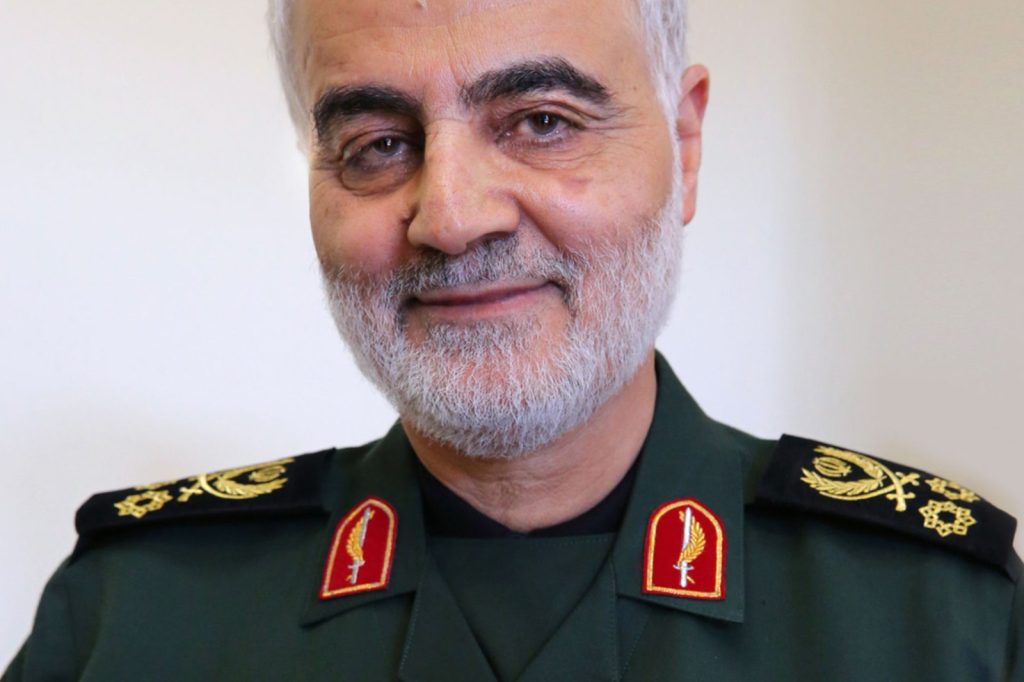
The notice went out on a Saturday, a day after the drone strike, and every page of it was classified. The White House sent the War Powers notification on Soleimani’s killing to congressional leadership, the House speaker and the Senate president pro tempore, a senior administration official told The Associated Press. Aides to Democrats and Congress confirmed the document was entirely classified.
The law requires such a notice within 48 hours of American forces being introduced into an armed conflict or a situation that could lead to war. Whether this one counted was the argument.
Who was told, and who was not
The strike killed Qasem Soleimani, commander of the Quds Force, one of five branches of Iran’s Islamic Revolutionary Guard Corps, near Baghdad International Airport on January 3, 2020. Five Iraqis and four other Iranians died with him, among them Abu Mahdi al-Muhandis, deputy chairman of Iraq’s Popular Mobilization Forces.
Democrats said they had been left in the dark. Sen. Lindsey Graham appeared to be the only member of Congress with advance word. He told Fox News he was briefed “when I was down in Florida,” at Trump’s golf club. Chuck Schumer, the Senate minority leader, said he was not briefed at all and criticized the strike as carried out “without specific authorisation and any advanced notification or consultation with congress.”
House Foreign Affairs Committee chair Eliot Engel said the failure to notify “raises serious legal problems and is an affront to congress’s powers as a coequal branch of government.” Nancy Pelosi demanded that the whole Congress be briefed immediately.
Custom has long had the president brief the so-called “gang of eight” congressional leaders before military action of this kind, though the law’s notification rule applies to covert actions rather than “traditional military activities.” It was also the second time Trump had skipped them on a high-value target. After the October raid that killed Islamic State leader Abu Bakr al-Baghdadi, he said he held back word from Pelosi and Adam Schiff because “Washington leaks like I’ve never seen before.”
The administration’s case
Officials first said the strike was needed to stop an imminent attack, then described it as a response to an escalating series of attacks on US personnel. The Pentagon said Soleimani was “actively developing plans to attack American diplomats and service members in Iraq and throughout the region.”
Secretary of State Mike Pompeo said the administration had “all the authority we need” and that any strikes inside Iran would be legal. “We’ll behave inside the system,” he said. He also said failing to kill Soleimani would have been “culpably negligent,” but offered no evidence for his earlier claims of imminent attacks. By Sunday he was calling the threat inevitable rather than imminent.
Trump posted a warning of his own that day. His message would “serve as notification to the United States Congress” that any Iranian strike on a US person or target would bring a swift and “perhaps disproportionate” response. “Such legal notice is not required, but is given nevertheless!” he wrote.
Schumer said Congress needed a new war powers resolution “to be a check on this president.” Experts, including the UN special rapporteur on extrajudicial executions, called the killing a likely violation of international law. On January 5, Iran took the last of its steps back from the 2015 nuclear deal, and on January 8 it fired missiles at US forces in Iraq.
Sources
- Assassination of Qasem Soleimani – Wikipedia
- Trump slammed for failing to tell congress of Soleimani strike: ‘This was put in the constitution for a reason’
- Trump notifies Congress of warning after lawmakers said they weren't informed about Soleimani strike in advance




