
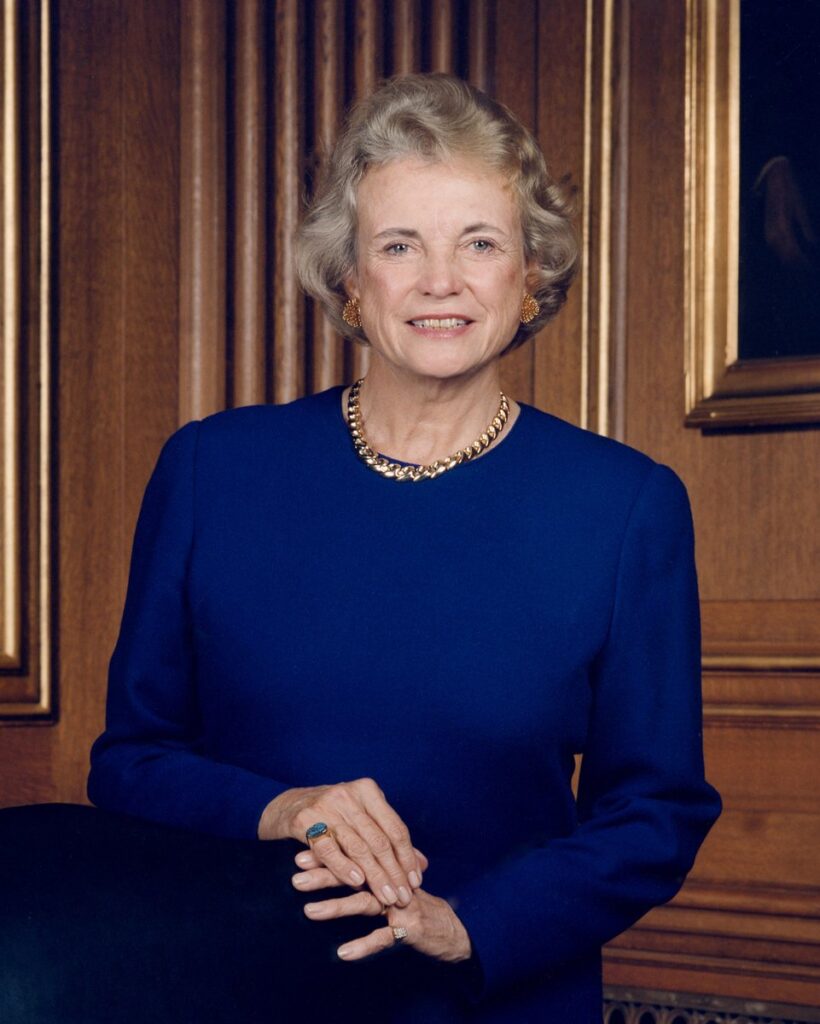
“It was no country for sissies, then or now,” Sandra Day O’Connor wrote in her 2002 memoir, Lazy B, about the Arizona-New Mexico cattle ranch where she grew up. “Making a living there takes a great deal of hard work and considerable luck.” She died on Friday, December 1, at 93.
The ranch covered 6.7 square kilometres, and it arrived on the map only half a generation after the two states joined the union. As a child she branded cows, shot a .22-calibre rifle and swam in a cattle tank. She could rope steers, the Globe and Mail noted, and later in life she roped in fellow judges to build consensus.
Turned away, then hired for free
Luck had little to do with her career. She finished Stanford Law School as one of only five women in her class, and job applications kept coming back rejected. She ended up offering to clerk for a county district attorney without pay. He took her on only after she sent a long letter, she recalled, “explaining all the reasons why I thought I could do things that would be useful in the office.”
She went on to become the first woman to serve as majority leader in a state legislature. From that post she pushed for women’s rights, including repeal of a 1913 law that barred women from working more than eight hours a day.
The Reagan pick
When Ronald Reagan needed a successor to Justice Potter Stewart, a White House aide involved in the choice said O’Connor was “the right age, the right combination of experience, the right political affiliation, the right backing.” Reagan called her a “person for all seasons.”
Roughly 100 million people watched her confirmation hearings in September 1981. She told senators the Court was “the body to which all Americans look for the ultimate protection of their rights.” The Senate confirmed her 99-0, and an AP-NBC poll found 65 per cent of the country behind the appointment.
Swing vote on the Court
O’Connor sat on 300 majority opinions, among them rulings that upheld abortion rights and affirmative action at universities. Justices appointed by Republicans in recent years overturned precedent on both. She also supported the death penalty and the criminalization of gay sexual practices, favored limits on federal interference with the states, and voted in the case that sent George W. Bush to the presidency after the 2000 election.
When she left the bench in 2006, Samuel Alito took her seat. He later wrote the ruling overturning Roe v. Wade. “She upheld, he overturned,” said Daniel Urman, a Northeastern University expert on the Supreme Court. “Where the country stood, O’Connor stood.”
David Souter, a fellow Republican appointee who often joined the O’Connor family for Thanksgiving, said she “knew the difference between political reasoning and legal reasoning.” He added: “In legal reasoning, no one could push her around.”
David Kravitz, a former clerk now serving as deputy state solicitor in Massachusetts, said she hired clerks with a wide range of ideological viewpoints and listened to everyone on every case. Rosalie Abella, a former Canadian Supreme Court justice, praised her as “unpretentious and genuinely open-minded.”




