
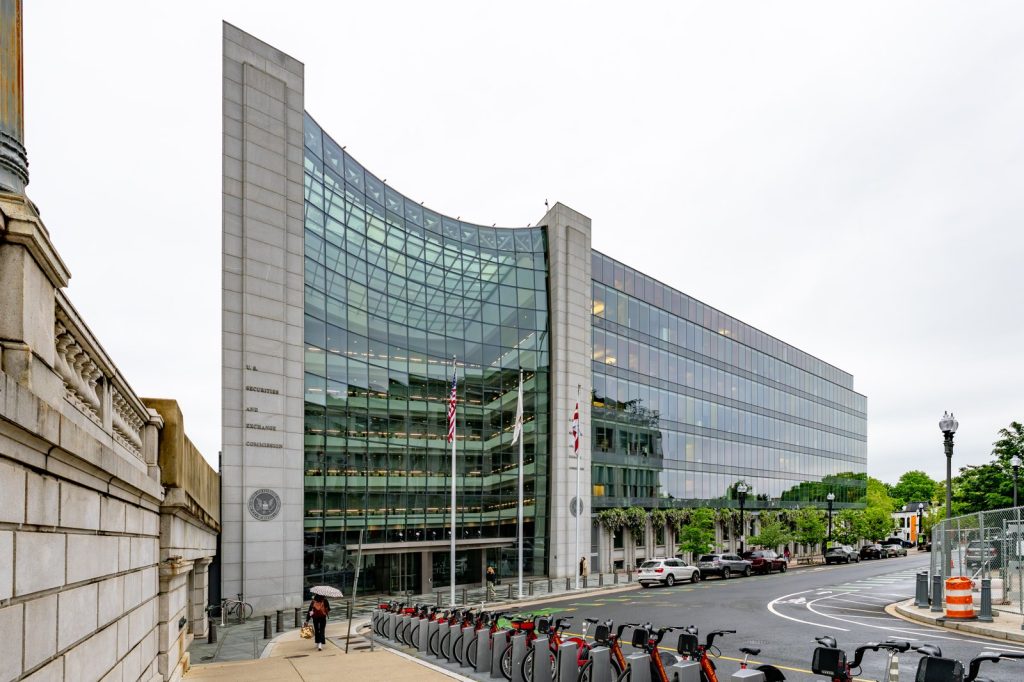
WASHINGTON, July 8 — The figure that matters: 784. That is how many enforcement actions the U.S. Securities and Exchange Commission brought in fiscal year 2023, a number that underscores the agency’s central role in policing Wall Street. More than 500 of those cases involved investment adviser misconduct, a category that touches the retirement savings and college funds of millions of Americans.
Here is the bottom line: when money goes missing, the SEC is typically the first federal cop on the beat. The agency, founded in 1934, enforces the federal securities laws that govern everything from stock trades to financial advice.
It does not work alone.
The $3.5 million theft and the regulatory web
On July 7, 2026, news broke of a $3.5 million theft that has drawn attention from multiple corners of the financial regulatory system. The SEC, the Financial Industry Regulatory Authority (FINRA), and state-level watchdogs such as the New York State Department of Financial Services (DFS) may all pursue charges in the case. Investors will note that the U.S. Department of Justice could also file criminal charges, a step that would transform a civil enforcement matter into a potential prison sentence.
The case highlights the multi-layered regulatory framework designed to protect investors. That framework is not a single agency but a patchwork of federal, self-regulatory, and state bodies, each with its own jurisdiction and tools.
FINRA, a self-regulatory organization created in 2007 from the merger of the National Association of Securities Dealers (NASD) and the regulatory arm of the New York Stock Exchange, oversees broker-dealers. It is not a government agency, but its rules carry the force of law for the firms and individuals it regulates. When a broker steals client money, FINRA can fine, suspend, or bar that person from the industry.
State regulators like the New York DFS add another layer. New York, home to the world’s largest financial center, has its own enforcement division that investigates fraud and can revoke licenses.
The DFS has been particularly aggressive in recent years, targeting everything from money laundering to cybersecurity lapses at banks and insurance companies.
The SEC’s enforcement machinery
The SEC itself brings hundreds of cases each year. The 784 enforcement actions in fiscal 2023 included not just investment adviser misconduct but also insider trading, accounting fraud, and market manipulation. The agency can seek civil penalties, disgorgement of ill-gotten gains, and injunctions that bar individuals from serving as corporate officers or directors.
Criminal charges, however, are the domain of the U.S. Department of Justice. The SEC cannot put anyone in prison.
When the agency refers a case to federal prosecutors, it signals that the conduct may have crossed the line from civil violation to criminal fraud. The DOJ has its own investigative resources, including FBI agents who specialize in financial crimes. The $3.5 million theft reported July 7, 2026, falls squarely within the kind of misconduct that triggers both civil and criminal scrutiny.
The SEC has long warned investors about the risks of handing money to unregistered advisers or firms with weak internal controls. The agency’s Office of Investor Education and Advocacy publishes alerts on red flags, including promises of guaranteed returns and pressure to act quickly.
How the system is supposed to work
The regulatory framework that exists today was built in layers over nearly a century. The SEC was created in 1934, in the aftermath of the stock market crash of 1929 and the Great Depression. Congress gave it authority to require public companies to disclose financial information, to prohibit fraud in the sale of securities, and to regulate the nation’s stock exchanges.
FINRA came later, born from the consolidation of industry self-regulation. Before 2007, the NASD handled broker-dealer oversight for most of the country, while the New York Stock Exchange regulated its own members.
The merger created a single organization with a unified rulebook and a centralized enforcement arm. State regulators like the New York DFS have their own history. The DFS was created in 2011 from the merger of the New York State Banking Department and the New York State Insurance Department.
It regulates banks, insurance companies, and other financial institutions chartered in New York, and it has the power to issue fines, revoke licenses, and refer cases for criminal prosecution. The system is not airtight.
Critics have long argued that the SEC is underfunded and understaffed, that FINRA is too close to the industry it regulates, and that state regulators lack the resources to police national firms. But the agencies do share information, and a major theft like the one reported July 7 can trigger parallel investigations.
What to watch next
Investors will want to watch for several developments in the coming weeks. First, whether the SEC files a civil complaint naming the individuals or firms involved in the $3.5 million theft. Second, whether FINRA takes disciplinary action against any broker-dealer that may have failed to supervise the person who took the money.
Third, whether the New York DFS or another state regulator launches its own probe. The DOJ’s role is the wild card.
Criminal charges require proof beyond a reasonable doubt, a higher standard than the SEC’s civil burden of proof. But when the government can show that a defendant knowingly stole client funds, prosecutors often seek indictments for wire fraud, securities fraud, or money laundering. The case is a reminder that the financial regulatory system, for all its complexity, is designed to catch theft and punish the thieves.
The SEC, FINRA, state regulators, and the DOJ each have a piece of the puzzle. The question is how quickly they can fit those pieces together.
{“@context”: “https://schema.org”, “@type”: “NewsArticle”, “headline”: “SEC, FINRA, State Regulators Lead Financial Fraud Enforcement”, “description”: “WASHINGTON, July 8 — The figure that matters: 784. That is how many enforcement actions the U.S. Securities and Exchange Commission brought in fiscal year…”, “datePublished”: “2026-07-08T09:30:00+00:00”, “author”: {“@type”: “Person”, “name”: “Ava Anderson”}, “publisher”: {“@type”: “Organization”, “name”: “InfoPulse Today”, “url”: “https://newsfeed.infopulsetoday.com/”}}




