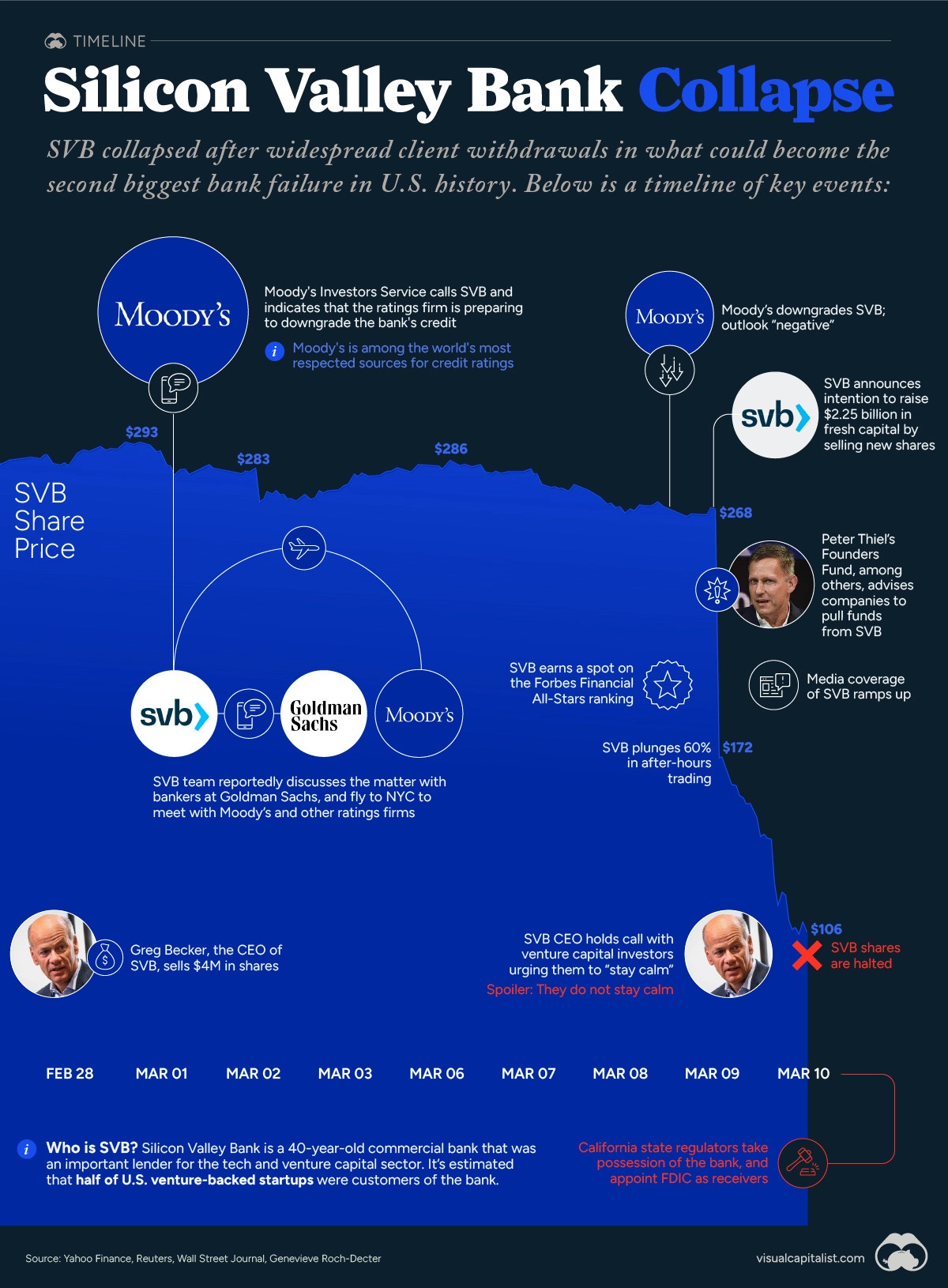
On March 10, 2023, Silicon Valley Bank (SVB) failed after a bank run, marking a significant event in the United States banking system. This failure is the third-largest bank failure in the country’s history and the largest since the 2008 financial crisis. The collapse of SVB is also part of a larger trend, with two other banks, Silvergate Bank and Signature Bank, also failing in March 2023.
The events leading up to the collapse of SVB are complex and multifaceted. In an effort to generate higher investment returns from its growing deposits, SVB had significantly increased its holdings of long-term securities since 2021. These securities were accounted for on a hold-to-maturity basis, meaning that the bank intended to hold them until they matured. However, as the Federal Reserve raised interest rates to combat an inflation surge, the market value of these bonds decreased substantially through 2022 and into 2023. This resulted in unrealized losses on the portfolio, which ultimately contributed to the bank’s downfall.
The impact of higher interest rates was not limited to the value of SVB’s securities portfolio. The increased borrowing costs also had a ripple effect throughout the economy, causing some of the bank’s clients to withdraw their funds to meet their liquidity needs. In an attempt to raise cash and pay withdrawals, SVB announced on March 8, 2023, that it had sold over $21 billion worth of securities, borrowed $15 billion, and planned to hold an emergency sale of some of its treasury stock to raise $2.25 billion. This announcement, combined with warnings from prominent Silicon Valley investors, had a profound impact on the bank’s stability.
The sale of securities and borrowing of funds were desperate measures to shore up the bank’s finances. However, these actions ultimately proved insufficient to stem the tide of withdrawals. The bank’s decision to sell a significant portion of its securities portfolio and borrow heavily to meet its liquidity needs was a clear indication of the dire straits it was in. The emergency sale of treasury stock was also a last-ditch effort to raise capital and avoid collapse. Despite these efforts, the bank was ultimately unable to recover, and its failure was announced on March 10, 2023.
The collapse of SVB has significant implications for the banking system and the broader economy. The bank’s failure is a reminder of the risks associated with rapid growth and the importance of prudent risk management. It also highlights the challenges faced by banks in a rising interest rate environment. As the Federal Reserve continues to raise interest rates to combat inflation, other banks may face similar challenges, and it is essential to monitor their financial health closely.
Looking ahead, it is crucial to watch how regulators and lawmakers respond to the collapse of SVB. The bank’s failure has already sparked concerns about the stability of the financial system, and it is likely that there will be calls for increased regulation and oversight. Additionally, the impact of the bank’s failure on its clients and the broader economy will be closely monitored. As the situation continues to unfold, it is essential to remain vigilant and watch for any potential ripple effects. The coming days and weeks will be critical in determining the full extent of the damage and the measures that will be taken to prevent similar failures in the future.