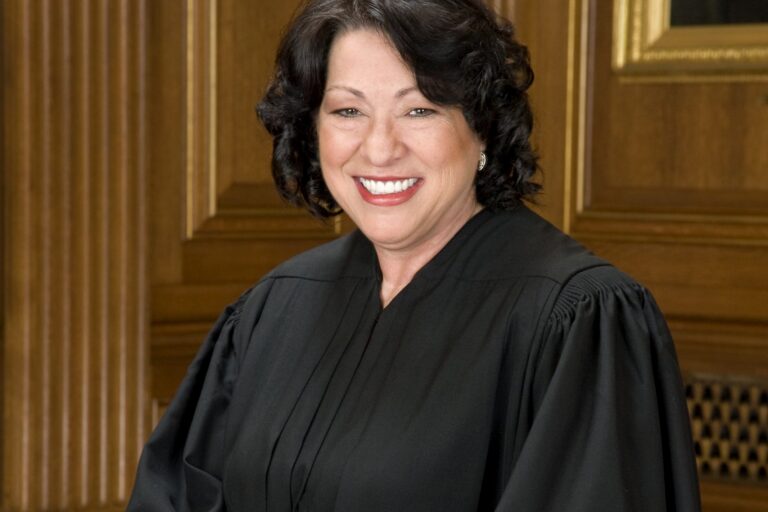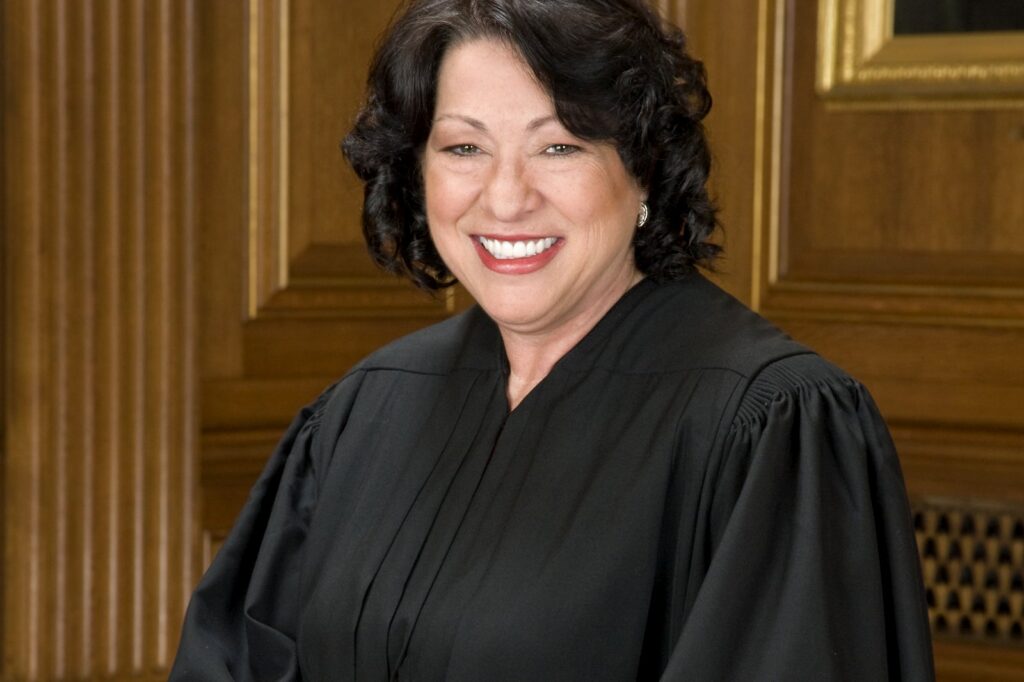
Justice Sonia Sotomayor told an audience at Mount Vernon on Nov. 7 that the rule of law in the United States is going through a “rough patch,” and she defined the phrase precisely: not a mood, not a political moment, but systemic changes in the Supreme Court’s own jurisprudence. The comment came during a public discussion about civics education at the Washington Library, days after Democrats won control of both chambers of Congress in the midterms.
Asked how hopeful she is about the rule of law, Sotomayor said it faces “so many challenges to it on so many different levels,” calling this “a really critical point in our history.” She added that “every election now seems really important to people, because they are.”
What ‘Systemic Changes’ Means
Sotomayor’s diagnosis is institutional rather than atmospheric. She said teachers now face a harder job explaining the law because “there’s been some systemic changes in my court’s jurisprudence” across various areas of law, according to The Hill. In plain terms, the complaint is not that the public has lost faith in the courts, but that the courts have moved the law itself, and that the shift is broad enough to be structural rather than case-by-case.
She framed the remedy as generational work. Sotomayor said persistent effort would be needed to restore the country to balance, and she serves on the board of iCivics, the civics education organization founded by the late Justice Sandra Day O’Connor. She urged citizens to vote and said indifference is unacceptable, praising strong voter participation without weighing in on the midterm results.
The Immunity Ruling as the Prime Example
Sotomayor singled out one decision above the rest. “There’s some opinions that I hope in my lifetime will get overturned. The immunity case is one of them,” she said, after joking that she hoped the court would take back some of the “crazy things” it has done. “I’m only joking,” she added. “Maybe not.”
The 2024 ruling, decided 6-3 along ideological lines, held that former presidents have at least presumptive immunity from prosecution for official acts. Chief Justice John Roberts wrote for the majority that “the President is not above the law,” but that under the separation of powers a president “may not be prosecuted for exercising his core constitutional powers.” The decision upended the criminal case against President Donald Trump over his attempts to subvert his 2020 election loss.
Sotomayor, who authored the dissent for the court’s three liberals, wrote that the decision “makes a mockery of the principle, foundational to our Constitution and system of Government, that no man is above the law.” That dissent is the hinge of her “rough patch” framing: a ruling she regards as a structural break, not a close call, and one she wants reversed while she is still on the bench.
A Court and a Congress in Motion
The timing sharpens the stakes. Sotomayor spoke days after Trump’s party lost the House, the Senate and a majority of governorships, with voters expressing dissatisfaction with the country’s direction. Losing the Senate makes it difficult for Trump, who nominated three justices during his first term, to confirm another nominee if a vacancy opens. The court’s composition, in other words, is now partly insulated from the president who shaped it.
Sotomayor’s own place on that court is long settled. Nominated by President Barack Obama in May 2009 and confirmed that August by a 68-31 vote, she has served since Aug. 8, 2009, and is the third woman to sit on the Supreme Court. She has been identified with the court’s liberal bloc and with concern for criminal defendants’ rights, and she is known for impassioned dissents on race and ethnic identity, including in Schuette v. BAMN and Trump v. Hawaii. The immunity dissent fits that pattern.
She did not describe the country as broken. Sotomayor said the nation will “come out of this,” though changed. “There are some norms we may have lost forever,” she said. “But I don’t think that we will fail as a democracy. But I think we’re going to have a hard patch figuring out what that means.”
For readers, the practical meaning is narrower than the rhetoric. A “rough patch” in Sotomayor’s usage is a docket-level claim: that the scope of presidential accountability, and the law around it, has been rewritten by a one-vote margin and could be rewritten back. Whether that happens depends on future cases and future confirmations, not on any single election. The next test of the court’s direction arrives with its coming term; Sotomayor’s own words set the measure. “The immunity case is one of them,” she said of the rulings she hopes to see reversed.
Sources
- Sonia Sotomayor
- Supreme Court hears challenge to Catholic preschools' exclusion from Colo.-funded program
- Sotomayor Hopes Supreme Court Overturns Immunity Ruling
- Sotomayor hopes presidential immunity ruling will be overturned — The Hill
- Kavanaugh Presses Colorado Over Catholic Preschools Left Out of State Program – Charisma Magazine Online
- 'Crazy things': Sotomayor hopes Supreme Court will reverse some of its rulings
Photo: Collection of the Supreme Court of the United States, Steve Petteway source (Public domain)