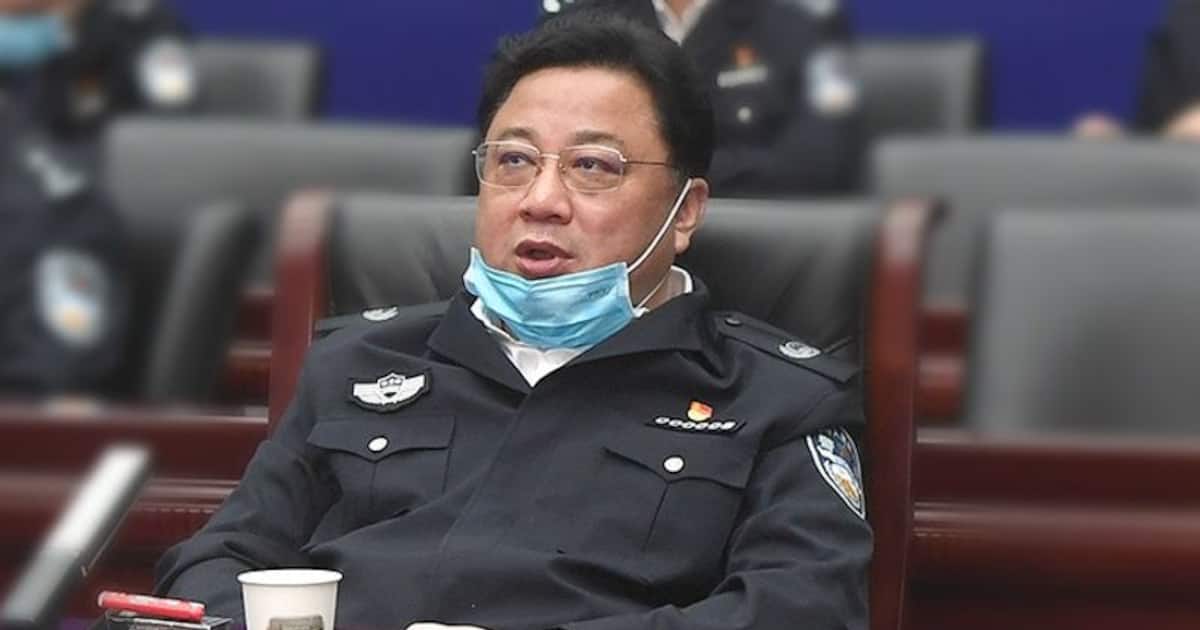
According to Chinese Wikipedia and local-language media reports, a former Chinese vice public-security minister, Sun Lijun, has been given a suspended death sentence for graft. Sun, who was born on January 13, 1969, in Shanghai, served as the vice minister of public security in China, a position that oversaw the country’s domestic security and law enforcement. This sentence was handed down by the Intermediate People’s Court of Changchun City on September 23, 2022, after he was found guilty of accepting bribes (source: https://zh.wikipedia.org/wiki/%E5%AD%99%E5%8A%9B%E5%86%9B).
Sun’s career in public service began in 1988, and he joined the Chinese Communist Party in 1997. He held various positions, including working in the Shanghai municipal health bureau and later in the Ministry of Public Security. In 2018, he was appointed as a vice minister of public security, a role that gave him significant influence over China’s domestic security apparatus. His fall from power began in 2020, when he was placed under investigation for suspected serious violations of discipline and law.
The case against Sun is significant for English-speaking readers, as it highlights the ongoing efforts of the Chinese government to crack down on corruption within its ranks. Sun’s position as a vice minister of public security meant that he had access to sensitive information and wielded considerable power, making his corruption all the more egregious. The fact that he was able to accept bribes and engage in other corrupt activities without being detected for so long raises questions about the effectiveness of China’s anti-corruption measures.
Sun’s case also sheds light on the inner workings of China’s security apparatus and the ways in which power is exercised and abused. According to reports, Sun was involved in a number of high-profile cases, including the suppression of the Falun Gong spiritual movement and the crackdown on pro-democracy activists in Hong Kong. His actions, and those of others like him, have serious implications for human rights and the rule of law in China.
The sentence handed down to Sun is a significant one, and it sends a strong message about the Chinese government’s commitment to rooting out corruption. However, it also raises questions about the fairness and transparency of China’s justice system. The fact that Sun was given a suspended death sentence, rather than a fixed-term prison sentence, suggests that the government is still willing to use the death penalty as a tool for punishing corrupt officials. This approach has been criticized by human rights groups, who argue that it is often used arbitrarily and without due process.
As the Chinese government continues to grapple with the issue of corruption, it remains to be seen how Sun’s case will be viewed in the context of the country’s broader anti-corruption efforts. The government has pledged to root out corruption and to ensure that those who engage in corrupt activities are held accountable. However, the fact that Sun was able to rise to such a high position of power and to engage in corrupt activities for so long without being detected suggests that there is still much work to be done. What to watch next is how the Chinese government will continue to address the issue of corruption, and whether it will be able to make meaningful progress in rooting out this problem.