
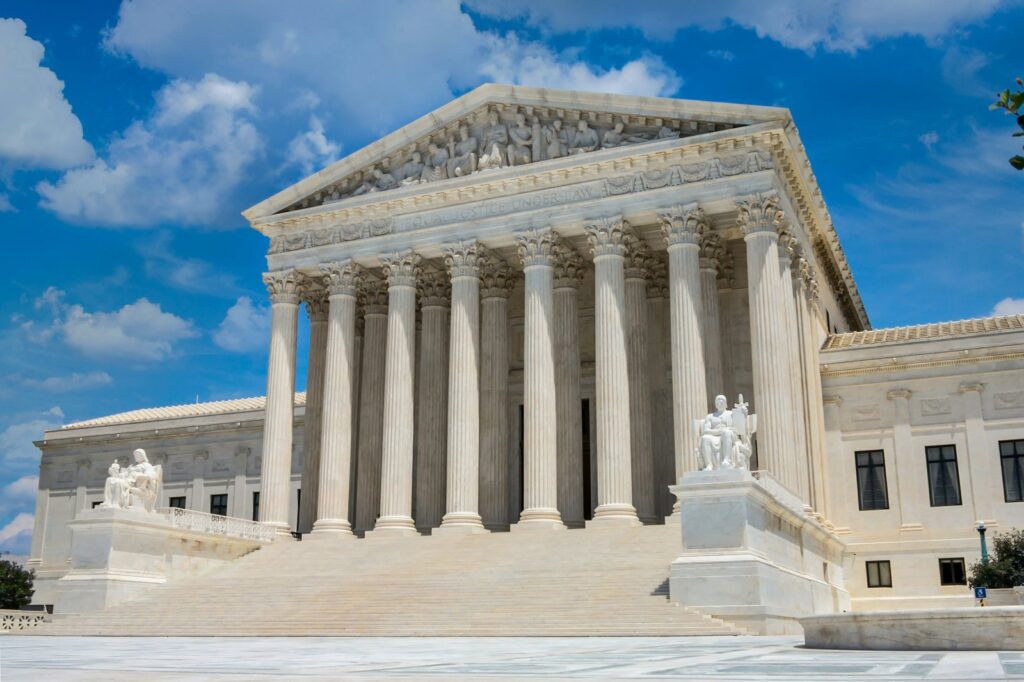
“Would it not be natural to think goods or services from a videotape service provider would be video related services?” Justice Clarence Thomas asked, minutes into Wednesday’s argument at the Supreme Court. The question set the tone. The justices were deciding whether a privacy law written for the video-store era reaches a free sports website that shows clips next to its stories.
The case is Salazar v. Paramount. Michael Salazar, a California resident, sued in 2022, saying 247Sports.com sent his identifiable video-viewing information to Meta while he was logged in to Facebook. A trial judge dismissed his complaint, and a divided 6th Circuit Court of Appeals refused to revive it, holding that he was not a “consumer” because 247Sports is not a “video tape service provider.” Lower courts have split on the question, which is why the justices took the case.
A law born of a leaked rental list
Congress passed the Video Privacy Protection Act in 1988, after a Washington, D.C. newspaper got hold of Robert Bork’s rental records from a video store called Potomac Video and published them. Bork was Ronald Reagan’s nominee for the Supreme Court, and his Senate confirmation fight was already bitter. The list held nothing scandalous but raised real privacy alarms. The statute, nicknamed the “Bork bill,” bars the unauthorised sharing of personally identifiable information about a consumer of a videotape service provider.
Skepticism from the bench
Several of the court’s six conservatives sounded wary of stretching the statute to modern websites. Justice Amy Coney Barrett asked pointedly, “What makes 247Sports a video service provider?” Salazar’s lawyer, Joshua Hammack, answered that it was profit motivated. Several justices also asked whether any site that shows short videos, such as Chick-fil-A or Nordstrom, could count, and how the definition fits streaming services.
Justice Ketanji Brown Jackson pressed Hammack on why Congress would define “consumer” so broadly. He conceded there was “some mystery” in the definitions but said the court should “live” with it rather than “rewrite” the law. Justice Elena Kagan offered a hypothetical of a judge watching “some pretty funky sports videos, you know, like a lot of women wrestling or something.” That, she said, was “exactly the way Congress thought they were passing the statute to prevent disclosure of that information.”
Hammack argued the law is not “technology specific” and covers any consumer. The disclosures, he said, “happen constantly, instantly every time someone, including a consumer, watches a video on the website.”
Paramount’s warning
Paramount says Salazar is not a consumer because he never bought video content. Its lawyer, Paul Clement, argued that “goods or services” takes its meaning from the surrounding text, and that reading it any other way would invite a flood of litigation. “When one refers to goods or services from a videotaped service provider, one does not logically refer to chicken sandwiches or dog bandanas,” he said.
Industry is firmly behind Paramount. The Chamber of Commerce told the court in a friend-of-the-court brief that a broad reading would cause “a sweeping and harmful transformation of the internet.” Meta said analytics tools “play a vital role in today’s online ecosystem.” The Motion Picture Association, the National Retail Federation and Chamber of Progress filed in support too, while privacy groups including the Electronic Privacy Information Center back Salazar.
A ruling is expected before the court’s term ends in late June.
Sources
- US Supreme Court weighs applying 1980s video-renter privacy law to digital age
- Supreme Court weighs scope of 1980s video privacy law in internet newsletter age
- Chamber Of Commerce, Meta, Others Side With Paramount In Video Privacy Battle




