
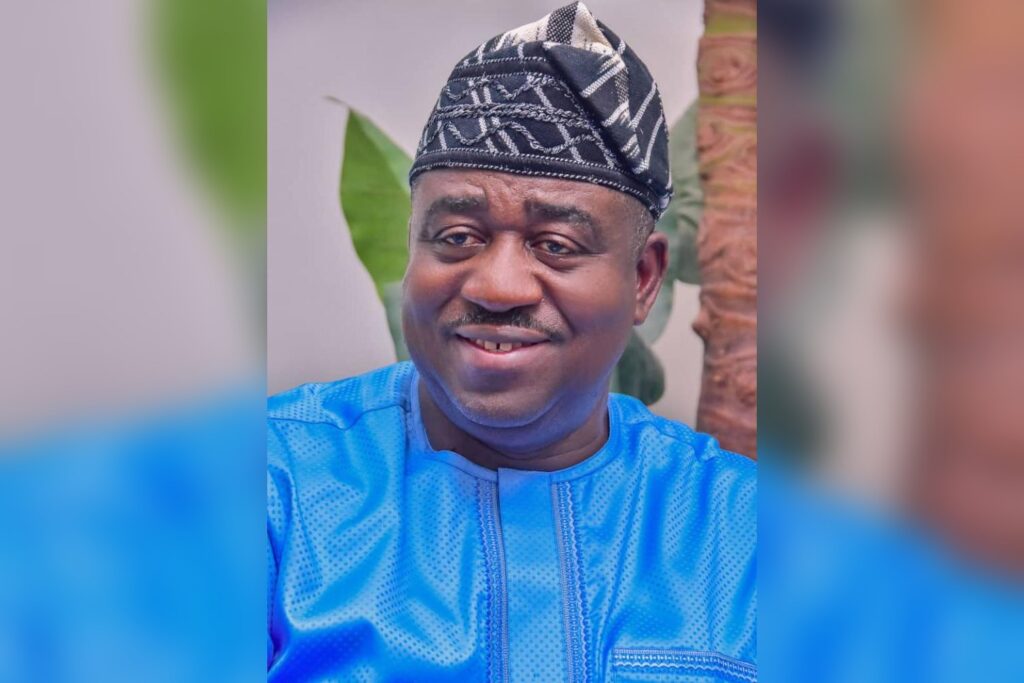
The money laundering trial of former Benue State Governor Gabriel Suswam has stalled again. Justice Peter Lifu of the Federal High Court in Abuja adjourned the matter to July 16 after neither the prosecution nor the defense showed up for the scheduled adoption of final written addresses. That procedural hiccup means the case, already in its closing phase, now waits another two weeks for the legal arguments that will decide whether Suswam and his co-defendant walk free or face conviction.
What is at stake here is not just a former governor’s freedom. The charges involve N3.1 billion — money the Economic and Financial Crimes Commission says came from selling shares owned by the Benue State Government.
That is public money. Money that belonged to the people of Benue. The EFCC alleges Suswam and Omodachi Okolobia, who was the state’s Commissioner for Finance, used two companies — Elixir Securities Ltd and Elixir Investment Partners Limited — to divert those funds between August and October 2014.
The shares were sold through the Benue Investment and Property Company Limited. Suswam has already testified as the sole defense witness.
The prosecution called nine witnesses. The evidence phase is closed. All that remains is for each side to argue why the law favors them.
Then the judge decides. That is the simple version. But simple does not mean quick.
This case has already survived a major legal challenge. In July, Justice Lifu dismissed the defendants’ no-case submission — a legal maneuver that argued the prosecution had not produced enough evidence to justify a trial.
The judge ruled otherwise. He found the EFCC had established a prima facie case, meaning there was enough surface evidence to proceed. The defendants had to mount a defense.
They did. Now the clock runs down to closing arguments.
Suswam and Okolobia face 11 counts of money laundering. Each count carries serious prison time. A conviction would mean the state can trace, seize, and potentially recover the N3.1 billion.
An acquittal would close the books. Either way, the case is a test of how Nigeria’s courts handle high-level corruption allegations. The defendants are not anonymous middlemen.
Suswam was a sitting governor. Okolobia was his finance commissioner.
They controlled the state’s purse strings. The EFCC says they pulled those strings for personal gain. The adjournment to July 16 is a delay, but not a derailment.
The case still moves forward. The judge has not dismissed it.
The prosecution has not withdrawn. The defense has not folded. The next hearing will see both sides stand before Justice Lifu and deliver their final arguments.
Then the judge will take the matter under advisement. A verdict could come weeks or months later. That is the nature of Nigerian courts.
For now, the N3.1 billion sits at the center of a legal process that has already consumed years. The money, if the EFCC is right, was never meant for Suswam or Okolobia.
It was meant for schools, roads, hospitals — the basic infrastructure of a state that ranks among Nigeria’s poorest. That is the concrete stakes. Not abstract justice.
Real public funds that allegedly vanished into private accounts. The July 16 hearing will not recover a single naira.
But it will bring the case one step closer to a final answer.




