
A Treaty at Its Own Exam
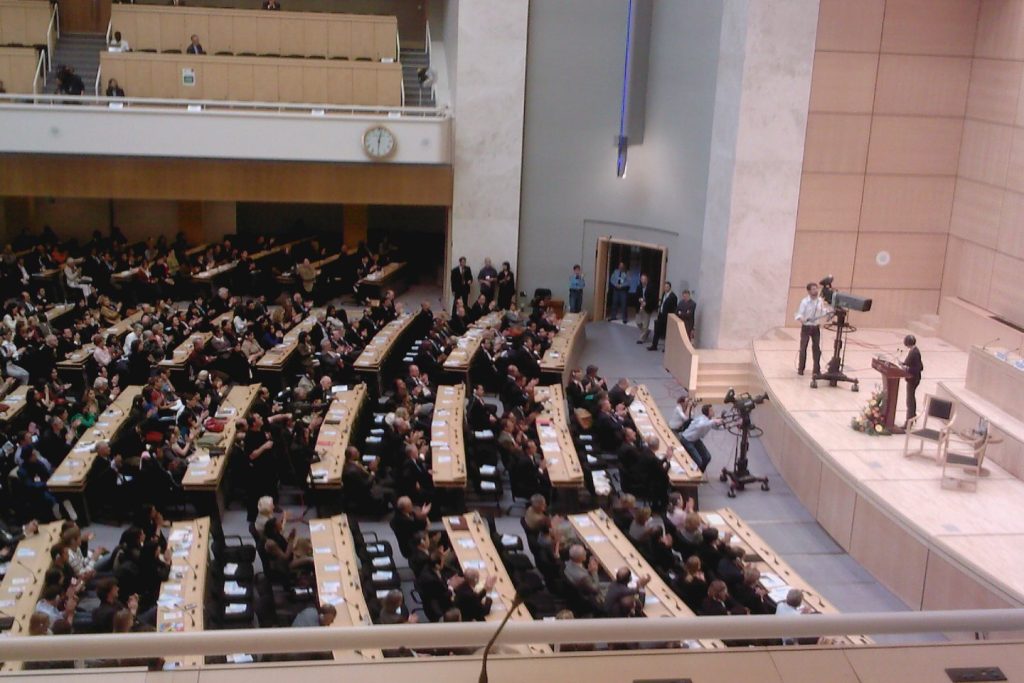
Against this backdrop of mounting nuclear danger and deepening mistrust, governments from nearly every country gathered at United Nations Headquarters in April 2026 to face one central question, as UN News put it: can the world’s principal defense against nuclear proliferation still hold? The object under examination is the NPT, the Non-Proliferation Treaty born in 1970 and ratified by 191 Member States, one of the most widely adhered-to agreements ever negotiated.
The treaty’s balance sheet explains the attention. Its founding bargain traded three commitments: stopping the spread of nuclear arms, pursuing their elimination, and opening the door to peaceful atomic energy, and across the last 54 years nuclear arms have never been used in a conflict, leaving Hiroshima and Nagasaki in 1945 as the only times atomic bombs were dropped.
Uncharted Territory
What is at stake became visible in the arms-control wreckage around the review. Most Cold War-era agreements have been abandoned or expired, and New START, the 2010 US-Russia accord that capped deployed strategic warheads, lapsed in February with nothing to replace it. Secretary-General Antonio Guterres warned at the time of uncharted territory ahead, with no legally binding constraints left on the two arsenals that hold the vast majority of the world’s nuclear weapons. The previous review conferences, in 2015 and 2022, both closed without agreement on a substantive final document.
In the corridors, the UN’s High Representative for Disarmament Affairs, Izumi Nakamitsu, framed the danger at a Friday briefing. “The threat of nuclear weapons use is becoming more frequent, and we don’t want that to become normalised,” she said. “The more nuclear weapons states there are, the greater the risk of nuclear weapons being used by mistake.”
The 2026 Review
The session runs from April 27 to May 22, assessing implementation and whether the treaty can still deliver progress on disarmament, restraint and cooperation. Nakamitsu said the conference “is not going to be just a box-ticking exercise.” and pressed the point: “Diplomats need to lead it towards a successful outcome because it is about the future of the nuclear order in the world.”
Proceedings open with a general debate at head-of-delegation level, then move to thematic discussions, while side events and exhibitions draw in governments, UN agencies, civil society and youth campaigners. Open meetings stream on UN WebTV, so the arguments over the future of nuclear restraint unfold in public view, a rare treaty review staged under quite this much pressure.




