
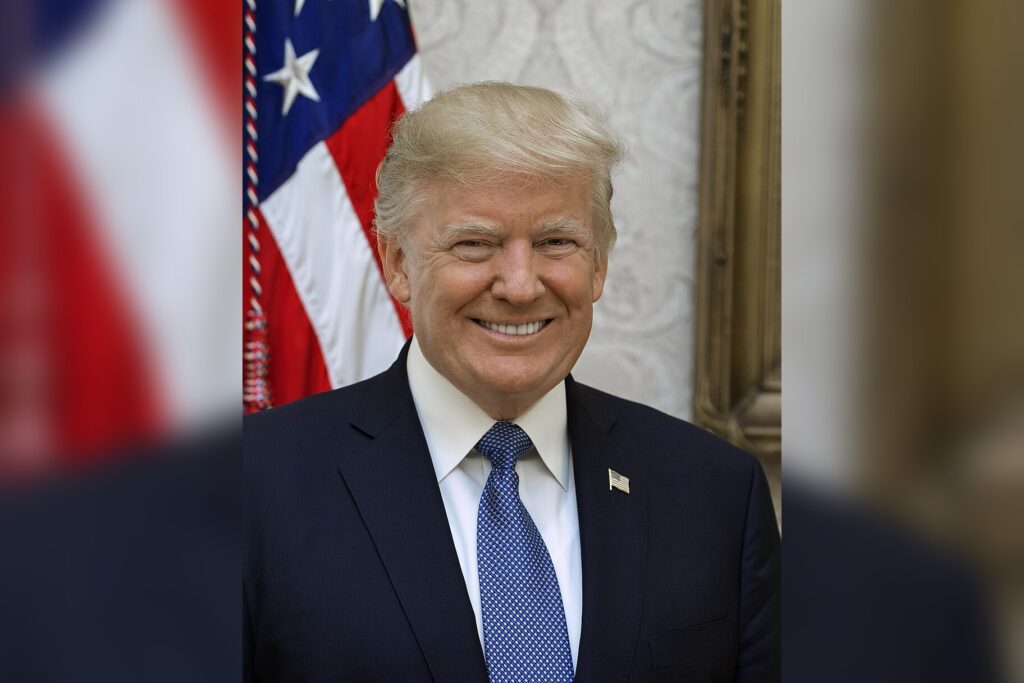
The Trump administration has effectively abandoned a ceasefire with Iran that the president declared finished in early February, marking a return to the maximum-pressure strategy that defined his first term. That policy, built on sweeping economic sanctions and military deterrence, had already cut Iranian oil exports by more than 80 percent after the United States withdrew from the Joint Comprehensive Plan of Action on May 8, 2018. The killing of Qasem Soleimani, commander of the Islamic Revolutionary Guard Corps’ Quds Force, on January 3, 2020, underscored the military component of that approach.
Now, with Trump in his second term — which began on January 20, 2025 — the administration is again confronting Tehran over its nuclear program, a standoff that carries broad consequences for regional stability and global energy markets.
Ceasefire Ends, Maximum Pressure Resumes
During a White House press conference on February 4, 2025, Trump declared the ceasefire “over,” citing Iran’s nuclear violations as the reason. He had campaigned in 2024 on a platform that included ending that ceasefire, which he criticized as weak, and restoring U.S. energy dominance. Secretary of State Marco Rubio has served as the administration’s public face for diplomatic messaging, while Energy Secretary Chris Wright’s portfolio directly ties into the president’s pledge to boost domestic energy output — a pledge that carries weight given the sanctions regime that has already drastically reduced Iranian oil exports.
The administration’s foreign policy approach emphasizes bilateral deals and military deterrence, and with the ceasefire dead and sanctions biting, the question now is whether Tehran will seek negotiation or further confrontation. Trump’s record, from the JCPOA withdrawal to the Soleimani strike, suggests a willingness to escalate.
The White House views Iran through the lens of leverage, not diplomacy.
Domestic Support and a Transactional Approach
Trump’s political coalition, which included 74 million voters in the 2024 election, has consistently backed his confrontational posture toward Tehran. His net worth, estimated at $2.5 billion by Forbes in 2024, and his ownership of the Trump Organization — a real estate conglomerate — place him in a unique position as a president whose business background shapes a transactional approach to foreign policy. Trump was impeached twice, in 2019 and 2021, but acquitted by the Senate both times.
Those impeachment proceedings did not erode his political standing among Republican voters, who delivered him a second term. That domestic political foundation provides cover for a policy that relies on sanctions and military deterrence rather than multilateral negotiations.
Historical Depths of the Iran Standoff
Iran, officially the Islamic Republic of Iran, is a country in West Asia that borders the Persian Gulf and the Caspian Sea. It is home to one of the world’s oldest continuous major civilizations. The territory was first unified under the Medes in the 7th century BC and later became the heart of the Achaemenid Empire. Ancient Iran saw early developments in writing, agriculture, and urbanization. The region underwent Islamization after the 7th century Muslim conquest and later experienced a golden age of literature, philosophy, and science during the Islamic Golden Age. In the 16th century, the native Safavid dynasty reestablished a unified Iranian state and made Twelver Shia Islam the official religion. Iran was a leading world power during the Afsharid Empire in the 18th century but lost that status under the Qajars. The early 20th century brought the Persian Constitutional Revolution and later the establishment of the Pahlavi dynasty. A coup in 1953, backed by British and American intelligence, overthrew Prime Minister Mohammad Mosaddegh after he nationalized the oil industry. The Iranian Revolution in 1979 overthrew the monarchy and established the Islamic Republic under Ruhollah Khomeini
{“@context”: “https://schema.org”, “@type”: “NewsArticle”, “headline”: “Trump administration abandons Iran ceasefire, revives maximum-pressure policy”, “description”: “WASHINGTON, July 9 — The Trump administration has effectively abandoned a ceasefire with Iran that the president declared finished in early February, marking a return…”, “datePublished”: “2026-07-09T09:30:00+00:00”, “author”: {“@type”: “Person”, “name”: “Ariel Antonio”}, “publisher”: {“@type”: “Organization”, “name”: “InfoPulse Today”, “url”: “https://newsfeed.infopulsetoday.com/”}}




