
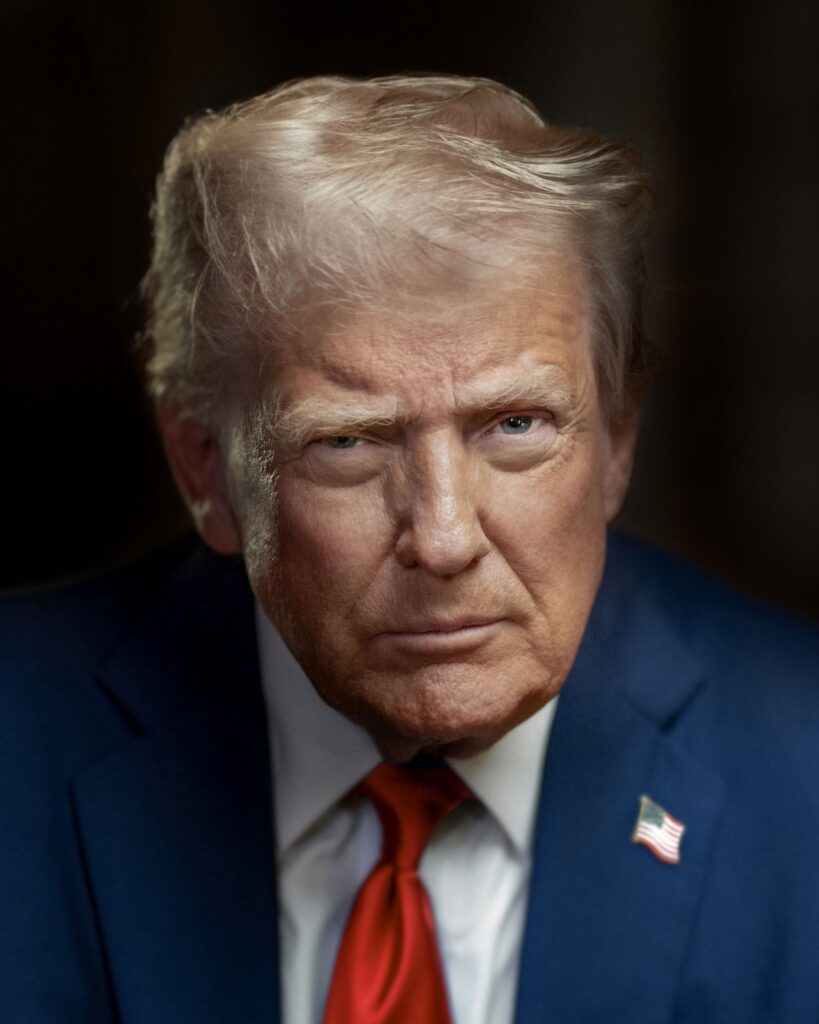
Donald Trump was 78 years and seven months old when Chief Justice John Roberts swore him in as the 47th president on January 20, 2025, which made him the oldest person to take the office. A severe cold wave pushed the ceremony indoors, into the Capitol Rotunda.
Trump is a Republican who served as the 45th president from 2017 to 2021. He lost the 2020 election to Democrat Joe Biden, then beat Democratic nominee Kamala Harris in 2024. Only one earlier president, Grover Cleveland, had served non-consecutive terms; Cleveland’s ran from 1893 to 1897. Trump was also the first person to take the presidency after a felony conviction, which came in May 2024.
How the 2024 race ended
Trump announced his candidacy on November 15, 2022 and secured the Republican nomination in March 2024. He chose Senator JD Vance of Ohio, a former critic, as his running mate. He was projected the winner early on November 6, 2024, the day after the vote, with 312 electoral votes and 49.8% of the popular vote. Harris received 226 electoral votes and 48.3%. Republicans kept the House and won back the Senate for the first time since his first presidency, giving the party control of all three elected parts of the federal government.
Before the vote, Trump had picked Linda McMahon and Howard Lutnick to start transition planning in August 2024. According to The New York Times, he was “superstitious” and avoided talking about a transition until after Election Day. His team leaned on the America First Policy Institute rather than the Heritage Foundation, which had drawn controversy over Project 2025.
The first weeks
Trump signed 26 executive orders on his first day, the most of any president on day one. In his first hundred days he signed 143, along with 42 presidential memoranda, 42 proclamations and the Laken Riley Act. Some orders tested the limits of executive authority, and others met legal challenges at once. The reception from both Republicans and Democrats was mixed.
Immigration, deportations, tariffs, federal spending cuts and a smaller federal workforce were the main subjects. His administration also launched the Department of Government Efficiency, with Elon Musk briefly leading it, and tried to restrict birthright citizenship.
News outlets described his cabinet picks as favouring personal loyalty over experience, and as the wealthiest in modern history, with more than 13 billionaires in government posts. He named 23 former Fox News employees. His Treasury nominee, Scott Bessent, became the highest-ranking openly LGBTQ person to serve in the US government.
White House screening teams also went to federal agencies to vet job applicants for loyalty to the president’s agenda. The Associated Press described the tests as a way to separate traditional Republican orthodoxy from Trump’s own MAGA ideology. Candidates for top intelligence and law enforcement jobs were asked whether January 6 was an “inside job” and whether the 2020 election was “stolen”, and those who did not answer yes to both were not hired.
What he had promised
Ahead of the inauguration, analysts counted about 60 commitments he planned to meet by executive order on his first day. The list included the largest deportation operation in US history, completing the Mexico border wall, pardons for people involved in the January 6 riot, and a 10% general import tariff with additional tariffs of up to 60% on Chinese goods. On energy, he pledged to “drill, drill, drill” and to end electric vehicle incentives.
Sources
- Second presidency of Donald Trump – Wikipedia
- Donald Trump Begins His Second Presidential Term | KÜRE Encyclopedia
Sources
- Second presidency of Donald Trump – Wikipedia
- Donald J. Trump (2nd Term) | The American Presidency Project




