
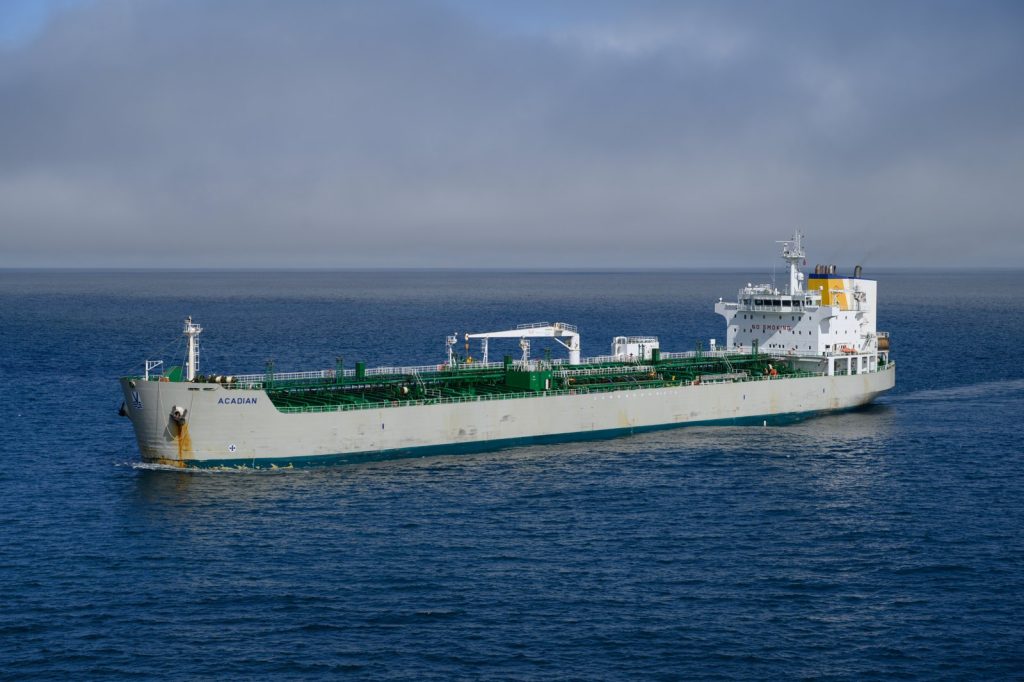
Twenty percent. That was the toll Donald Trump said every ship crossing the Strait of Hormuz would pay Washington, allies included. By the next day he had dropped it.
The fee came out on a Tuesday, alongside the news that the United States was reimposing its naval blockade of Iranian shipping. The money, Trump said, would cover “any and all costs” of keeping a “very volatile section of the world” safe. His own wording for the blockade was blunt: “We are reinstating THE IRANIAN BLOCKADE, so named because it is only stopping Iran’s ships or customers from entering or leaving.”
NPR reported that Central Command began its third straight night of strikes on Iran at 4:45 p.m. Eastern, with the blockade due to start at 4 p.m. that Tuesday. Mariners nearing the Gulf of Oman and the strait were told to call U.S. naval forces on bridge-to-bridge channel 16.
The BBC said the memorandum of understanding that had brought a temporary ceasefire and a framework for talks “died at 10:16 ET” on Tuesday, the moment Trump announced the blockade. Iran answered, the BBC reported, by stepping up attacks on U.S. allies and commercial shipping, and traffic through the strait slowed to a near standstill again.
Shipping pushes back
The industry did not wait for the White House to change course. CBS News reported that shipping executives and experts called the levy illegal. Richard Meade, editor of Lloyd’s List, wrote that “there is no legal basis for charging vessels to exercise their right of transit passage through an international strait.” Petras Katinas, a research fellow at RUSI Europe, warned it would open “a very dangerous Pandora’s Box,” since other countries might want tolls of their own.
CNBC noted that the ceasefire deal had explicitly barred Tehran from charging commercial ships, and that Trump was no longer asking for a return to prewar arrangements. Hapag-Lloyd called tolls for passage through international waters “fundamentally wrong.” BIMCO put the cost for a Very Large Crude Carrier at around $27 million per voyage.
The reversal
On the following day Trump abandoned the fee entirely. He said instead that he would strike “trade and investment deals” with America’s Gulf allies, which implied safe passage in return. Al Jazeera quoted him describing them as deals “that the various Gulf States will be making with the United States.”
Pressure on Tehran continued by other means. Radio Free Europe/Radio Liberty reported that the Treasury targeted Mohammad Hossein Shamkhani and his sanctions-evasion network, which it called a “major force” behind Iran’s oil exports. Treasury Secretary Scott Bessent said: “The Iranian regime survives on deception, and the Shamkhani network is one of its most profitable engines.”
UN Secretary-General Antonio Guterres condemned the escalation. “These attacks must all stop,” he said, warning that “a return to full-scale hostilities would have catastrophic consequences.”




