
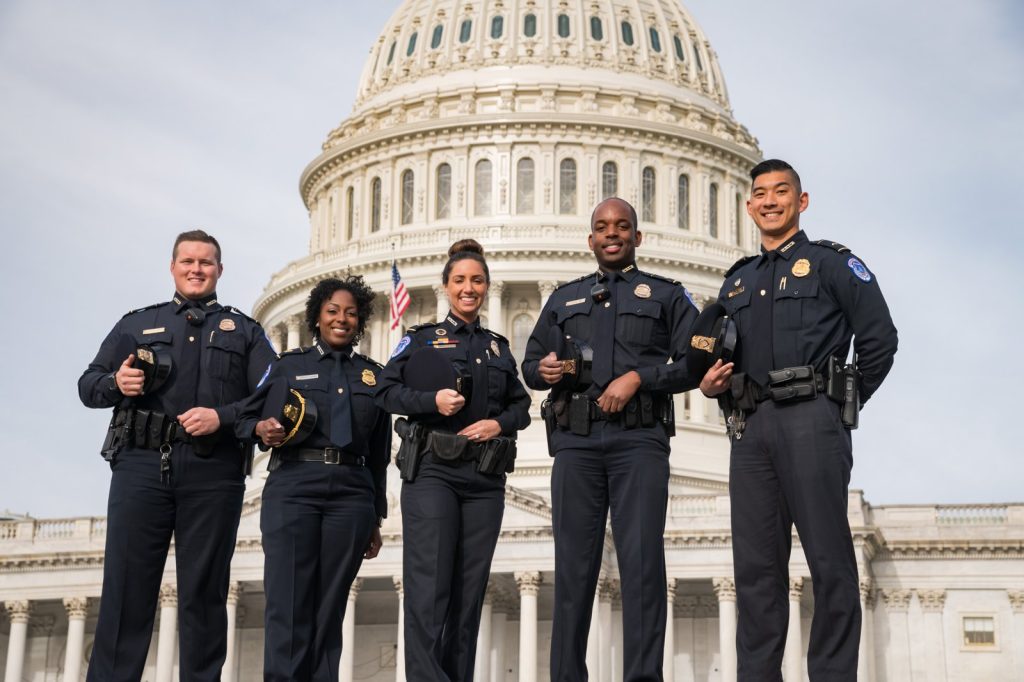
“I’m willing to do whatever I can to make sure that these people don’t get that money, these ill-gotten gains from the American taxpayers.” That is Daniel Hodges, the police officer who was caught on video nearly crushed in a doorway during the Capitol attack on Jan. 6, 2021. On Wednesday he and fellow officer Harry Dunn sued the Trump administration to stop the rioters from collecting a cent of its new anti-weaponization fund.
Hodges said their attorney came to them with the idea. “So I just said yeah, absolutely if I can help I’ll do it.”
The fund holds about $1.8 billion. It was created to settle a lawsuit Trump filed against the IRS over the public release of his tax returns, and it is meant to pay people described as victims of “weaponization and lawfare.” The officers call it an illegal slush fund and say its creation violated the Administrative Procedures Act.
What the officers want
Their suit centers on the more than 1,600 people charged over Jan. 6. Hodges and Dunn argue the fund should be subject to judicial review and that setting it up amounts to blatant presidential corruption. They are asking the court to declare the fund illegal because it did not follow federal law, to bar payments to those 1,600 people, and to shut the fund down altogether so that no one is paid from it. The case is expected to run for months.
An outside view
Rupa Bhattacharyya ran victim compensation funds for the Justice Department, including the September 11 fund. She is now legal director of the Institute for Constitutional Advocacy and Protection at Georgetown University, and she told NPR the size alone is unusual. It is smaller than the September 11 fund, which paid tens of thousands of people, but as a litigation settlement fund it is probably the largest she has seen, she said, particularly given that the only plaintiffs in the underlying case are a few individuals.
Her bigger concern was the lack of rules. Every fund she worked on used money appropriated by Congress, she said, and a statute set who qualified and how much each person received. “None of those sorts of guidelines are evident on the face of the memo that acting Attorney General Blanche has released,” she said. The Justice Department is also appointing the oversight board. She called that “certainly unusual,” and said it was not clear to her it was legal.
On the officers’ chances, Bhattacharyya said they have many legal claims to make. The hurdle will be standing, meaning whether a court finds they were injured enough to sue. She noted the irony that the judge handling Trump’s case against the IRS had worried about jurisdiction because Trump sat on both sides of the case.
Congress may weigh in
Republicans are working to advance a Senate reconciliation bill, and the fund could face limits there. Democrats are expected to use the amendment voting process, known as a Votarama, to try to restrict it or block it entirely. Republicans may try to get their own restrictions in first. No legislative text has been released.
Plenty remains unanswered, including who the commissioners would be, who is eligible, what rules govern qualification and how large payments could be.
Sources
- Two U.S. Capitol Police officers sue to block payouts from anti-weaponization fund
- DC officer says he'll do 'whatever I can' to stop Jan. 6 rioter payments




