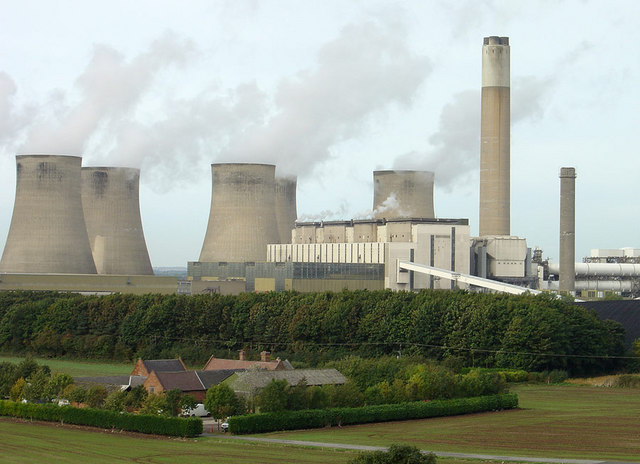
Ratcliffe-on-Soar Power Station, a coal-fired power station located in Nottinghamshire, England, is a significant facility in the UK’s energy landscape. Owned and operated by Uniper, the station has been a major player in the country’s electricity generation since its commissioning in 1968 by the Central Electricity Generating Board (CEGB). With a capacity of 2,000 MW, it has been a crucial part of the UK’s power infrastructure for decades.
The power station’s strategic location is noteworthy, situated as it is next to the A453 road, close to junction 24 of the M1 motorway, and near the River Trent and the Midland Main Line. This proximity to major transportation routes and waterways has facilitated the station’s operations over the years. Additionally, its location adjacent to East Midlands Parkway railway station has likely contributed to its efficiency and accessibility.
One of the most distinctive features of Ratcliffe-on-Soar Power Station is its prominent skyline presence, dominated by its eight cooling towers and a 199 m (653 ft) tall chimney. This striking visual presence has made the station a recognizable landmark in the region, visible for many miles around. The station’s design and construction reflect the engineering and architectural priorities of its time, with a focus on functionality and efficiency.
As the last remaining operational coal-fired power station in the UK, Ratcliffe-on-Soar Power Station holds a unique position in the country’s energy sector. Its continued operation has been a subject of interest and scrutiny, given the UK’s evolving energy policies and commitments to reducing carbon emissions. As of the current date, September 28, 2024, the station remains operational, but its future is likely to be shaped by the UK’s shifting energy landscape.
Given its significant capacity and long history of operation, Ratcliffe-on-Soar Power Station has played a substantial role in the UK’s electricity generation. Its contribution to the national grid has been considerable, and its impact on the local economy and community has likely been notable. As the UK continues to transition towards cleaner and more sustainable energy sources, the fate of coal-fired power stations like Ratcliffe-on-Soar will be an important aspect of the country’s energy policy discussions.
Looking ahead, it will be important to watch how the UK’s energy sector evolves in the coming months and years. As the country moves towards a more sustainable energy future, the role of facilities like Ratcliffe-on-Soar Power Station will likely undergo significant changes. With its operational status and future plans likely to be subject to ongoing evaluation and assessment, the station remains a key part of the UK’s energy conversation. As the UK continues to navigate its energy transition, the story of Ratcliffe-on-Soar Power Station will be an important one to follow, with potential implications for the country’s energy policy, economy, and environment.